Home » 2020 (Page 8)
Yearly Archives: 2020
Four points of view to address the issues of the world
- Who? Me?

The most common position to address the issues of the world is “to let someone else deal with it”. In our fragmented reality, in which we all occupy a little piece of everything and no one seems responsable for “it all”, one easily identifies with the big global problems but hardly with one’s own responsability or one’s option to bring the world together to solve whatever is needed. This is the case for the billions of individuals but also all the institutions that have their own specific objectives and interests to focus on, to stay alive in the fragmented economical political environment.
2. If you ask me, and pay me

We live in a fragmented reality in which trade is the norm, as well as reactive, remedial governance. All our efforts are measured against financial rewards. Governments tend to subsidize remedial actions that they consider needed. In the past the same governments may have paid to do whatever created the problem that now needs to be solved. They never go to the root cause and tend to mop with the tap open as the tap represents interests that are difficult to wipe out. Business organizations offer their services to solve whatever problem as long as they get paid. They will not go at the root cause of issues either as these do not provide financial means and often even show that most of the institutions are as much part of the problem that they try to solve against payment. Like someone said in big pharma about medicine: “It is not our business to cure people, we just satisfy our shareholders.”
3. Activism

Then there is the category to people that either suffer the consequences of the problems, or develop a moral attitude to the lack of responsability that is taken by the fragmented players, people or governments. There are many ways to show insatisfaction or a particular morality. One can become a volunteer (unpaid participant) to solve issues at hand. One can organize or participate in demonstrations, show aggression against dominance (terrorism), prepare an attack through justice, or lobby through the media or with pamflets.
4. Create something new
The layer that we created as Sustainocracy simply invites everyone to participate in addressing the issues by developing the root of all issues, our mindset and contextual focus. In fact we engage the previous three points of view without them hardly noticing. The layer “who me?” is invited to follow the new mass and as their follower’s mentality gets them to participate in the solution without even changing their attitude (eg. if no plastic bags are available people bring their own). The layer “if you ask me and pay me” (business) is participating through the projects but at the same time asked to reflect about their own position (transformation and positioning) in the problem solving eco-system. The “activists” have a dot on the horizon to pinpoint to and enough material to address the ones “who don’t (want to) know” about their choice and make it know to them.
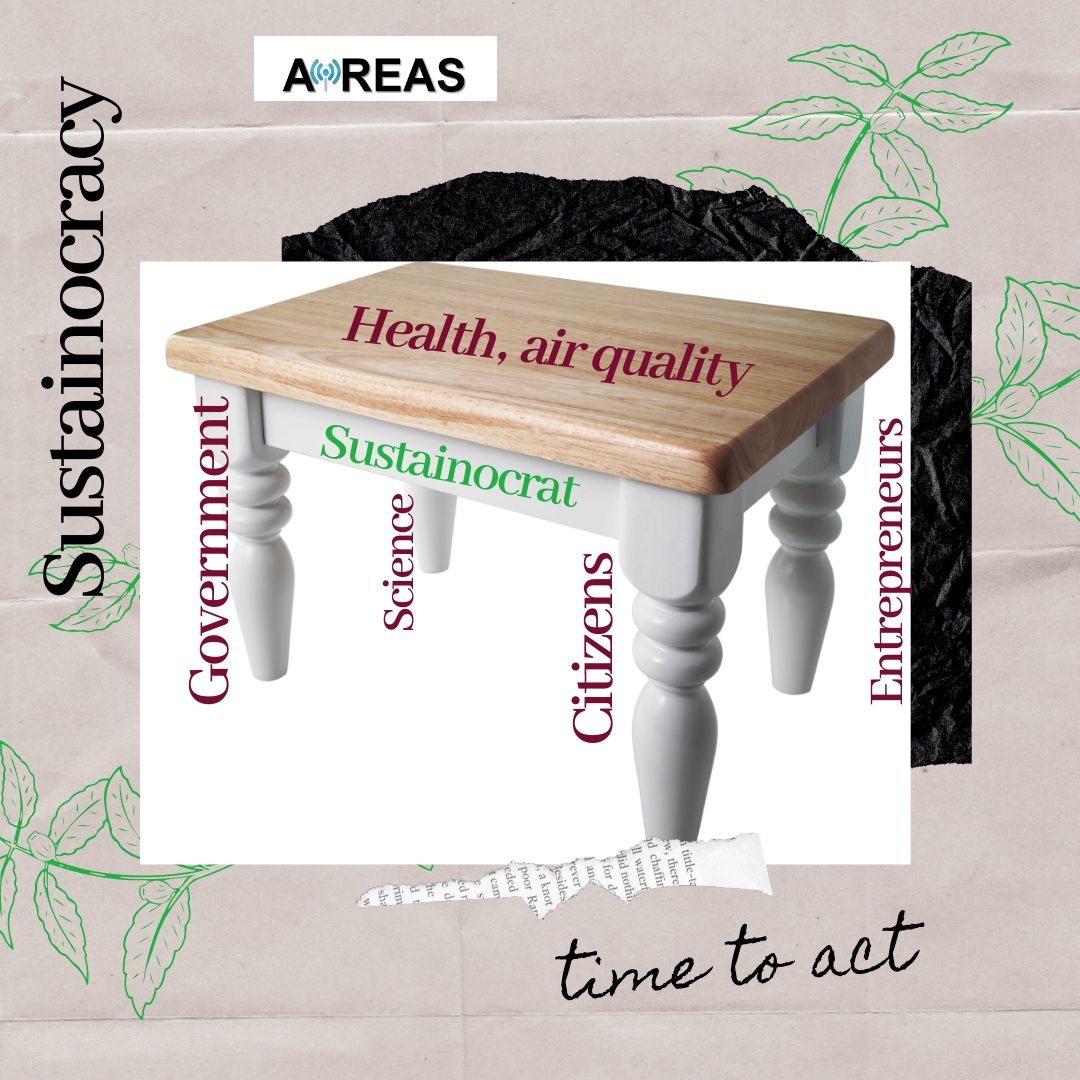
Developing purpose driven collective intelligence
Sustainocracy is a core human values based democracy designed around the development of purpose driven collective intelligence. Our method is unique due to its multidisciplinary character of values driven cocreation. It is based on authenticity of the participants, freedom, respect, equality and trust. This short video shows 4 key elements to develop collective intelligence as we do in our sustainocratic clusters.
Feminine power, the birth of a basic Sustainocracy in Mexico
During an open dialogue about options for sustainable human progress and breaking destructive environments of controle, I received this short video from a village in Mexico. How the local women got fed up with the criminal forces murdering their sons, violating the women and controling their lives through terror and fear. They stood up, kicked out corrupt police and politicians, and established a realtime democratic participation society (sustainocracy) based on the first of our basic core human values for sustainable human resilience and a progressive community: safety.
 Sustainocracy, the new democracy