Home » Articles posted by Jean-Paul Close (Page 11)
Author Archives: Jean-Paul Close
Peace desires in an aggressive society format
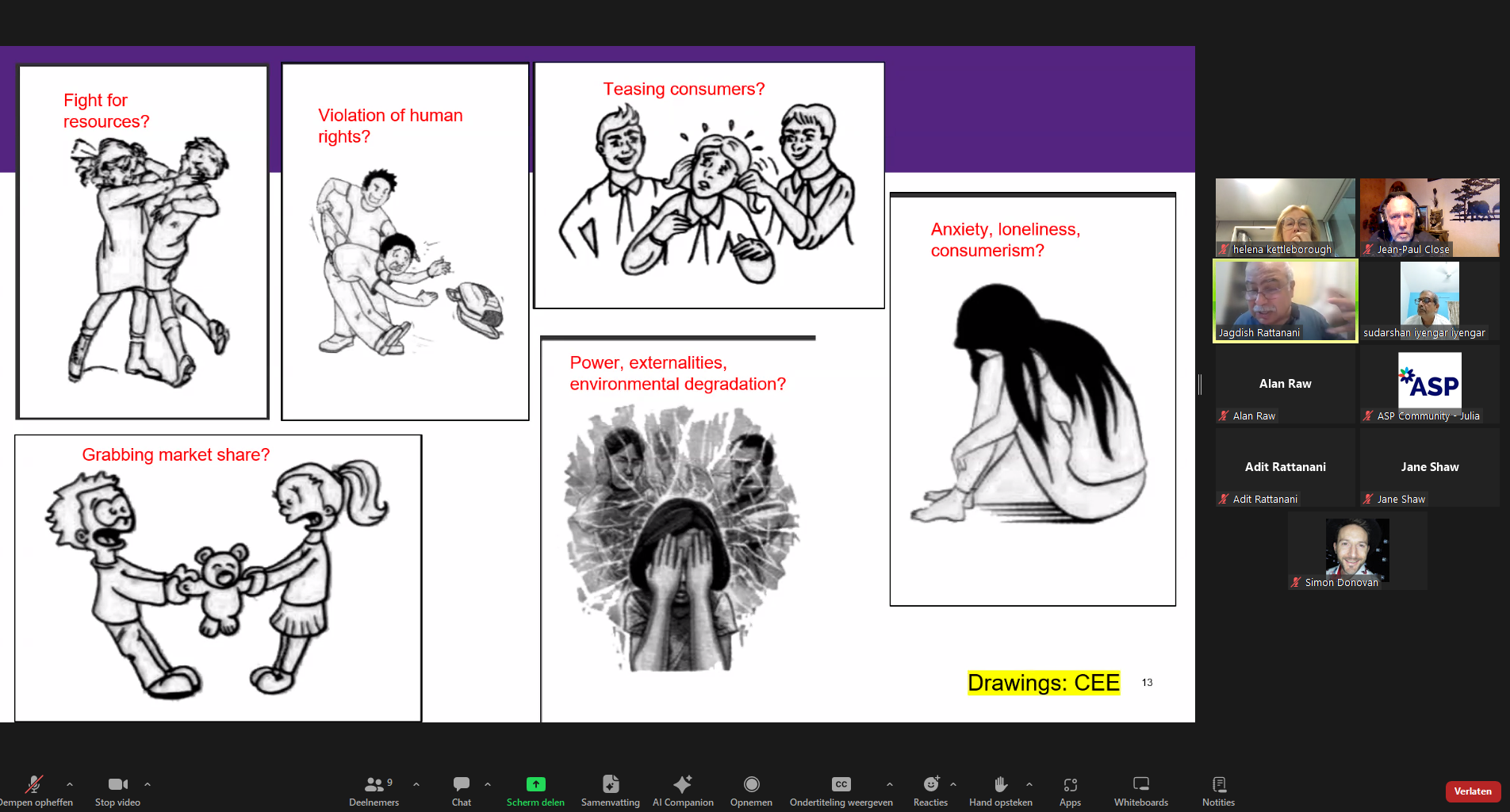
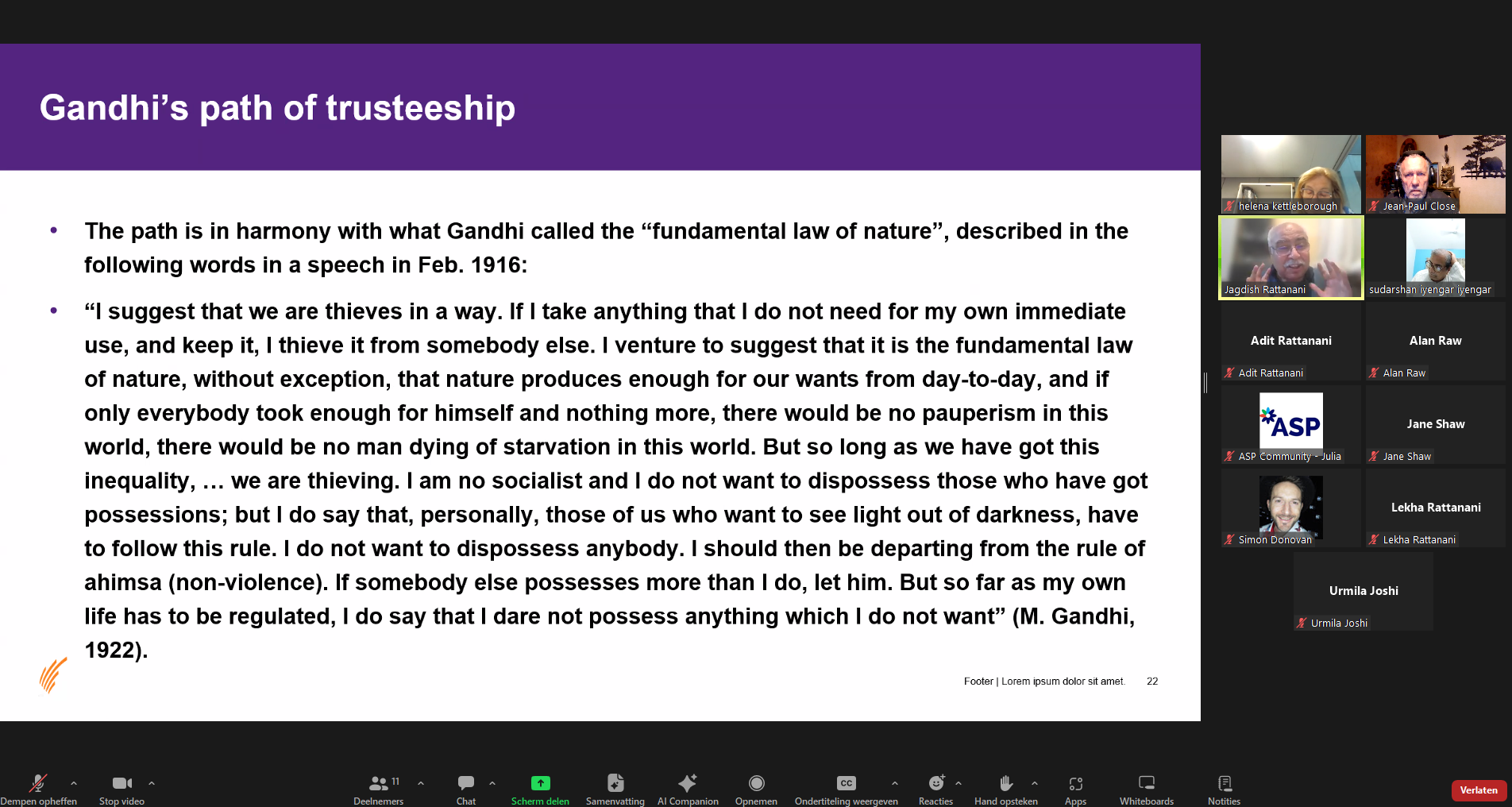
An online encounter about “Non-violence in a violent world” discussed how inherently violent our current societies are. The way we take from nature, not just for our fulfilment of direct needs but to develop imaginary financial economies of greed. The way we compete out of self interest. The way taxes and rules are imposed. The way social differences are exploited. And much more. The session was conducted by journalist Jagdish Rattanani from India, author of the book about “Abundant Love”. Multiple references were made to the views of Mahatma Gandhi and the wisdom of Satish Kumar (peace pelgrim and co-founder of the Schumacher College).
As a person who stepped away from the financial ratrace and doctrines many years ago, developing our societies around core natural human values as shared responsibilities, the encounter was yet another confirmation of my own choices and path developed with sustainocracy.
short video on sustainocracy
With thanks to SCI60 that transforms complex science in comprehensive video summaries. The video is triggered due to our research publication on “breaking with our heritage” for place based sustainable development.
What is a sustainocrat?
In 2010 we hosted one of our preparation meetings with all the invited institutions in the Province of North Brabant. Our program was to develop local air quality and health through the multidisciplinary community of AiREAS. Every thinkable institution (government, science, NGOs, technology) was present. They all had the opportunity to present their own programs. But at the end of the meeting everyone was packing their stuff again to go home. This is the moment when the sustainocrat was born. I jumped in the center of the meeting, looked around and asked: “Is that it? Do we have a healthy region now?”
The bags were unpacked again and everyone went back to their seat. That is when the real discussion started. “Who does what?” It was then when we decided that the provincial challenge was to big and complex, that we needed a smaller but complex region where we could look each other in the eyes and take decisions together. The city of Eindhoven stood up and suggested that they could be that initial region. And that is how it started. I have not left that position in the middle of the circle ever since and keep repeating the same questions, over and over again.
 Sustainocracy, the new democracy