Home » Articles posted by Jean-Paul Close (Page 2)
Author Archives: Jean-Paul Close
Why also internationals should vote in the municipality elections in the Netherlands.
Jean-Paul Close being interviewed on Radio 4 Brainport with Supriya Vij and Jean-Paul Linnartz
social encounter with political parties on February 18th, 2026 in Wasven farmhousr.
Conference about human existentialism
In september 2026 (28-29-30) I plan to organize a dedicated conference in Eindhoven (the Netherlands), with presentations, workshops and interactive discussions.
For over a decade now I have attended conferences around the world to present the societal approach to sustainocracy. I explained the core human values of our human sustainable existence, published chapters in scholarly books, told about our “healthy city and region” as a shared responsibility, challenged the world oif education, told about our efforts around social inclusion in a multicultural environment, etc. But the presentations were generally only a sidekick of an overarching program dealing with the mainstream political financial technological doctrine.
I met the most wonderful people, with beautiful initiatives in relation to nature, cultures, gender equality, the role of women in society, spirituality, the evolution of languages, our interconnectedness, also with nature, psychology, positive health, etc. Researchers looking into our interpersonal relationships, food resilience, our evolution, air quality, sociology, anthropology, the dangers of the financial doctrine and hegemony, the need to address education in a novel manner, etc. But always as a minority grouping in massive gathering that can be politically or commercially relevant but far from existential or regenerative evolutionary for the human species. I wanted to turn this around and what better than use my own living lab and societal environment of Eindhoven in the Netherlands.
An intellectual platform for sustainable human development, research, implementation and existential ethics.
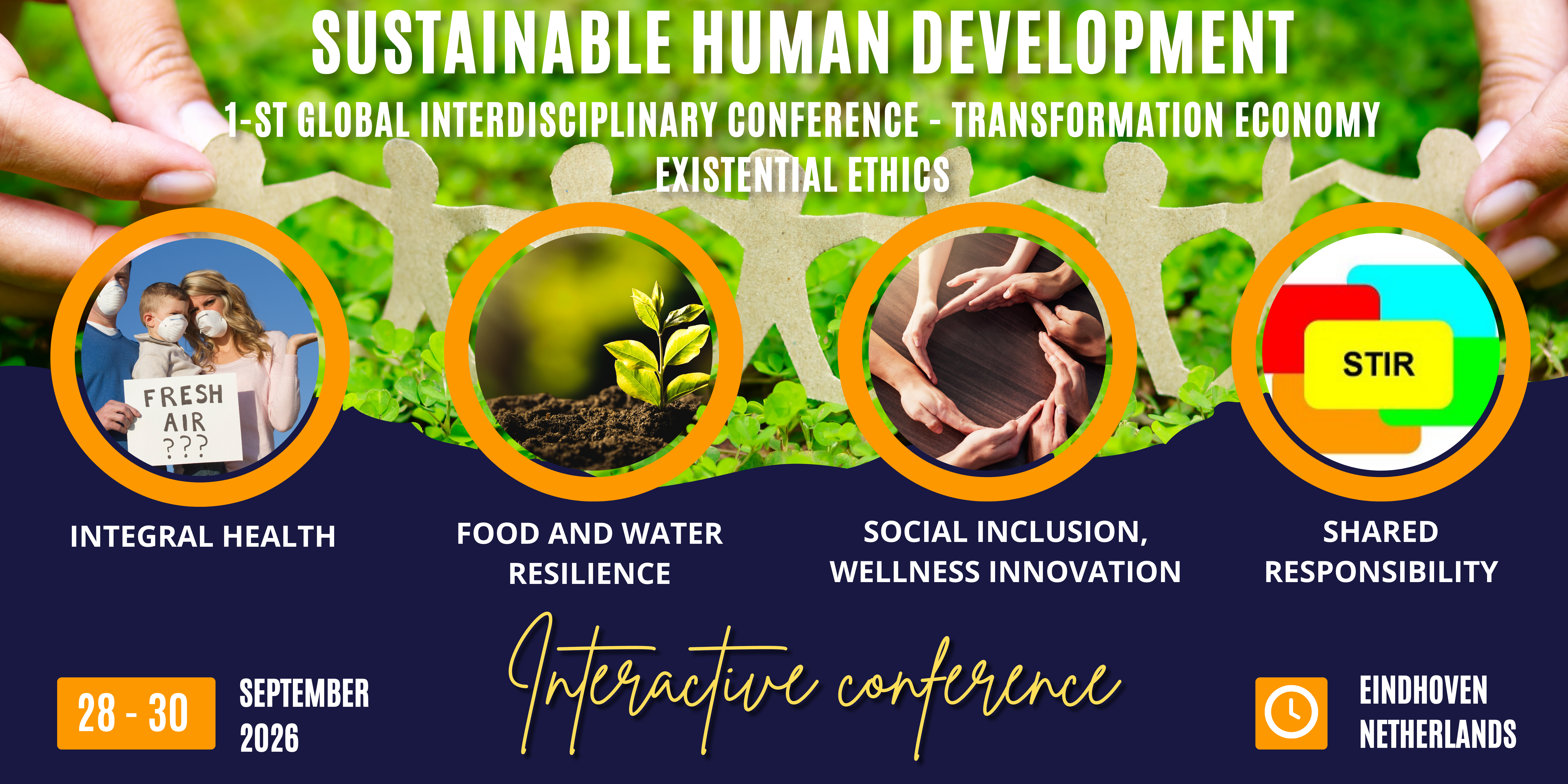
I have reserved three days for all who have scholarly presentations or wish to participate interactively in the audience. The setting is multi and interdisciplinary, looking for ways to cluster initiatives into new project ideas, proposals and cooperation. I hope that the platform becomes a recurring meeting place for like minded people, researchers, government officials, innovative business people and active citizens.
Reach out to me if you have ideas, wish to participate, send an abstract or have other remarks. I try to keep it low cost as this is not commercially oriented. Feel free to share the initiative in your network. Ideally we get people from the different regional silos to come together in this setting to practice informally possible co-creation options (the sustainocratic way):

2025 reflections about Sustainocracy and sustainable humankind
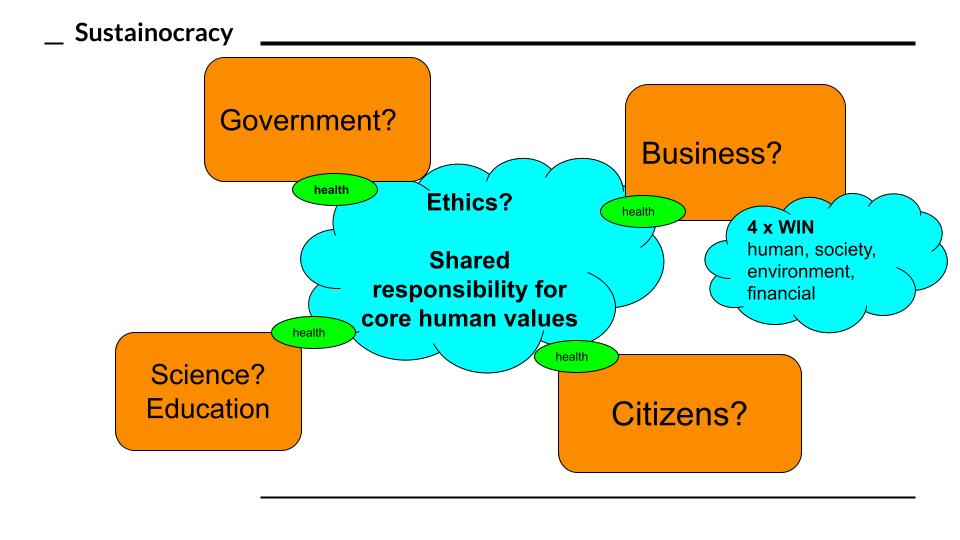
2025 was again a unique year, this time with the desire to expand the practical approach to sustainable human development (Sustainocracy) on a worldwide scale. This has three important motives:
- I will not live for ever to remain the spearhead of this societal approach. If I do not manage to extend the approach with the involvement of other people and institutions, I will remain the weakest shackle of it all, with the risk that all the efforts over the last 30 years disappear eventually into history.
- The current human world is in a dual state. On the one hand there are the powerful forces of political economic destruction, investing much more in warfare and global instability than in human resilience. On the other hand there are increasingly initiatives that work on humanism, sustainability, integration with nature, etc. Sustainocracy represents an overarching Existential Ethical approach that can benefit all if we respect life, not death, replacing warfare and conflicts by cooperation, diplomacy and a common existential mission.
- Every year, since my breaking with the financial ratrace (1996) at executive level, the development and coaching of “entrepreneurship in the 21st century” (2005) serving humankind and the planet instead of taking abuse, and the application of the same “working with humankind and the planet for our sustainable existence (2009)” at societal level with Sustainocracy, I have added layers of expertise though trial and error, persistance and patience.
Overall we see that humankind and its “systems” have nested themselves in short term competitive materialism, conflict and survival. This is very difficult to transform into long lasting, durable wellness through shared responsibility. This is not because people or institutions in majority do not want this durable wellness. They and we all do. The problem is that the current functional reality became a way of life that got so operationally intertwined that it seems nearly impossible for people and institutions to even consider the possibility of another approach.
Sustainocracy needs to be experienced:
Those who have experienced the warmth and constructiveness of a sustainocratic core human values driven process, not only appreciate it, they also go through various mental challenges:
- they like the interdisciplinary way of shared responsibility but experience difficulties in making best use of it.
- they fall in the routine of wanting to bureaucrize it, taking ownership instead of making effective use.
- they have to learn to let go of control and take joy in participation and co-ownership of the process.
- they need to learn how to trust by engaging in the development of the end result not just the delivery of some expertise.
- they need to make organizational changes in order to be able to develop interdisciplinary engagement and crossovers without budgetary blockage or impediments.
- overall, the level of co-creation breaks with many old habbits and “comforts” that are replaced by new ones in the field of togetherness.
How can I make people and institutions in the world experience this meaningful positiveness? It is not a one to one experience of trade. It is a collective commitment, with all local people and institutions together, not once but continuously. But someone needs to bring together and monitor the contextual approach. In my own region in the Netherlands I could be there to be the linking pin between all the local leadership archetypes and bring them together. But elsewhere other people need to stand up to do that. It is not a salarized position, so no one can just be hired to do this. It is a personal mission.

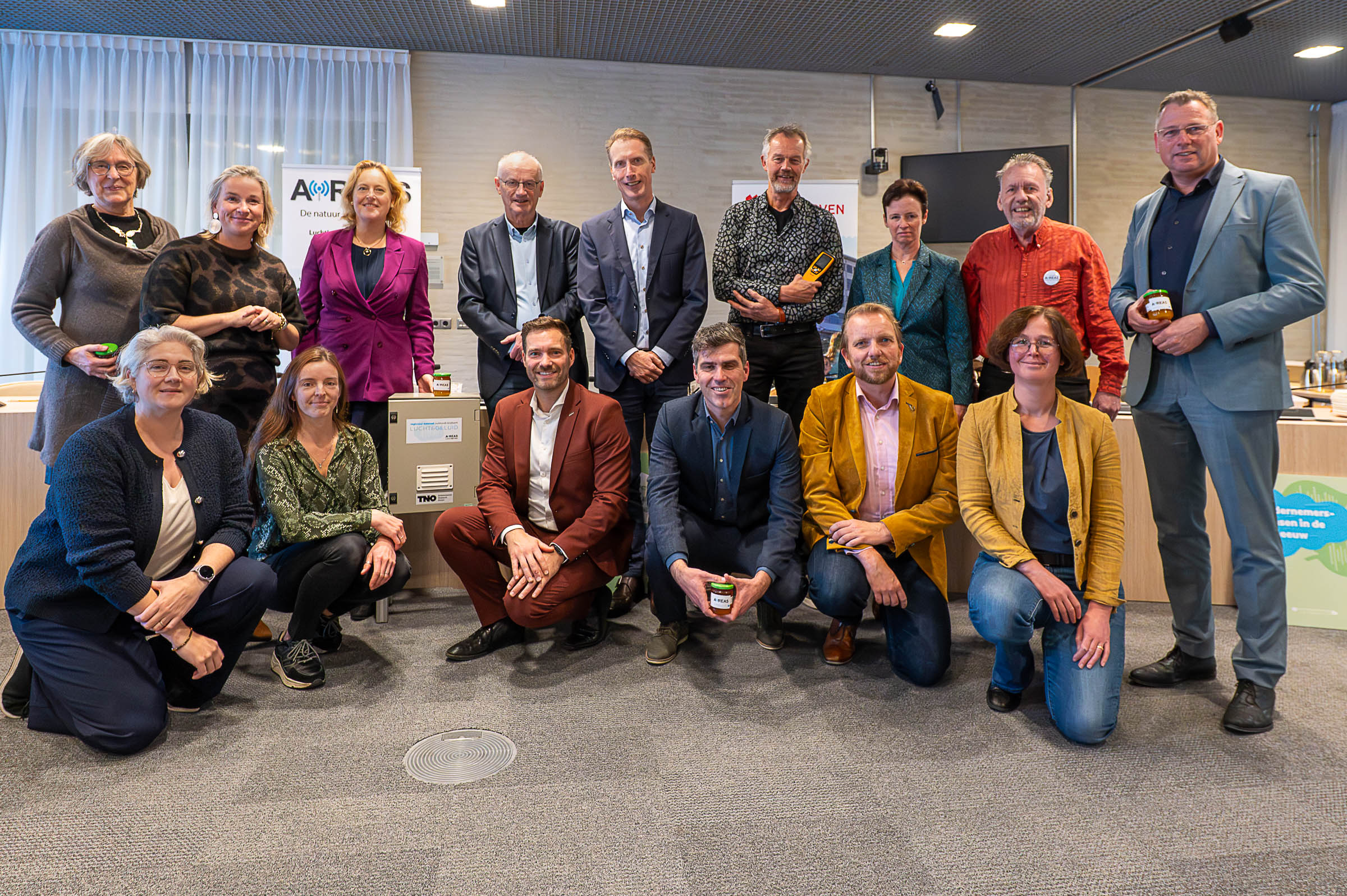
Signing the new Aireas (air quality and health) agreement for healthy regional development and measurement for another five years with the local province, 21 municipalities, environmental services, health authorities, technological and knowledge institutes, citizen groups, etc.
Trying to involve education:
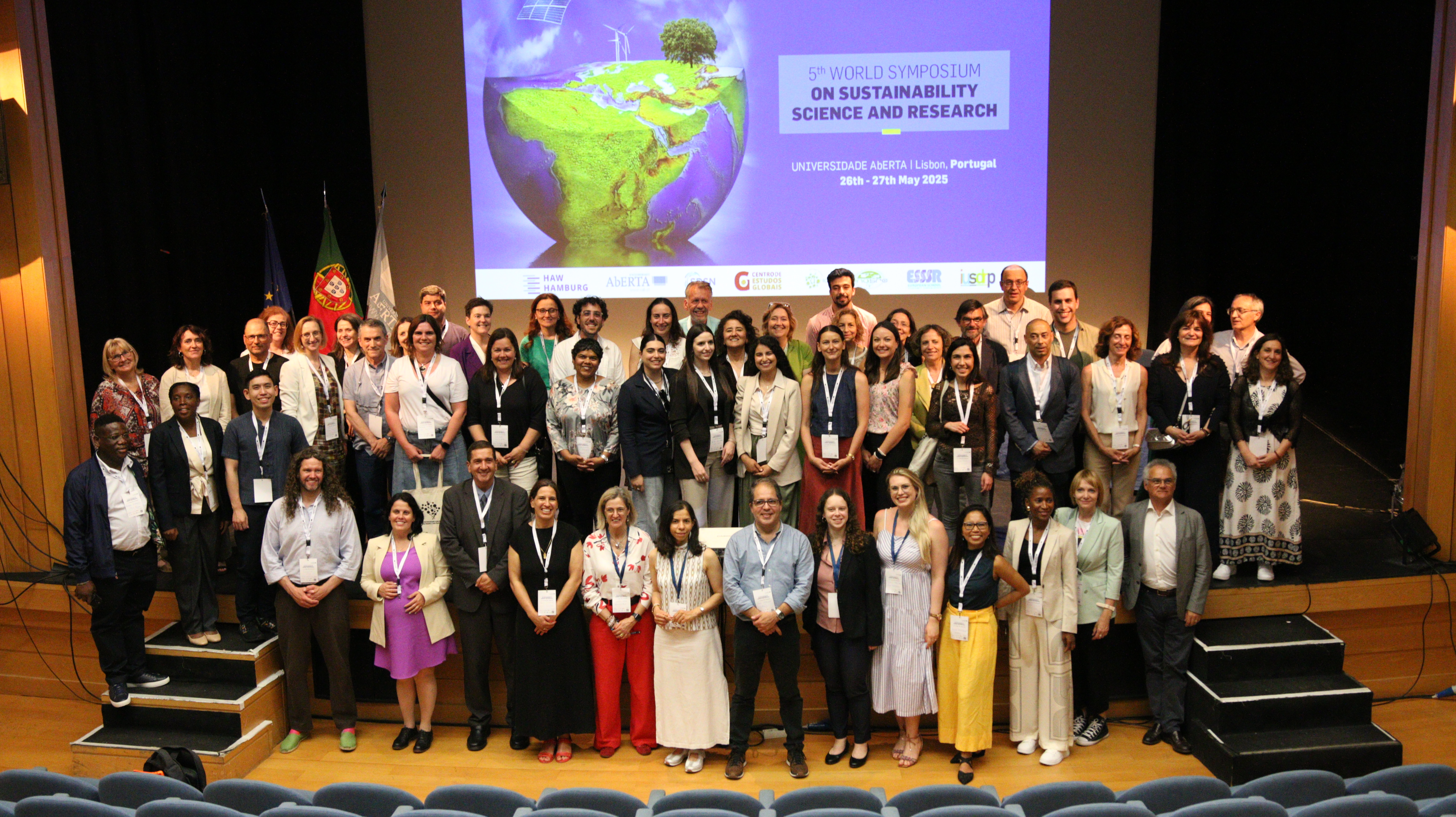
It is not just education that I wanted to engage. I am looking for the younger generations and the possibility to take them on the journey of shared responsibility. I went to Lisbon (Portugal) and Osaka (Japan) to extend the positive invitation to the world of education. Although the formal response was minimal, mainly due to the old positioning of education in the world of job preparation rather than existentialism, there is a tendency noticible, also in this world. The problem is of course that the world of education is not independent. It is managed by the political financial doctrine. “Are we part of the problem?” key note speakers suggested. In 2024 the professor in Budapest already stated that “Education failed the last 50 years”. But this self reflection does not mean self correction if the ones who pay keep determining the deliverables, not common sense or important global issues.
Photo 1: Portugal. Photo 2: Japan. Photo 3: in action


I have been focusing on inviting the world of education rather than establishing a new platform by myself. This to avoid competition while trying to create an evolutionary step together, not just a new method and option. In view of the need to get people to experience Sustainocracy, in order to build confidence and trust, I may have to review my approach, the same way I did in 2010 when addressing society as a whole. Instead of explaining it, I invited everyone to participate by taking responsibility myself.
Community of social entrepreneurship
In 2020 the sustainocratic movement for social engagement and innovation, COS3i, was interrupted by the Covid measures. In 2025 a new impuls was created by creating the Healthy City challenge, the related “explore healthy Eindhoven” site, etc. Gradually a community spirit started to emerge again that will hopefully build up in 2026. The reason to get all these initiatives united is to create a unified platform of interaction, both with society and institutions like government, business and science. If they are not united the nobel initiatives are like lose sand, fragmented, fragile and invisible. Meanwhile the local municipality has announced its own health approach. The COS3i community can complement this very well, if the municipality shows willingness to work together.
After many articles, now planning a book release
In 2025 the scholarly article related to Extential Ethics was published through the Corvenius University of Budapest. It was my third international article through the Euro-SPES academic community, and my 19th international article in general. There have also been two internationally released books on the Aireas cooperative. But there has not been a book yet on Sustainocracy in general. It has been written, summarizing my 30 years of working on the core human values and sustainable human development. Hopefully it gets accepted by the publisher that contacted me.
 Sustainocracy, the new democracy