Home » 5K world (Page 27)
Category Archives: 5K world
Kill the robot
“only individual human beings can take full responsibility for sustainable human progress. Institutions cannot, they are designed to excel in artificially fragmented self interest” J.P. Close (2012)
Every human made institution is a human made instrument to perform a fragmented function in the huge, global network of organized human artificial structures. Think of a political party that represents and defends a particular line of social thinking. Or a business enterprise that develops a line of productivity. A scientific institution focuses on a line of investigation. A school provides some form of education. A local government that develops a geographical region for concentration of economic benefits and residence of people. Etc. etc.
Our society is packed with such instruments that each have been given an artificial identity of their own, a name, a legal right of existence, to act on behalf of a fragmented part of human interests . They are run by people that sustain the institution for the function it has in society for those who support it. They do this either through personal conviction, to become part of a group for the particular purpose it serves (eg. left wing political parties defend the right of the working class with a particular program of human interests. A sports club unites people with the same affinity in sport), a purpose that represents a personal security in an outgrown sense. Or one joins an institution by choice to exercise labor against a (financial) standardized reward.
None of the modern institutions is fed purely by ideology or specific objectives, like the devastating conquering armies of the past. Modern enterprises are all subsidized with financial means through private or public funding in a money driven artificial society. Money is food for robots. Each organization has the objective to sustain itself through human membership or accumulation of financial means for the benefit of their members. The artificial structure is kept in place only through the unique capacity to produce some partial kind of security to its human members. If the system would disappear, the corresponding sense of security would as well.
People who are active inside such institutions get compensated through a standardized artificial reward that was invented to create open interaction between the artificial systems. It is called money, again a human invention to simulate the value of human effort to sustain the institution. Between institutions one deals with money. Robotic institutions deliver life supporting substances and the comfort of luxury to the humans and humans feed them back with money. While humans develop hunger for comfort, robots develop hunger for money.
All human needs have hence been translated into money and are organized in automated processes presented by institutions chained up in lines of interdependence and development of efficiency as well as dynamic economies of robots interacting with each other. We depend on robotic structures for our life’s resources, like food, water, clothing, shelter and securities while we have access to those life’s resources only with money. The power of money linking the biological human life form with the artificial robotics is huge due to the way human have made themselves dependent on the artificial system and therefor on money. Money is only obtained if one helps one or more of such institutions to stay artificially alive either by working in it or by making a debt. We have placed our entire existence in the hand of robots.
In a competitive money driven environment human beings do not seek arguments for human progress, just to sustain any robotic institution and even make it grow. Robots started to live a life of their own, driven by the interests of all the people who depend on it. Inside the artificial structures equally artificial hierarchies of power are developed to structure the way the institution is kept alive, by controlling its supportive community of people that sustain it. The robot leads and the human being is a slave to it. It becomes of vital interest of people to do whatever they can to sustain the robot, not question its existence.
The situation is even more complicated because such robotic institutions rule countries, establish laws over people, create relationships among each other, produce money and start competing. From a human perspective the institutions can be instrumental of a number of human securities, as if it were a huge body guard, providing all kinds of services. We call it democracy if we can vote together how the robot works. It is quite logical that we want the robots to provide us with abundance of everything and if it does we will sustain the robot with great pleasure. We do not have to take responsibility anymore, the robot does and we just have to make sure that it keeps serving our benefits.
Now all countries have their own robots and there are so many different robots serving all kinds of human interests that the robots have started to absorb everything they need to keep fulfilling our demanding needs. Robots do not think, they just perform their tasks as efficiently as possible because that makes it sustain itself through the human reward it receives. The robots provide abundance at the expense of overall environmental destruction in the name of lifestyle.
We see it now happening but our dependence on the robots is so large, our greed so big and our inability to become self sufficient in basic needs so large, that we cannot turn it around anymore. It has been all so common and easy to serve the system, justified by perceived luxury of its rewards. Now it seams too late. Three quarters of the global human population is so extremely vulnerable that the robots need to be kept in place to avoid a humanitarian disaster. But the robots cannot be kept in place because they have damaged the natural cyclic resources needed for organic survival. The consequences can be seen around us in the form of pollution, shortages, etc. Robots are likely to stop functioning and we perceive that as a crisis. Every time a robot malfunctions we feel the securities that it provided disappear instantly. That is what is happening now. Massive amounts of money will not solve the problems.
Since money is the artificial means to have access to the services of the robots one will need more and more of it to receive a share of the ever decreasing functionality of the robots. When money is not available anymore the robots will be asked to fight among each other for the sake of the little remaining resources. Human beings are asked to manage and conduct those fights supporting their own robots at the end of their mechanical life cycle and this will go at the expense of human life again. The peak of comfort that we have achieved by entrusting our lifestyle to robots is likely to be compensated by a deep valley of human suffering due to the blindness to the consequences.
We have grouped ourselves around the robotics of our human organization by centralizing our living environment in cities and working environment in factories and office buildings. Now we find out that these huge concentrations of people become the hot spots of human disaster when the robots fail to serve them and they face the need to take care of themselves, humans serving humans, having to rely on the natural resources that we banned out of our vicinity.
What can we do about it? The first thing to do is wake up and become aware of our own vulnerability when we look at the distance between our current lifestyle and self sufficiency? Secondly we can look at ways on how we can bridge the gap by letting go of dependence and working on self sufficiency by taking personal responsibility. You could even decide to move to the countryside and learn how to provide yourself with your basic needs. You can decide to stay in the city and apply modern technology to your surroundings that helps you become self sufficient in a more complex environment, such as a city center (urban farming is growing in popularity), etc.
But the most important thing you need to do is to stop supporting the robots. Kill the robots by letting go of your dependence on them. Without human support the artificial system die, no war needed. Start believing again in your own human strengths and capabilities, and stop feeding your reliance on some external artificial self-sustaining power structure. Start working together with your fellow people on a self supporting attitude with the resources you have at hand locally. The more you depend on the system the more vulnerable you are to be surprised by the circumstances. Become owner of your own life and act accordingly. You cannot eat or drink money.
You may find that by taking this decision the systems will try to capture you back into the robotics, even with legal means that have been created to support them. It is up to you to fight the system. The robots are now a threat to humankind while humankind is dependent and all those who support or manage them should reflect about the moral justification of their actions.
As soon as you have stepped out of the system and made yourself in charge of your own life a next step will become an option: how to use the robots for humankind’s sustainable progress. But that will only be an option for those who seek no power nor dependence, with humble willingness to become the center of true human sustainable progress. That I will explain in a next blog.
Life is….
Summary
In this blog article I will show that we have made ourselves vulnerable to an evolutionary crisis of our human species by eliminating nature from our daily lives. Especially people living in cities do not stand a chance. The deterioration for us goes so fast that extreme urgent actions are required, especially in the field of bring green life forms abundantly back into our direct surroundings for food, environmental and energetic support. We already suffer the severest consequences and these will reach extreme peaks the coming decades. Key to it all is awareness and then strong action, fast. The good thing about it all is that we (who are left over after it all) come out stronger as a species with a leap in our higher consciousness that will affect the evolution of our species for ever. Chance is that after all that we will not be the most dominant species on Earth anymore but we will not see it as a problem either.
The article
On twitter (@jpclose) a brief discussion developed on the need of a circular economy and the symbiotic values of an energetic society. Now this may be gibberish for most of us but it all started when I suggested that local self-sufficient communities should use the following formula:
Talent + Energy + Purpose = Sustainable Progress + Abundance (Reciprocity)
The “energy” part that I refer to is the labor capacity, motivation and personal contribution of any member of our community. I did not refer directly to the origin of such living energy. But when the word “symbiosis” was used in relation to a “circular economy” I was challenged to put things into perspective, not just for me but also for all those people who were looking at a chain of remarks on twitter within the confinement of 140 characters. Who would make sense?
Symbiosis refers to a relationship between a host and user often also referred to as a parasite. But who or what would be a parasite? Is the human being a parasite of our planet Earth? We would be if we were some alien species that was mining resources away from the planet with the possibility of emptying it. But we have originated (for all I know) on this planet as a species and everything we have done so far (except some minor adventures into space) has been confined to our planet. So we cannot be referred to as a parasite from a material existential point of view. But this is maybe not entirely true. We do use material in a way that it is not circular to its origins. In that sense we would be a parasite, but does it matter? Yes, it does.
Let us look at the definition of “life” in the first place. Life (in a physical body) is built up out of matter (which comes from the planet Earth) and burns up energy to grow and remain alive. So the energetic part is symbiotic because it is used to grow and stay alive and is not given back to its origins. The material composition of a living being is given back in a circular manner to our surroundings when it dies. That material can be reused again, the energy used for life cannot. Not by that species anyway. It does have an importance in the chain of consumable dependencies, as we will see.
That is interesting. So if all life on Earth uses up energy without giving it back where does all this energy come from to keep us going? From the Sun of course.
But the sun throws her energy away anyway and we merely use it to become and stay alive as long as the Sun provides us with energy. This is hardly a symbiosis, it is an interesting usage of the waste of the sun yet we depend on it for life. The Sun is key to our existence from an energetic point of view and the Earth from a material point of view.
Yet we all know that just some sunshine and a heap of material does not come alive just like that. That would be a miracle. Yet at one time it did. Life was injected somehow to make odd combinations of material compositions that had unique living properties: the capacity to reproduce similar shapes and evolve into more complex forms eventually reaching the complexity of the human being. This is an extra-ordinary chain of events that was sparked off with the following formula:
Life = Matter (from Earth) + Energy (from the Sun) + Purpose (the “Why”?)
The energy of the sun is provided to us on a daily basis for at least a few billions years to come which gives us some guarantee of expectation for life to come. About the “purpose” of life we can speculate a lot of course, especially about that one single moment that energy and matter decided to come together with a pre-established and reproducible purpose. Once that had happened “reproduction” became one of the main evolutionary driving forces that eventually started causing the differentiation into different species.
From a mathematical point of view the expansion of matter through the absorption of energy of any source shows fractal patterns. This means that the same shape in phase of expansion reaches a point of collapse and, instead of disappearing, it reproduces itself in the same shape again but smaller. This means that material shapes in particular formats keep the same format by duplicating themselves into replicates. We see this happening in coastal lines, snow flakes, plants, etc. It is a natural process with a great deal of logic from a material point of view but it is not “life” yet, yet it may well be have been the basis for life. The step from fractal expansion (energy + pre-structured matter) to life can be explained by the appearance of a (sub)conscious “purpose” of reproduction.
Here we stand, Human Beings, at the end of this evolutionary line in what we call “today”. We are individually alive by the union of matter and energy and remain alive by feeding ourselves with matter and energy stored around us in nature. We consider ourselves to be the “end of the food chain” and the “most modern version of an extraordinary line of evolution”. From an individual point of view our life is finite because for some reason we die. From an evolutionary point of view we do not die because we reproduce ourselves. So the purpose of our lives is still to remain alive through reproduction.
The human being has evolved with an extra quality added to the formula: Self-consciousness. The consciousness is a condition that made life create forms of matter + energy that reproduce in a conscious, preprogrammed way. This consciousness plotted in earliest genetics is complex and subject to intense studies of science. Yet the human being made it even more complex by enhancing the automation through self-reflection and self-consciousness. We are unique in asking ourselves “why”? Our purpose may still be reproduction but also adds to it the big question why we do this in the first place? So in essence we ask ourselves what life is?
From a simple biological point of life is the capacity to reproduce the same species over and over again. In the diversity of evolutionary patterns this ability has gradually differentiated itself into different species that compete with each other to find enough matter and energy to sustain its diversification. The purpose of reproduction enhanced itself with competition and with competition the quality of adaptiveness was introduced in the genetic coding of the consciousness. Life was getting more and more complex and so was the evolution of the composites in different types of species until we reach the human being today.
The self-conscious reasoning abilities of this species got it to become dominant over other species. Self-consciousness is for that matter a logical consequence of the evolution from a self-preservation point of view through conscious reproduction. It simply enhanced our options in a competitive, highly diverse, living world. It is not strange to assume that over time more and more species will cross the line of self-consciousness and in fact many already did. The competition continues and so does the natural selection through diversification and adaptiveness. So far so good. But now we have reached a point of important reflection. Our species has outgrown itself so much that it has become a competitor to itself. We have reached a point that we do not improve our chances for survival through our consciousness, we diminish it through over-competition and dominance. We are about to reach the end of our own evolution and disappear unless something else happens.
Let us go back to the formula of life: Matter + Energy + Purpose to become aware of the importance of it for our own sustainable progress as a species. What does the formula mean in our practical lives today?
Matter refers to the material building blocks of life. We need matter to grow, survive and reproduce ourselves. If we destroy matter in industrial processes that are not cyclic with our natural environment we gradually destroy our own building blocks of life. It is of key importance to use material for our sake in a reciprocal way with nature. In fact, our surroundings work that way already for billions of years and successfully. We, the human beings, have used materials for the benefit of our tools and wellness but forgot that we need it to survive ourselves. We have reached a point in our global size and lifestyle that this mis-usage of materials is causing stress in our quest for survival. In a circular relationship with our environment we would never pollute our habitat yet we have no circular relationship. We know from other species that over consume or destroy their habitat that they eventually kill themselves. We are in the process of rapidly doing so now.
Energy is needed to keep life together, grow and reproduce. The human being is not capable of producing energy itself so we rely on our surrounding for it. Sunlight is important but the living species surrounding us are even more. They are containers, storage places of sunlight as they transform the light into elements that we can eat and convert back into energy again to sustain our life. So when we destroy our habitat by building cities we in fact take away our natural conversion and storage of solar energy. Living green is important for our survival and we are eliminating it from our lives. People in cities have become totally dependent from energy sources outside the city. This does not just arrive through distribution of fossil energy (which is nothing less than solar energy stored through plants that transformed in a particular confinement where the energy could not escape into the environment) but also through the food distribution and supermarkets. The soil that is used for building dead cities cannot be used for natural energy capturing processes unless we do something about it. The cities tend to overheat causing deceases and behavioral problems among the human beings and lack the natural cyclic ability to sustain life in the cities through capturing and eating of energy. Everyone living in a city has made itself vulnerable from an evolutionary point of view by becoming dependent on energy from outside the city. Current cities hence will never be the basis of sustainable progress, yet will be the source of many humanitarian crises that people in cities will suffer. Placing solar panels in the cities will not help overcome the need we have to feed ourselves with living matter for the sake of the energy contained in it. Urban agriculture is far more important than solar panels.
So while we destroy the habitat of other species we also destroy our source of natural energy for nutrition. We cannot survive with artificial food because we need also the energy contained in the living food that sustains our chain. We have a huge dependency on our environment and need to learn how to sustain a good balance with it. This introduces our next step in our evolution.
Purpose refers first to the micro formats of matter that became alive from a fractal expansion of matter + energy to some early genetic consciousness for the sake of conscious reproduction. The evolutionary pattern not only developed the format of the species into a diversity through competition and natural adaptiveness to new circumstances, it also got “purpose” to evolve. We started with a conscious drive to reproduce and gradually evolved into a state of competitive self-consciousness. Self-consciousness improved the chances of survival for those species that enhanced itself with conscious decisions on life expectations, the creation of tools and dominance over other species which evolved without self-conscience. We increased our chances with self-consciousness as we have seen over time, until we crossed the line of self-destruction.
The next step in the evolution of purpose is self-awareness. Dominance over other species is excellent for improved reproduction of a species but eventually one becomes dominant over itself. There is a point in time that dominance to sustain oneself crosses a line in which dominance needs to be combined with wisdom. We tend to have become so dominant that we cannot sustain ourselves anymore. Purpose hence enhances from competitive self-consciousness to awareness on sustainable progress in which we learn to value matter and energy in a new way for the sake of survival of the species.
Life is important to us and we have now all the understanding we need to sustain ourselves. We simply need to accept the new condition of our evolutionary state: higher awareness, and change our way of organizing ourselves from a competitive way into a adaptive way. This we see happening now around us. All the crises that the human being suffers in material and energetic sense only show us the way to a next evolutionary step in our self-consciousness. Our purpose in life is enhanced by understanding matter and energy for the sake of life itself to sustain our own life. Bringing back nature into our direct local lives is key in this process, redesigning our cities and lifestyles in line with our growing awareness of the need to balance our existence with our universe.
We now know what life is and simply need to learn how to live it to the full, including the next necessary evolutionary step. We need to change to live which brings us back to the newest definition of human progress:
Talent (awareness) + Energy (motivation) + Purpose (our evolution) = Sustainable Progress + Abundance (Reciprocity)
“City of Tomorrow” game
Putting Planet, People, Profit, Passion and Progress into Practice
Recently we played the entrepreneurial “City of Tomorrow” game for the first time. In the STIR foundation we support the idea of integral human development as expressed in the chapters 15 and 16 of my free book last year, not just the rational side of it as our system is educating our children today. As Sir Ken Robinson so beautifully stated in his much applauded TED talk “the current education systems kill creativity” and Mitra shows in his “hole in the wall“, children have a much higher self-learning ability than our schools appreciate or even stimulate. Yet despite the famous anthropological and anthroposophical views and knowledge on the development of the human consciousness through spiritual, emotional, physical and rational experiences, the system remains the system, locked up in bureaucracy and self supporting prejudice.
We see that current educational formats serve a paradigm in which politicians see the human being as a little robot in the machinery of money driven/dependent economies of growth. Such robots need to learn how to behave like robots within a system, brainwashed about the importance of money, a job, debt, fashion, consumerism, the state, their dependence on the system, etc. The learn to calculate and write a letter but nothing about the importance of social relationships, feelings, spirituality, sustainability or responsibilities.
The paradigm that we support is totally opposite which is why both are difficult to match. The way a complex human society is structured in either paradigm differs enormously which is why the current educational system will sooner see our propositions as a threat to them rather than an opportunity. It is even worse than that. The current education system has no identity of its own because it is chained in dependence to the money which allows it to exist. This comes from central government which dictates the normatives that the schools need to comply with. So the education system has hardly any opinion of its own, just a hierarchy controlling that what is done is done according to the guidelines that allow them to stay alive financially. They are themselves expensive robots in a system.
So we are not seen as a threat to the educational content (who cares?) but for their financial continuation. That is why the system remains closed to all influences from outside, even common sense.
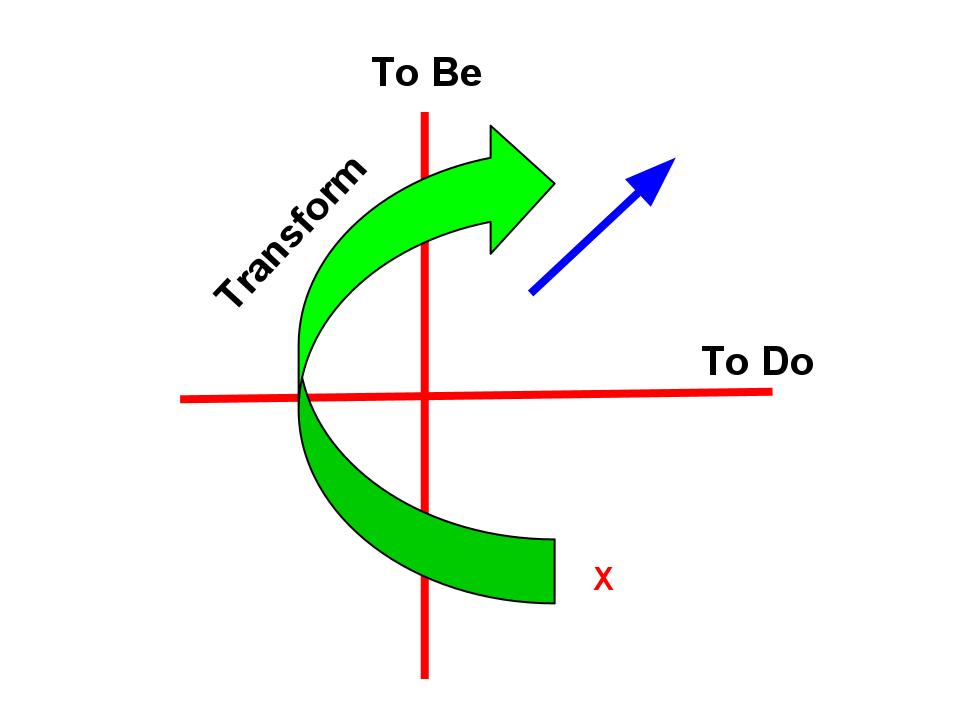
Transforming from one complexity to another
If we cannot change the system we can in fact stand next to it. We should never forget that even the most locked up human organization consists of people. And individually people do become aware of the need of a new society and other ways of education. Some, not all, are willing to use this personal awareness and influences to take action within the structures in which they are employed. They become the internal transformative hero’s that link already with change and seek internal opportunities that make a difference.
We positioned our initiatives on human awareness right at the place where the young adults would leave school to start their life in the real world. Our program is called “entrepreneur of your own life“, linking the increasing requirement of entrepreneurship in the old money driven economies with the self-leadership and sense of responsibility in the value driven society that we are trying to develop. We asked the high schools to allow us to give their students a view into real life with a bit of our counselling. It is also in the interest of the school to pay attention to this even though they find it difficult to let the real world enter their world. When we propose to provide a low cost bridge through our game they become enthusiastic.
We had done one of such days already before in a multicultural setting trying to show the tremendous opportunities of cultural diversity in a community if you choose to make the best of it together. It had been a great day . Now we were facing a highly technical setting with 500 students in two groups.
One of the coaches, Jules Ruis, suggested to make the day into an adventure and the students into hero’s. Overnight he developed a simple game but with great educational value. It was based on economics but could easily and secretly be changed into buddinomics by me.
The ingredients of the game are:
- a large bunch of students 17+ years old
- technological innovation companies that show their innovations
- coaches that carry specific information
- a bunch of camera’s
- a value system in exchangeable cards
We played that day with about 200 students that started without knowing much more than that they would have to collect information at the stands of the enterprises and the coaches that walked around as wild cards. They had been teamed up with people from different years, whom they did not know personally, and the elderly student was made team leader.
They had to assemble the team, work together towards the end of the day, trying to figure out what they had to do to win? During the evolution of the day and every encounter with a coach the complexity of the game would rise, requiring the teams to perform and place the product exhibitions and information into new perspectives.
Watch the filmbook (in Dutch) of the day here
The end of the day was spectacular from an awareness point of view. It was amazing for us to see how self-leadership and adaptability got these youngsters on their way and how fast they managed to adjust their views with new input. At the end of the day they were allowed to present their views in public and with cameras present. For the highest years present the presentations were key because they were invited to continue the game for another year. Their prices:
- a job
- a scholarship
- a starting capital for a new business
The effects of the game had not just affected the students. The high school had become so motivated that it started to open up for reorganization and further partnership with the foundation and others. The game will be played now at least twice a year and every year again with all the students. While we do so we are going to step up the challenge every time inviting the students to deal with real life complex problems within the simulation of the reality of the game.
The business enterprises also started to readjust their activities and organization inspired by the game. Most found each other during the game to partner up in purpose driven ventures. They also committed to further invest in the initiatives led by the foundation and based on local for local cooperatives between government, technical innovations, education and science, social innovation.
And even the local government representatives were so enthusiastic that they proposed to open up their structures for more student involvement and participation. At the end all participants will become partner and judge of the final game of all students: defining their own city of tomorrow, based on their own home town and for which they can take responsibility themselves with what they have learned at school and are triggered to learn by placing their knowledge into their daily reality, simulated in complexity by the game.
The entire process is sponsored by the partners to maintain our independence and avoid any client/supplier relationship or chain dependencies. This way the game can be purpose driven in which the virtual reality transforms into reality.
Expanding our ambitions:
On 12.12.12 we now wish to play the game for 4 consecutive days in Eindhoven (The Netherlands) with students from all over Europe. The game will then be called “Europe of Tomorrow” giving already away what the main topic of the event will be. The game will be combined with an international congress on sustainable progress. It will again be great fun to see how our young adults will react to the modern reality and eventually change the world through their own new levels of consciousness and adaptability.
 Sustainocracy, the new democracy