Home » multidimensional world (Page 141)
Category Archives: multidimensional world
“City of Tomorrow” game
Putting Planet, People, Profit, Passion and Progress into Practice
Recently we played the entrepreneurial “City of Tomorrow” game for the first time. In the STIR foundation we support the idea of integral human development as expressed in the chapters 15 and 16 of my free book last year, not just the rational side of it as our system is educating our children today. As Sir Ken Robinson so beautifully stated in his much applauded TED talk “the current education systems kill creativity” and Mitra shows in his “hole in the wall“, children have a much higher self-learning ability than our schools appreciate or even stimulate. Yet despite the famous anthropological and anthroposophical views and knowledge on the development of the human consciousness through spiritual, emotional, physical and rational experiences, the system remains the system, locked up in bureaucracy and self supporting prejudice.
We see that current educational formats serve a paradigm in which politicians see the human being as a little robot in the machinery of money driven/dependent economies of growth. Such robots need to learn how to behave like robots within a system, brainwashed about the importance of money, a job, debt, fashion, consumerism, the state, their dependence on the system, etc. The learn to calculate and write a letter but nothing about the importance of social relationships, feelings, spirituality, sustainability or responsibilities.
The paradigm that we support is totally opposite which is why both are difficult to match. The way a complex human society is structured in either paradigm differs enormously which is why the current educational system will sooner see our propositions as a threat to them rather than an opportunity. It is even worse than that. The current education system has no identity of its own because it is chained in dependence to the money which allows it to exist. This comes from central government which dictates the normatives that the schools need to comply with. So the education system has hardly any opinion of its own, just a hierarchy controlling that what is done is done according to the guidelines that allow them to stay alive financially. They are themselves expensive robots in a system.
So we are not seen as a threat to the educational content (who cares?) but for their financial continuation. That is why the system remains closed to all influences from outside, even common sense.
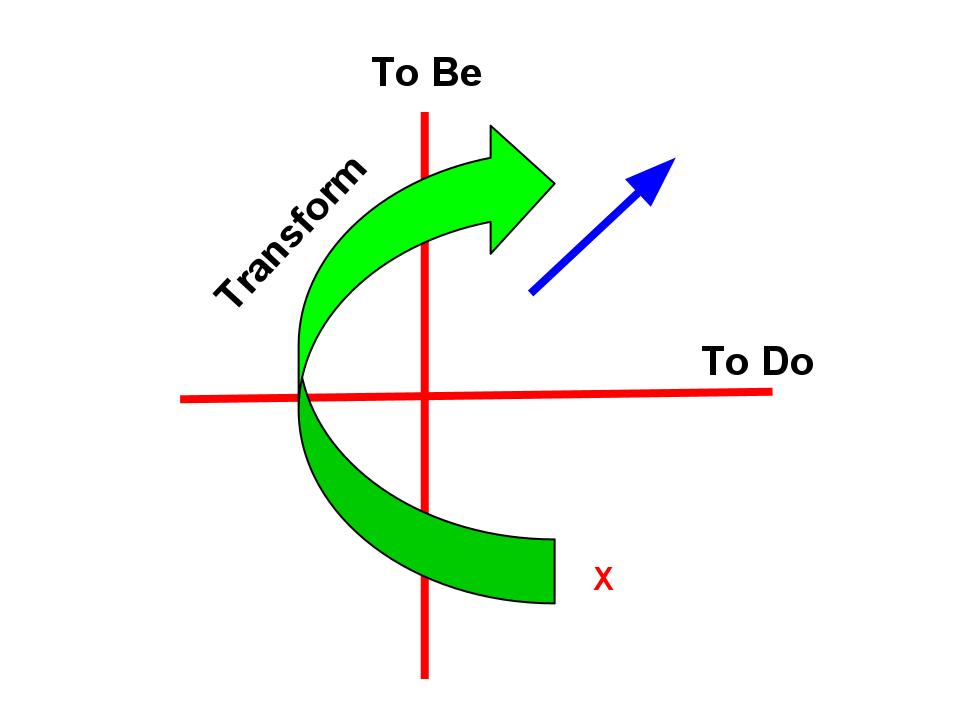
Transforming from one complexity to another
If we cannot change the system we can in fact stand next to it. We should never forget that even the most locked up human organization consists of people. And individually people do become aware of the need of a new society and other ways of education. Some, not all, are willing to use this personal awareness and influences to take action within the structures in which they are employed. They become the internal transformative hero’s that link already with change and seek internal opportunities that make a difference.
We positioned our initiatives on human awareness right at the place where the young adults would leave school to start their life in the real world. Our program is called “entrepreneur of your own life“, linking the increasing requirement of entrepreneurship in the old money driven economies with the self-leadership and sense of responsibility in the value driven society that we are trying to develop. We asked the high schools to allow us to give their students a view into real life with a bit of our counselling. It is also in the interest of the school to pay attention to this even though they find it difficult to let the real world enter their world. When we propose to provide a low cost bridge through our game they become enthusiastic.
We had done one of such days already before in a multicultural setting trying to show the tremendous opportunities of cultural diversity in a community if you choose to make the best of it together. It had been a great day . Now we were facing a highly technical setting with 500 students in two groups.
One of the coaches, Jules Ruis, suggested to make the day into an adventure and the students into hero’s. Overnight he developed a simple game but with great educational value. It was based on economics but could easily and secretly be changed into buddinomics by me.
The ingredients of the game are:
- a large bunch of students 17+ years old
- technological innovation companies that show their innovations
- coaches that carry specific information
- a bunch of camera’s
- a value system in exchangeable cards
We played that day with about 200 students that started without knowing much more than that they would have to collect information at the stands of the enterprises and the coaches that walked around as wild cards. They had been teamed up with people from different years, whom they did not know personally, and the elderly student was made team leader.
They had to assemble the team, work together towards the end of the day, trying to figure out what they had to do to win? During the evolution of the day and every encounter with a coach the complexity of the game would rise, requiring the teams to perform and place the product exhibitions and information into new perspectives.
Watch the filmbook (in Dutch) of the day here
The end of the day was spectacular from an awareness point of view. It was amazing for us to see how self-leadership and adaptability got these youngsters on their way and how fast they managed to adjust their views with new input. At the end of the day they were allowed to present their views in public and with cameras present. For the highest years present the presentations were key because they were invited to continue the game for another year. Their prices:
- a job
- a scholarship
- a starting capital for a new business
The effects of the game had not just affected the students. The high school had become so motivated that it started to open up for reorganization and further partnership with the foundation and others. The game will be played now at least twice a year and every year again with all the students. While we do so we are going to step up the challenge every time inviting the students to deal with real life complex problems within the simulation of the reality of the game.
The business enterprises also started to readjust their activities and organization inspired by the game. Most found each other during the game to partner up in purpose driven ventures. They also committed to further invest in the initiatives led by the foundation and based on local for local cooperatives between government, technical innovations, education and science, social innovation.
And even the local government representatives were so enthusiastic that they proposed to open up their structures for more student involvement and participation. At the end all participants will become partner and judge of the final game of all students: defining their own city of tomorrow, based on their own home town and for which they can take responsibility themselves with what they have learned at school and are triggered to learn by placing their knowledge into their daily reality, simulated in complexity by the game.
The entire process is sponsored by the partners to maintain our independence and avoid any client/supplier relationship or chain dependencies. This way the game can be purpose driven in which the virtual reality transforms into reality.
Expanding our ambitions:
On 12.12.12 we now wish to play the game for 4 consecutive days in Eindhoven (The Netherlands) with students from all over Europe. The game will then be called “Europe of Tomorrow” giving already away what the main topic of the event will be. The game will be combined with an international congress on sustainable progress. It will again be great fun to see how our young adults will react to the modern reality and eventually change the world through their own new levels of consciousness and adaptability.
The day after economics
Economics is out. We cannot keep progress or wellness away from people who cannot afford it. We cannot morally play with lives of millions or billions of people to fill the pockets of a few deadly soles. The era that this was tolerated is ending fast. We are entering a new era of wealth, the one that is not based on economics but on something else. I have called it Sustainocracy, just to give it a reference to talk about. What is the difference?
Modern economics is “the financial science to deal with shortages”. It has to do with money that is spend to purchase material goods, valued against the degree of desire and scarcity of the object. Entire nationwide economies are based on this system that places the availability of resources in the hands of people who make it available only to the highest bidder. Maintaining shortages raises the economic perspectives and it has become a game to deal with this in a globalized world for the benefit of those who can control certain material elements. We see this in commodities, housing, energy, food, loans, etc. This automatically means that people need money to gain access to wealth. Money is only made available to those who have work and work is only valued with money if it fits in the robotics of the system. In an other blog I already asked why the care taking activities of a housewife with small children was not valued in a money system while the labeling of packages in a logistics process is. Is the one more valuable then the other? Of course not, but the system determines what gets paid and what not. This regulated choice creates a society and the morality in it. The woman with small children gets no money and has not right to access wealth and the factory worker does. It is a choice and this choice needs to be turned around because it does not suit the general purpose anymore of sustainable progress. On the contrary. Extremely talented people necessary in all kinds of human needs are forced to work in the system on positions that contribute to problems simply because the system is organized that way.
And if you have no job you are obliged to get a debt in order to maintain a degree of wealth or wishes to survive, no matter what talent one has. Some do not even have access to the debt system and perish, supported by this inhumane system.
Dead end
The system of economies that are based on speculation around shortages are making our lives unsustainable, expensive and unstable. These systems collapse and receive a growing opposition of the general public that is willing to rise against those who block abundance to the masses. We simply have to recognize that economics has reached a dead end. Economies of growth only mean that they expand further the disaster just to finance the unbalanced debts of the past. The debts of countries rise simply because they produce only costs and no value anymore, despite the massive amount of talented people they contain.
There is a desperate need to deblock these human talents and make them work together on sustainable progress. That is what I call “the day after economics”. What is this other option?
Sustainocracy
We need to recognize that our resources on Earth are finite, but our talents grow in abundance. The more finite the material resources (food, water, oil, etc) are the more valuable they would become for all people if we want to sustain a minimum of living standard or even survival. We cannot sustain a financial system that speculates on the availability of resources in scarcity. It becomes a source of blackmail, not just over the pockets of the people but also playing with their lives. Capitalist economics are likely to become the genocide of the 21st century where certain people are willingly, for their own benefit, to keep life supporting and saving resources away from the public by pure financial speculation, causing death, war and disaster. We have already seen the consequences of this in commodities like grain, wheat, water, oil, etc. and the effects on global stability.
Sustainocracy therefor represents the “science of talented abundance through cocreation”. This meand that human scientific knowledge, productivity and progress is owned by the species and not members thereof. Human talent is value of humankind and should not be dealt with in confinement of scarcity but in abundance for progress. This means that every invention, every insight should reach all members of the species not just a selected few.
In Sustainocracy only one continuous goal is important for all members of a community: sustainable human progress, according to the definition described in a previous blog:
“continuously working together on a healthy, vital, safe and dynamic human society within the ever changing context of our natural local environment”.
This statement allows no political debate or speculation since the goal is for all members of the global community. Everyone can take responsibility for this sustainable progress by contributing with one’s own competences, talents and energy. All elements of such society are measurable, feeding in open reflection the interaction of people in the community. Application of knowledge and personal energy is key to address the changes provoked by any change that is being made. It gives a common purpose to a society.
Sustainocracy is Talent + Energy + Purpose = Sustainable Progress
The community based on sustainocracy does not necessarily need money to produce progress. Resources are used but only become valuable when introduced in the result driven processes. The results are delivered to the benefit of everyone in the community. There is no need to speculate with scarcity of resources since the community will become creative, using the local means that it has available to it. Communities become cohesive in human interaction on a local for local basis trying to avoid dependence on other communities. If such relationships are needed to exchange material resources then reciprocity is organised in exchange of talents. Payment in times of needs are not done in money but in talent which will help communities to deploy automatically the human and material resources needed to assure community progress and intercommunity relationship, even if particular communities have scarcity of resources but abundance in talents.
Money could be used to value the individual contributions to progress making the variables of “talent” (competences, knowledge and creativity) and “energy” (motivation, teamwork, involvement, etc) instruments of value that can receive recognition on individual level and maybe some sort of adhered status. The level of value can be determined by the community in a democratic process.
In all cases the local for local communities would become small local pearls of self sufficient centers in which sustainable progress would be carried by all members of the community. A woman who gives birth would as important as a man who helps to build a house. Community choices would be prioritized according the level of sustainable progress everyone desires, lead by the circumstances, not greed.
Sustainocracy represents peace and progress, a modern new way to step up the human evolution using our accumulated abilities and levels of awareness for the benefit of all, starting with the future perspectives of our children and the way we educate them today on how to take responsibility using talent and energy.
Sustainocracy has become the system to value talent and reciprocity in Sustainocratic processes)
-Belief- is essential for progress
Why don’t politicians support the transformation of society? Why do banks not change their bonus culture? Why do people go to church when they encounter a crisis?
When I try to get overall scientific, business, political or financial support for the transformation of human society into a state of sustainable progress (referred to as the Global Shift) I do not get it. Why? All the crises in the Western world seem to cry out for change yet people only focus to get more of the same. New economies develop based on those that are now in crisis hence knowingly develop their own problems. Why? Why are all these human structures so reluctant to change and destined to repeat their mistakes over and over again? Because all these institutions are not based on “belief”.
It is necessary to be a believer to open up for new realities and hence accept and even conduct progress through the acceptance of change. To understand what I am saying we need to first define “belief”. According Wikipedia belief is:
“Belief is the psychological state in which an individual holds a proposition or premise to be true.”
This definition refers to a “psychological state”, not a proven truth, hence it is subjective to the individual. What do you believe that is true? Proven truth or suspected truth? We tend to accept only what is touchable or commonly accepted as truth. A believer tends to visualize a truth that does not exist yet in the physical or proven world. All our current human surroundings are organized in complex human structures, institutions. These are known, hence true. Anything else, that is not yet included in the human organizational structures is hence unknown and does therefor not exist.
Or it exists when you believe it exists, or could get to exist. True believers open up to things that do not exist yet in our regular life. Everyone who has a hired position inside an institution can only sustain what is known and stops believing. If one would believe he/she would probably question what is served. The only option such people, even so called world leaders, have is to keep in place what has been organized, because it is known. Even when it is in crisis. If they are visionary and see the problems they cause by keeping up the unsustainable they would have to step out of the system to change it. But then they loose their position of power.
From an operational point of view this is logical simply because every human institution is a structure with a particular purpose. It would only change if the purpose of the structure would change or when it goes broke. If those institutions are as significance as a political organization, a financial system of power or a business monopoly, everything will be done to avoid its collapse, not by changing it but by maintaining it, no matter what.
One could expect that common sense would prevail when we see the suffering of so many people caused by this lack of flexibility. But common sense is only based on the same knowledge that is commonly accepted as truth, hence within the same dynamics as where the problems occur.
Science does not help
If we look at the definition of belief why would science then not be a believer? Doesn’t science believe in its own studies to obtain progress in knowledge? Of course it does and that is also the essence of the difference. Science is a non-believer because it looks for proof through commonly, already accepted knowledge. Science does not want to “belief”, it wants to “know”. This interesting paradox of science is that it is continuously searching for knowledge so needs to accept belief to understand that it still has a long way to go to accumulate all knowledge. We still do not know everything. This automatically means that science needs to accept that new knowledge can dispute any old knowledge. We can therefore know for sure that all knowledge is only believed to be true until is proven not to. A crisis is not enough to prove something wrong. Only something different would prove something else to be more truthful. The problem we face is that science does not easily accept this scientific belief. It claims the truth by accepting proof and then holds on to it. If you do so you block yourself from the possibility that what was proven true can also be proven untrue in time. So science accepts the state of belief to motivate the search for knowledge through guided research but does not accept belief to question knowledge that has been accepted as truthful. Science therefor tends to try to prove the known and tends to avoid the unknown. In the process of providing proof to the known we stumble across new knowledge to be proven. Science seems only to advance by further analyzing the known. It is fixed to a particular track. This means that in essence science is not a believer, just a proof provider to perceived knowledge.
So for change we cannot rely on science and hence find that universities only teach science but not belief or the potential of change. They can’t, even if intellectuals inside the university suspect new tracks of knowledge they find difficulties in their institutions to support deviation to the unknown. Universities depend on the resources provided by the structures that do not belief and hence serve the known, not the unknown. Only a very small part of research funds are invested in finding new realities and these even need to be covered up by arguments that the common structures can understand and support.
The world of statistics
Business and politics do not even worry about belief. They reason from the influence of the masses of people either by exerting power on them or by offering external securities in the shape of goods. There is only one certainty and that is the one of proven support in the shape of votes. In essence any purchase is a commercial vote too. From that point of view all of the world of politics and business is measurable and conducted through statistics rather than belief. The statistics are translated into a standardized system of values, often called money. Financial systems manage money and hence manage statistics, nothing else. By speculating with shortages the statistics move and become measurable instruments of economies that live eventually a virtual life on its own without considering the human being or our natural universe itself. In fact, the way statistics move through artificial intervention of politicians and business people have created a simulated reality that interacts with our true reality and is even perceived to be real through the importance we give to money and material valuable. But it is all fake, even the poverty we see around us is fake simply because the statistics of our robotized systems do not allow people to create a new, self sufficient reality.
Belief means acceptance of change
None of the above provides any true progress because it is all based on commonly accepted truth and knowledge, but no belief in alternatives, simply because they do exist yet. That is why the quantum leap of human evolution will surprise us as it comes. When it happens it will extensively be studied by scientists and even open up new channels of knowledge development, just like financial analysts now know why the credit crisis occurred but back then never saw it coming.
Becoming a believer
People in a state of crisis experience the lack of support of the commonly accepted truth of the obsolete systems but cannot embrace change yet because it does not exist yet. They experience a crisis because securities are falling apart and are not replaced by new ones. They are challenged to think for themselves and accept change by stepping out of the structures in crisis and start deciding for themselves. Since this is extremely difficult for individuals who have taken the old truth for granted they tend to go to church and ask for a miracle. In reality people ask the universe to react by creating a renewal of the universal truth. They ask God but in fact they ask themselves to accept change. We are so used to external securities that we have learned to distrust our selves. People in search for spirituality are opening up for renewal of their faith in humankind and especially in themselves. They experience suddenly the warmth of friendship and social support, self leadership and significance. They become believers, not just in God, but especially in themselves.
I can describe the Global Shift, the transformation of humankind, and find opposition from all common human structures. If it does not exist it is not true. People fight collapse of existing systems simply because they do not have “belief” in letting go. The old systems are known, scientifically analysed and hence true. The new systems are in the world of beliefs without and proof of truth and hence without any guarantee for security. That is also why true progress is made by people who are only considered a genius when reality changes, proving them right in hindsight. Meanwhile they are always seen as a risk to the established truth and crazy, weird or clowns, despised by the systems and laughed at by the masses.
But only believers are truly progressive. They are prepared to see the invisible, to accept that truth is relative to our common acceptance but not at all reliable. Believers accept that other realities exist and set out to find them. They accept to be despised by the masses and ridiculed by the knowledgeable realizing that all those who react that way are locked up in their own prison of disbelief and a reality conditioned by their own limitations.
Even religious believers tend to create dogma’s around the unknown to enable to speak in name of God by creating limitations proper to the human world of “knowledge” rather than abundance of the miracle of the Universe and our adventure as a true believer in progress. If we belief in God we should accept the unknown as our evolutionary challenge to progress and science as simplified form of registering perceived truths until they prove wrong or reconfirmed. We are getting to a point that sustainable progress does not accept anymore virtual statistics as a reality nor scientific proof as absolute truth of knowledge.
Soon we enter an era (the quantum leap) where we accept the unknown as the only constant for our progress. The amount of crisis of the world of knowledge and statistics will be so big that the world will turn around believers who show a new reality, the reality of a humankind based on spirituality, on the belief in our evolutionary quest and eternity. Science will not be proof anymore of knowledge but a reflection of our progress by accepting the stepping up of our adventure by challenging knowledge against the unknown.
When we do that business, finance and politics will cease to exist because they will not be necessary anymore as fragmented human institutions. They will transform into key area of responsibility and related competences that interact to provide sustainable progress by addressing the unknown on a continuous basis. When that has happened we will refer to this a the quantum leap and even give it a scientific understanding leaving it in out past as a significant moment in time when humankind opened up to its own universal destiny.
Sustainable progress is hence assured by believers.

