Home » Society (Page 18)
Category Archives: Society

Under what circumstance can Sustainocracy develop as a viable alternative to our current governance models?
Asking the famous Artificial Intelligence Chat platform:
ChatGPT:
Sustainocracy is an alternative governance model that prioritizes the well-being of people and the planet, emphasizing sustainable development and the co-creation of a harmonious society. While its adoption and viability depend on various factors, there are certain circumstances under which Sustainocracy can develop as a viable alternative to our current governance models:
- Recognition of the limitations of existing models: When the shortcomings of traditional governance models become apparent, such as their focus on short-term economic growth without adequately addressing social and environmental concerns, there may be a willingness to explore alternative approaches like Sustainocracy.
- Growing awareness of sustainability and well-being: As societies become more conscious of the need for sustainable practices and the well-being of citizens, there is an increased demand for governance models that align with these values. Sustainocracy’s focus on sustainable development and the balance between economic, social, and ecological aspects can appeal to those seeking a more holistic approach to governance.
- Collaborative decision-making and citizen empowerment: Sustainocracy emphasizes citizen participation and co-creation, involving various stakeholders in decision-making processes. When people feel disengaged or excluded from traditional governance structures, the participatory nature of Sustainocracy can be seen as a more inclusive and democratic alternative.
- Localized initiatives and experimentation: Sustainocracy thrives in localized contexts where communities and regions come together to address their specific challenges. When local communities face pressing issues that require innovative and tailored solutions, Sustainocracy’s emphasis on local initiatives, collaboration, and adaptation can provide a suitable framework for governance.
- Leadership and political will: The adoption of alternative governance models like Sustainocracy often depends on visionary leaders and political will. When political leaders recognize the potential benefits of Sustainocracy and are willing to champion its principles and values, it becomes more likely to gain traction as a viable alternative.
It’s important to note that the transition to Sustainocracy is not a straightforward process, and its success depends on a complex interplay of social, economic, cultural, and political factors. However, under the right circumstances, Sustainocracy can emerge as a viable alternative that addresses the shortcomings of traditional governance models and promotes sustainable development and well-being.
Chat GPT, what challenges does Sustainocracy meet in the Dutch and global societies?
Playing with this incredibly powerful OpenAI (Open Artificial Intelligence) gives intelligent answers that are spot on. Just read what it responded to the question in the titel.
What challenges does Sustainocracy meet in our current Dutch and global societies?ChatGPT
Sustainocracy, as a concept and approach to governance, faces several challenges in both Dutch and global societies. While it aims to promote sustainable development and prioritize the well-being of people and the planet, its implementation can be hindered by various factors. Here are some challenges that Sustainocracy may encounter:
- Paradigm shift: Sustainocracy requires a fundamental shift in thinking and decision-making processes. It challenges the prevailing paradigm that prioritizes economic growth and short-term gains over long-term sustainability and societal well-being. Overcoming this resistance and fostering a shift in values and mindset can be a significant challenge.
- Political and economic interests: Sustainocracy may face opposition from powerful interest groups, including those with vested interests in maintaining the status quo. Political and economic pressures to prioritize immediate gains and favor certain industries or sectors can hinder the implementation of sustainable policies and practices.
- Complexity and interdependencies: Achieving sustainability requires addressing complex and interconnected issues such as climate change, resource depletion, social inequality, and environmental degradation. Sustainocracy needs to navigate these interdependencies, balancing multiple stakeholder interests and finding integrated solutions, which can be challenging in practice.
- Collaboration and participation: Sustainocracy relies on collaboration and active participation from various stakeholders, including governments, businesses, civil society, and citizens. Building effective partnerships, fostering trust, and ensuring meaningful participation from diverse groups can be demanding, as conflicting interests and power dynamics may arise.
- Education and awareness: Promoting sustainability requires raising awareness and educating individuals about the importance of sustainable practices. This includes providing information about the impacts of personal choices, consumption patterns, and the need for behavioral changes. Overcoming apathy, resistance to change, and promoting widespread understanding can pose challenges.
- Implementation and scalability: While Sustainocracy may be successful at a local or small-scale level, scaling up and replicating its principles and practices can be challenging. Adapting the approach to different contexts, integrating it into existing governance structures, and securing necessary resources and support for implementation can be hurdles.
- Global cooperation: Many sustainability challenges transcend national boundaries, requiring global cooperation and coordinated efforts. Sustainocracy may face challenges in fostering international collaboration, navigating geopolitical tensions, and aligning diverse national interests towards common sustainability goals.
Addressing these challenges requires a combination of visionary leadership, inclusive decision-making processes, effective communication strategies, and fostering a culture of sustainability. It also necessitates the integration of sustainability considerations into policies, regulations, and economic systems, while engaging and empowering individuals and communities to actively participate in the transition towards a more sustainable future.

How is this possible? Research question…
The “Out of Body Experience“, or OBE, is one of the most mind boggling research questions. Awarded filmmaker Veysi Yildirim starts a crowdfunding action (27.000 euros needed) to make a science and empirically based documentary about this phenomenon.
(Image in blogtitle: www.in5d.com)
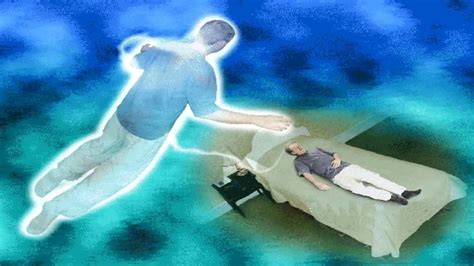
Over 30 stories were collected on video of people that experienced or witnessed such inexplicable events. For science these experiences need to fulfill a series of criteria in order to be understood.
- Verifiable. In case of the experiences lived by people it is of course difficult to verify their stories. They experience a physical death situation for a certain period of time. Often this time is enough to declare them diseased by doctors. To everyone´s surprise the corpse comes back to live without any residues of this death experience. The person tells then a story of leaving the physical body and being able to observe and remember the environment, including the conversations and presence of people, even in adjacent rooms. People can even travel through these walls. Verification comes from the incredible testimonials of people in those stories that have been observed, listened to, smelled, etc. They are often flabbergasted about the testimonial. And these people are often highly educated people such as the medical staff present.
- Scientifically it does not seem possible to observe and memorize events without the presence of a living body that carries the sensoring properties, the neurotransmitters and brains for the interpretation and memorization of that what has been observed. How is this possible without the presence of a body?
- Reproducible. Some people are known to have the ability to do the OBE voluntarily. Other people do it with the help of substances. So to some extend it is reproducible and this is necessary to be able to study the phenomenon and maybe come to an understanding of it.
- Explicable. And here comes the issue. We cannot explain it. There is enough proof about its existence and even part of its working. But we cannot explain it. In our current understanding of our sensory capabilities we need a physical living basis, a body, equipped with the right sensory facilities in order to be able to hear, see, smell, observe consciously, interpret and memorize our observations. The body may be there, but it is at a distance and without the functional signs of being alive. Maybe it is, in a dormant (dream), hallucinatory or unknown state, but this does not explain its capacity to observe at a distance even across rooms.
In addition, people who experience such happening tend to come back to “normal” life with their conscience altered. They look at reality in a different way, with a deeper trust in life, no fear for death, and relieved of their sense of materialism. So, even if we manage to clarify scientifically the mechanics of OBE, this change of awareness and conscience is much more difficult to explain. It seems that we need to accept that there is an energetic life form or experience connected to our physical body, a spirit, that has it own energetic resonance. A resonance that has to do with the way we sense and interpret reality and that this sensing can be altered. Many people experience such sudden altering of their conscience in their lives due to intense experiences but without OBE. But this was never associated to the idea of a spirit as an integrated entity into one’s existence.
So proof and understanding of such spirit has major implications on the way we understand life as whole. It would open up a totally new field of research around the relationship between such spirit and the physical body, the properties of such spirit in time and space, its impact on our behavior, etc.
So far the element of the existence of a spirit has been confined to the world of religious and paranormal beliefs. Bringing it into our scientific reality would have also implications on the way we look at the complexity of life in general and of us as self conscious human beings specifically. Questions arise if such spiritual dimensions are generalized for all living beings, subject to evolution or that it has its own rules? Also interesting is the development of our understanding how this dimension works if it exists without the support of physical bodies. Or does it make use of a broader spectrum of the physical living reality? If so, what would be the relationship, how is it orchestrated as a bigger possible entity to which we are all related?
All this right now is speculation, open questions without concrete answers. The multidimensional options of life have found little scientific support despite some curious riddles that hardly find answers through the physical interpretation of life alone. As STIR (Transformation, Indexation and Research foundation of what the human being really is and how to organize ourselves for our sustainable evolution) this is very relevant and we like to keep an open mind. Especially the change of conscience of people, both within their normal lifetimes through specific (painful) events, through OBE or NDE (Near Death Experience), is relevant for achieving a next phase for humankind in our evolution, away from our (self)destructive presence in our current times.
 Sustainocracy, the new democracy