
You can say it but if you don’t present an alternative no one will listen.
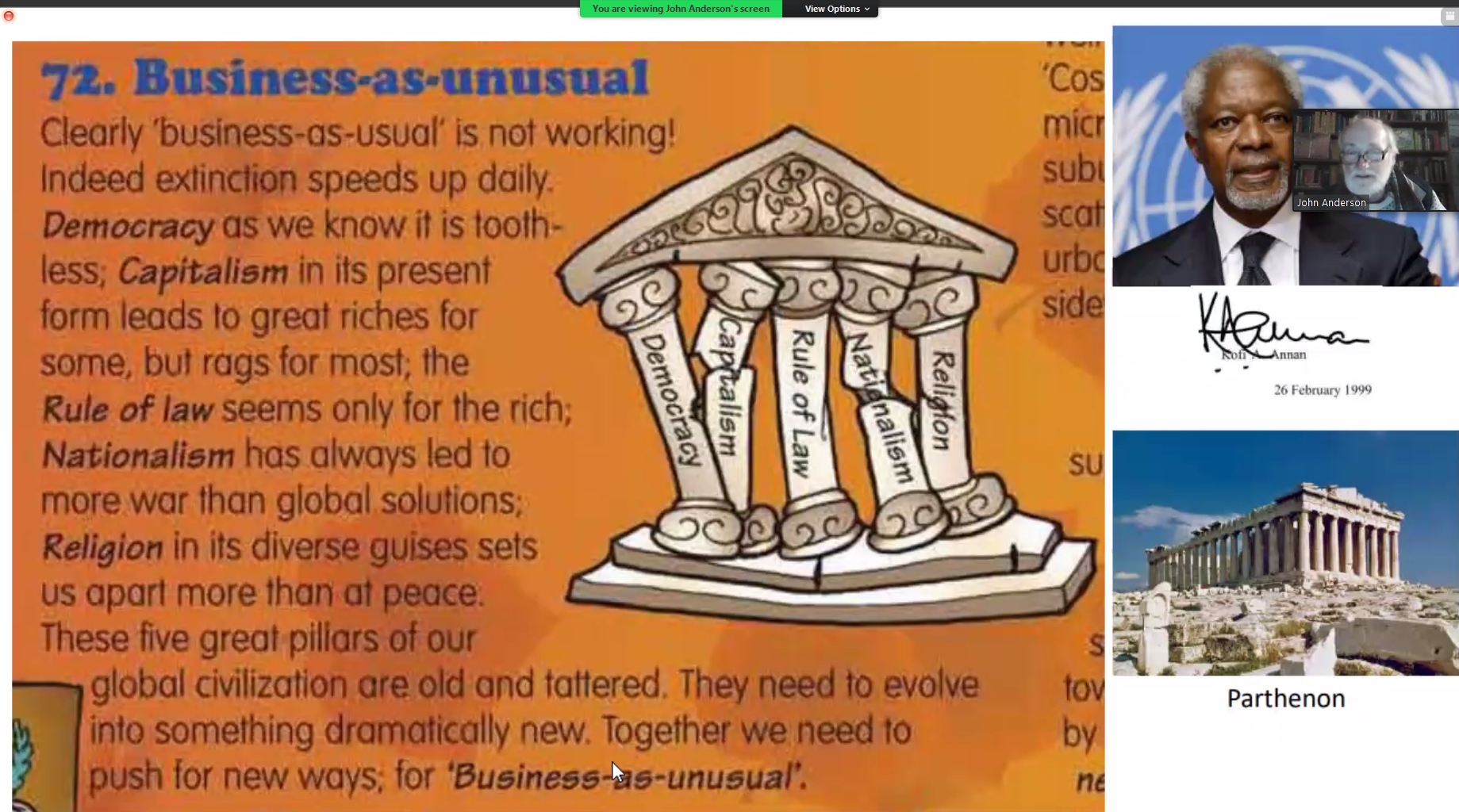
During our scientific EuroSpes encounter on “Place based Ethics, Sustainability and Spirituality” in the beautiful city of Urbino in Italy, I was pleasantly surprised to hear presentations about leaving our crumbling comfort zone to find a safer common ground. My own presentation was about “breaking with our (capitalist, money dependent, politically mismanaged) heritage”. I introduced my audience into my own business as unusual, unusual for others but very usual for me, referred to as Sustainocracy.
It was good to see that intellectually people were approaching “my world” of commonly shared values. The common good was finally defined as “the entire living world” and new business ideas were proposed to address and respect that common good adequately. A bit like our own sustainocratic 4 x WIN method, but not quite as far yet. It was good to see that the idea of business schools developing around the common good became a point of attention. Refreshing because only a couple of years ago this proposition was perceived as “impossible to achieve”.
Powerful presentations of business entities in the process to 4 x WIN were showing that business education is lagging behind.
Also scientists from the world of theology reflected about the role of religion and need for adjustment.
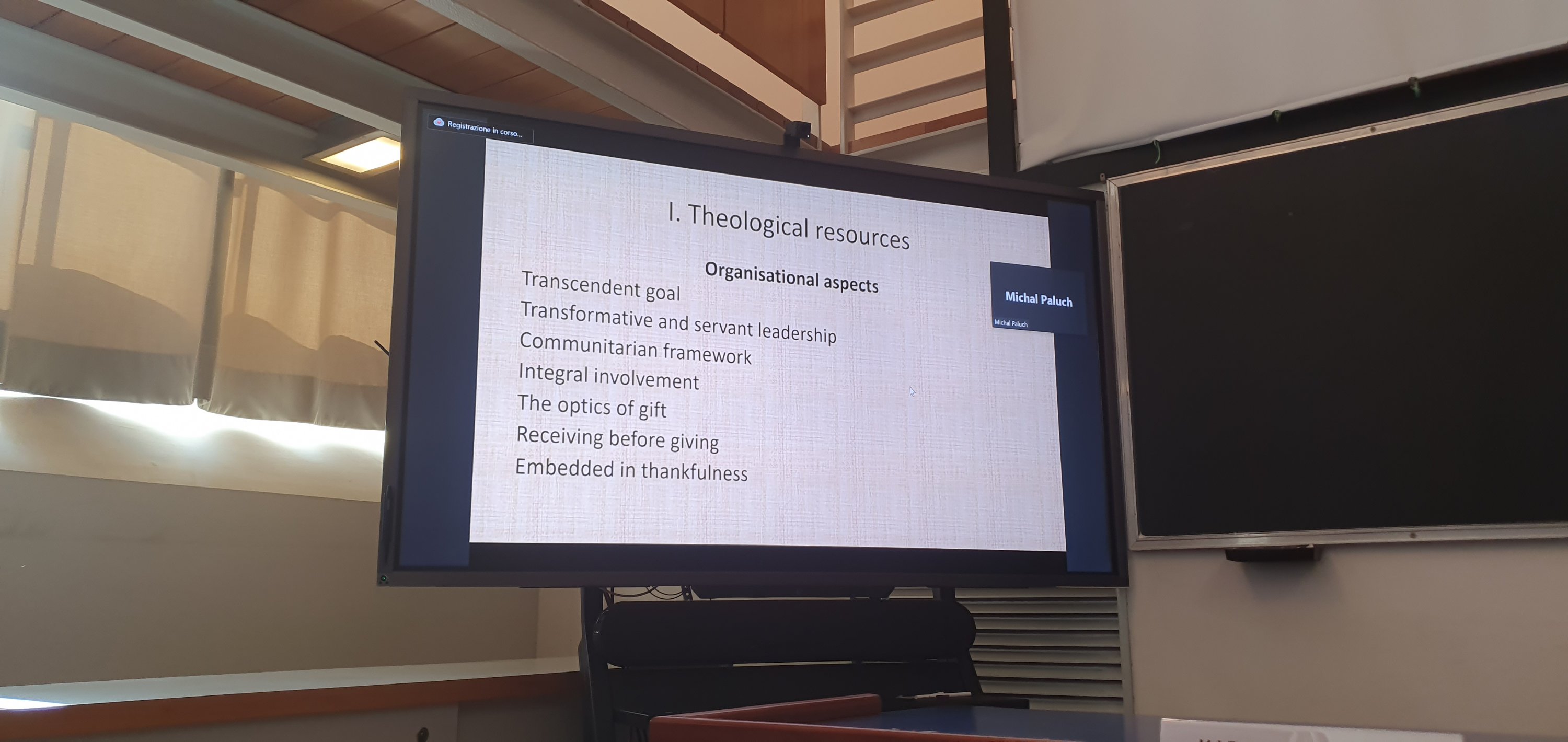

So in every field of our old pillars of society: society, capitalism, democracy, religion, justice, media, etc fundamental transformative change is needed. But we can say it one million times. Everyone will knod in agreement and then continue what they have been doing all the time. If no alternative is presented then business as usual will remain the mainstream. Until it collapses into the biggest chaos ever.
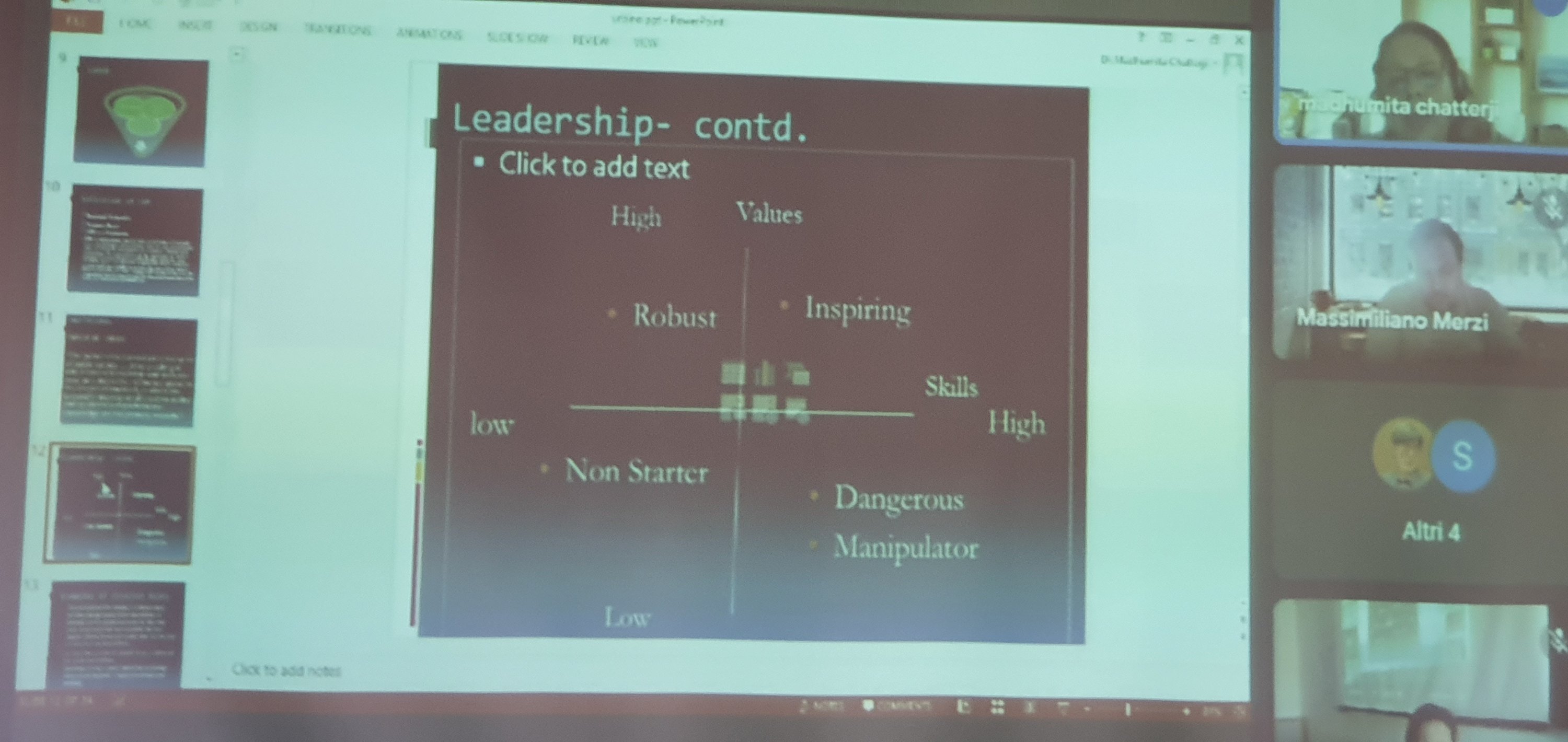
The above is a similar drawing as the ones used in Sustainocracy to position our alternative in the quadrant of high values (ethics) and skills (multidisciplinary authenticity). The complexity is not just to understand the ideal. It is to get those in manipulative and dangerous positions to let go. Luckily it is our experience in our core values driven communities, that among the elite there are many that are very much inclined to accept the invitation to the values driven quadrant and do their best effort to make it grow in the process.
They do need the positive invitation to make the choice.
(Jean-Paul Close)
And someone has to formulate that choice. This is what we have been doing successfully for the last decades for all stakeholders involved. Many of our visitors said, when observing this way of evolutionary working: “It exists, now we want it too”. Well why not? Who or what stops you to make the step? We can help….



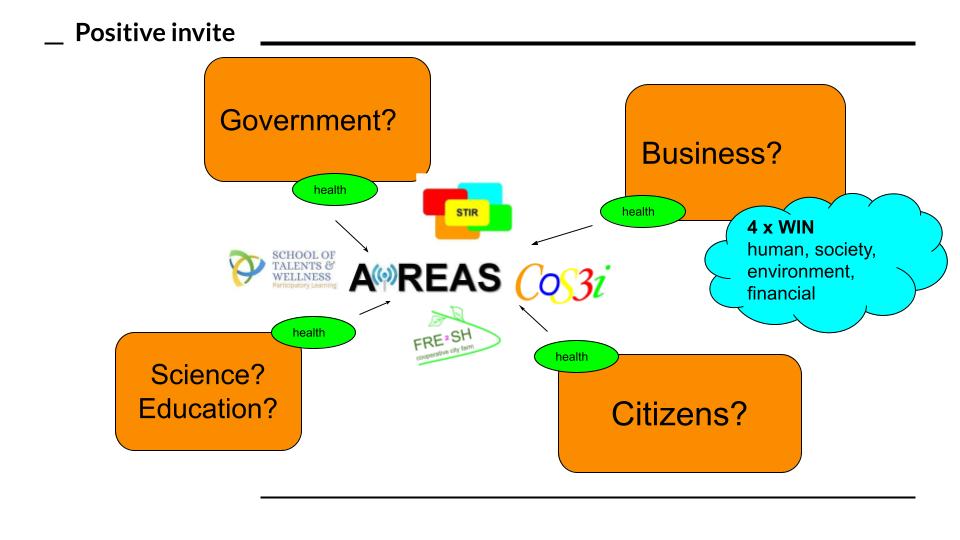

11 years of AiREAS, part 2, the transformation
In part 1 we explained how the start of our AiREAS community in 2011 attracted the element of (financial) self interest of the participating institutions and people.
- Business wanted to sell their expertise and products. Addressing their polluting manufacturing methods and logistic deliveries was another issue.
- Science was looking for the financing of (PhD) research projects. Showing us the results of other research, directly related or even exactly the same, was avoided.
- The city was looking for applied innovation and avoidance of limiting factors for growth. Taking measures for improving air quality and health was up against the diversity of political interests.
- Citizens were known to complain a lot. But when asked to take responsibility together their absence was mindblowing.
The issue of health was an interesting means for all, not a primary goal (yet). This is of no surprise. The mainstream societal ethics was about the solidarity with the financial system. Health was generally dealt with as a remedial issue, often by other institutions than the ones that contributed to the unhealthy problem. Establishing AiREAS as a non financially driven entity could even be considered contextually illegal. Nevertheless we together decided to go ahead anyway.
So health and air quality was primarily an issue of the founders of AiREAS, local entrepreneurial citizens who brought in their own motives. At human level all institutional people involved engaged positively with this health thinking, but at institutional level the objectives of these organisations were leading for them as employees. This lead to the common saying in AiREAS:
Self interest is your best motivator as a participant in AiREAS. Feel free to represent it to the full in the AiREAS community as long as it contributes to the common mission and goal of air quality and health.
This lead to very interesting confusion among the partners. A product supplier for instance would normally expect to finish a relationship with a customer when sending the invoice and getting paid. In the case of AiREAS the relationship only started when the products were delivered, installed and made available for use. The products themselves were not important, their expeted functional results were, placed within the context of the health and air quality objectives. In a five year partnership arrangement this would mean a long period of feedback to the supplier with possible needs for product adjustments and readjustment of services.
The same was for all the partners. They had to get used to this health and air quality overall umbrella for their AiREAS engagement. Angry citizens were asked to think of their own contribution to air pollution in their daily lives, not just fingerpointing at others. Scientist were asked to bring in the existing expertise prior to getting their research contracts. The local government realized that if they participate in measuring air quality, there is also an expectation to do something with the data and insights.
Gradually each of the participants started to transform as an organization and become more and more proactive in the field of health and air quality development.
Some even developed an attitude of: now that we can do it ourselves, why do we need AiREAS? This led again to confusion, especially for them. AiREAS started to work with other regions in order to avoid having to deal with these commitment fluctuations. In the end most would return to the multiple level engagement dynamics of AiREAS, simply because health and a healthy region cannot be developed by any single institution itself. It needs to be done together. But this is a learning process. After all, we all we come from a world full of self centered silos, individualistic interests and self determination. This resulted in the following AiREAS rule….
Whatever one can do by oneself, one does by oneself. Whatever is too complex, we do together.
This rule had a double purpose. The first to avoid abuse of making cheap use of others for things that really belong to oneself. The other to stick to real and exciting complexity levels of execution of challenging projects together. Gradually participating members of the community started to understand the additional value of working together in AiREAS.
We called the concept: One plus one is much more than two!
It developed the identity and authenticity of each of the partners in the relationship with the others in order to optimally start valuing each other and incorporating each in a common higher goal and purpose. The specific added value, that only appears when both (or more) work together, is unique and magically effective. It really enhances the position of all involved. In AiREAS competition among the partners does not exist. Each engages based on their own unique contributive value.
Another issue that required the learning process of all partners involved was the fact that AiREAS was a dynamic ecosystem, not a controled fixed structure. One participates, suggests or joins processes and celebrates end results, but no one controls anyone or others. Many cooperative clusters can emerge, all at the same time, under the flag of AiREAS. One participates, or not. It is always an open invitation and a contributive choice.
The first AiREAS project was the design, implementation and use of a fine maze, city air quality measurement system focused on citizen´s exposure to air pollution. End 2013 the installations took place and for the first time we made Visible the Invisible, for all that participated. We could suddenly see the effects of Newyear fireworks, the impact of bbq-ing during a windstill summer evening, etc. With this measurement system as a backbone and reference, more projects were proposed and defined together.
Other municipalities started to engage and with it also other partners. AiREAS grew as an ecosystem in which everyone can find their own space and engagement. By doing so every new participant started to mark their presence as a valuable additional resource. They also needed to go through the learning process of developing cocreation instead of their traditional trade attitude.
Together we had developed an enormous amount of knowhow. But there was still one thing missing: Genuine changes in societal functioning.
Everyone involved in AiREAS had undergone transformative changes in their commitment, functioning and even their organizational reason to be. The participating institutions became examples of structures moving from a traditional 1 x WIN to a multiple WIN positioning. Their old focus on financial results or cost coverage had transformed into the desire to make impactful positive footprints in society. Also the executive management culture was changing. Multiple WIN thinking wishes to make a difference. And together this could be done.
But the most difficult was still to come. The extention of all changes into the operational reality of society.
11 years AiREAS, working together on air quality and regional health. Part 1, the beginning
In 2011 AiREAS was founded as a sustainocratic community to address regional air quality and health as a shared citizen and institutional responsibility.
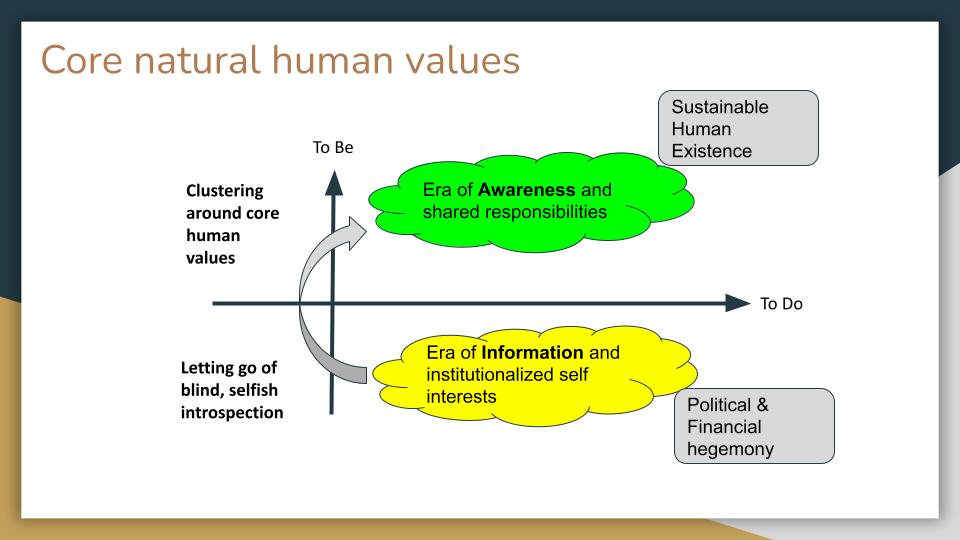
AiREAS became the first multidisciplinary, cooperative association that has no financial objectives for its members or itself. Money is only a means for the cooperative, just like so many other things. Its sustainocratic mission is defined to bring together all regional stakeholders and cocreate this healthy environment together. A core natural and human values driven mission. Around the AiREAS table we gather local government officials, citizens, scientists, business people and educators together, all within that same common challenging mission.
Despite the positiveness of the community shaping around such a great and shared responsibility, it remains extremely difficult to produce adequate and measureable changes that show improvement in our local health and air quality situation. Our polluting behavior is so deeply engrained in our societal functioning that it requires a huge makeover to effectively produce sustainable health.
This huge makeover has to do with a mentality shift. Once that is done, many small voluntary and big organized changes bring about a huge transformation.
This is probably one of the most important learning results within AiREAS after these 11 years.
At first this mindset shift was not there. Participants joined with many different motivations but hardly ever the one of shared responsibility for health and a healthy envirionment. Only years later the mentality shift started to occur.

We all know that we pollute our environment yet have great difficulties in letting go of this polluting attitude if this affects our lifestyle and comfort. This does not only apply for us as citizens. It also applies for industries, agriculture, permits providing governments, transportation companies, etc. Our lifestyle, luxury or profitability (in case of business institutions) comes first, our responsibilities second, sometimes very very far behind this first. We seem to have great difficulties in turning this around and imagine our happiness, wellness or success without the polluting structures.
Our societies are full of contradictions that show our confusion between our desired sense of wellness and our shared responsibilities towards each other and our environment.
When AiREAS was formed, the invitation to participate was focused on this shared health mission. Many attented the invitation but only very specific people and institutions stayed:
- the ones with financial objectives only, usually in a survival mode, disappeared quickly. AiREAS has no budget, no building, no resources of its own. It only has a shared mission and its multiple partners that are willing to invest (time, money, resources) in this cocreation.
- the ones with an existential mission around remedial activities, such as health care in an unhealthy environment, saw AiREAS as a threat to their positioning in society and were reluctant to commit to health. They did not participate.
- leaving only the people and institutions that were authentic, in creation mode, motivated for their own reason (self interest connected to the common challenge).
- many organizations that focus on their “thing” never even consider their impact on health or the environment unless someone confronts them with it. They had no natural intention to participate in Aireas since it did not fit their daily functioning. They often were not even aware of the existence of the cooperative.
From a citizens point of view it were often those citizens with a critical view to society, especially against government functioning that allowed pollution out financial interests or city design processes. Participation was often more fear than responsibility driven.
The participation in AiREAS became a self sellecting ecosystem. That itself was already an interesting topic to study. It also shows the complexity to transform an entire societal mindset when only a very specific type of pioneers engage to the new regional storytelling. A large part of society remains fixated within their old mindset that conducts their daily lives.
Gladly gradually all this changed and health and environment did become part of the (institutional) mindsets. For each of the AiREAS participants this meant a huge transformation of their own positioning in society. An admirable evolution.

 Sustainocracy, the new democracy