Home » Posts tagged 'heritage'

Tag Archives: heritage

Podcast about sustainocracy and developing a new and sustainable reality together (8 minutes)

Modelling the World’s Floods & Building Fathom | The Enterprise Sessions with Professor Paul Bates ResearchPod

In this episode of Enterprise Sessions from the University of Bristol, Professor Michele Barbour speaks with Professor Paul Bates, world‑leading expert in flood inundation modelling and co‑founder of Fathom, one of the University’s most successful research‑driven companies.Paul reflects on a remarkable career that began with a Bristol PhD in the late 1980s and evolved into pioneering work that transformed global flood modelling. He describes the technological shift that enabled a new generation of high‑resolution terrain data, the academic debates that reshaped the field, and the multidisciplinary collaborations that built the foundation for Fathom’s modelling techniques.The conversation traces Fathom’s origins from two ambitious PhD students with an idea, through early years of bootstrapping, to international clients including insurers, banks, multinationals, and the World Bank. Paul also discusses the challenges of spinning out before universities had mature commercialisation systems, the importance of staying ahead of competitors through transparency and innovation, and the recent acquisition of Fathom by Swiss Re.Finally, Paul reflects on what research entrepreneurship means within academia, how Fathom has strengthened Bristol’s scientific capabilities, and what lies ahead for both him and the next generation of global flood models.🔍 In the episode:·        The origins of flood inundation modelling at Bristol·        How new airborne laser mapping transformed what was scientifically possible·        Overturning long‑held assumptions in the field·        The multidisciplinary team behind high‑resolution flood models·        Serendipity, road trips — and how two PhD students sparked a company·        Fathom’s unconventional path: bootstrapping, grants and early customers·        Data‑as‑a‑service before it was mainstream·        Building global flood maps used by insurers, governments and financial institutions·        Staying ahead of competitors by publishing methods openly·        Growing from four founders to a 50‑person global team·        Acquisition by Swiss Re and what it means for the future·        Entrepreneurship in academia: culture, opportunity and barriers·        The virtuous cycle between research and commercial innovation·        What’s next: NASA’s SWOT satellite and the next era of global flood modelling 🌐 About the Enterprise Sessions The Enterprise Sessions bring together a diverse mix of company founders and researchers who talk openly about their personal experiences of forming spinouts and start-ups, raising capital, academic-industry partnerships and the joys of translating research discoveries into real-world impact. The series aims to inform, inspire and challenge myths and stereotypes about research commercialisation and how businesses and universities can work together to tackle society’s biggest challenges.  👍 Like, Share, Subscribe, ExploreIf you found this episode inspiring or informative, please don’t forget to like and share. Visit our website or subscribe to the University of Bristol’s YouTube channel for more Enterprise Sessions.  https://www.bristol.ac.uk/enterprise-sessions Paul Bates – LinkedInMichele Barbour – LinkedIn
  1. Modelling the World’s Floods & Building Fathom | The Enterprise Sessions with Professor Paul Bates
  2. TB Testing: From validation to eradication
  3. Engineering Blood Cells | The Enterprise Sessions with Profs Ash Toye and Jan Frayne
  4. Beyond Opioids: Personalizing Pain Treatment Through Genetics
  5. Discover Reading: World Meteorology Day 2026

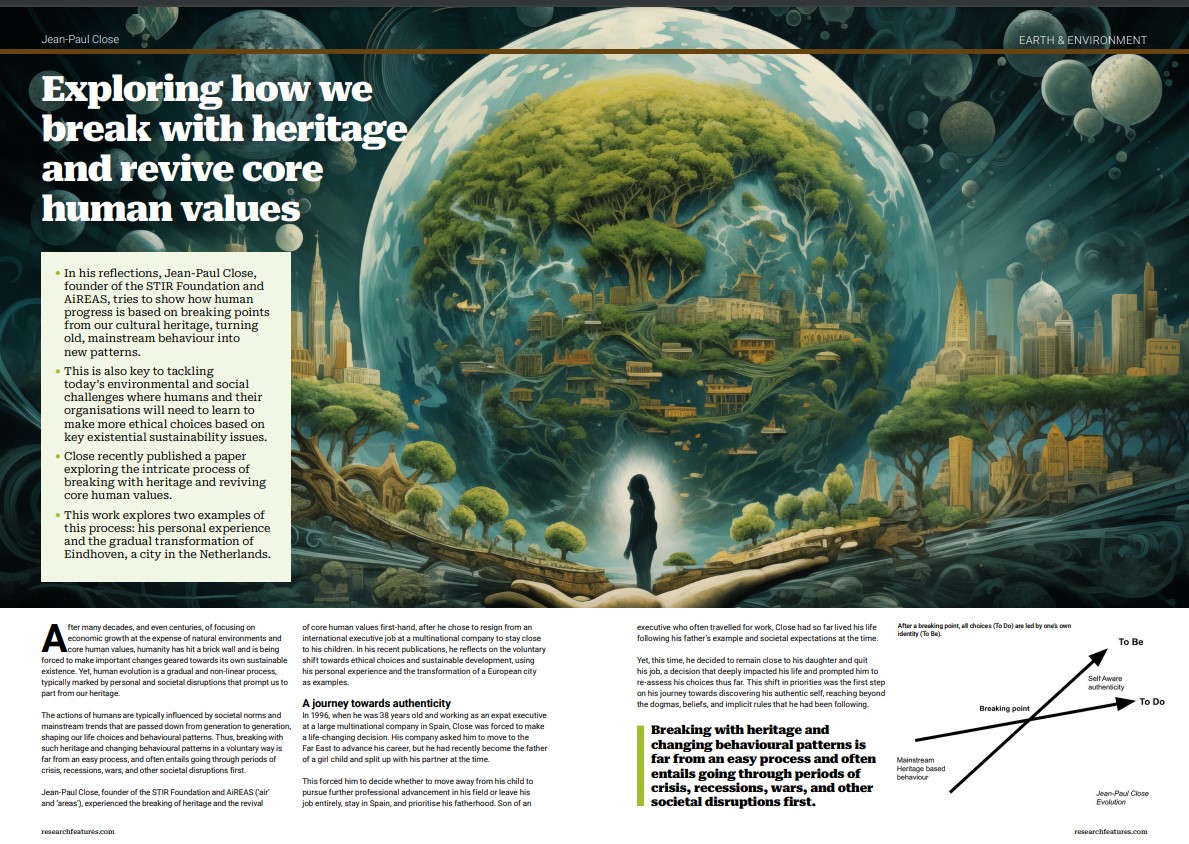
Human evolution based on breaking points

https://researchfeatures.com/exploring-how-we-break-heritage-revive-core-human-values/

Breaking with 10000 years of history

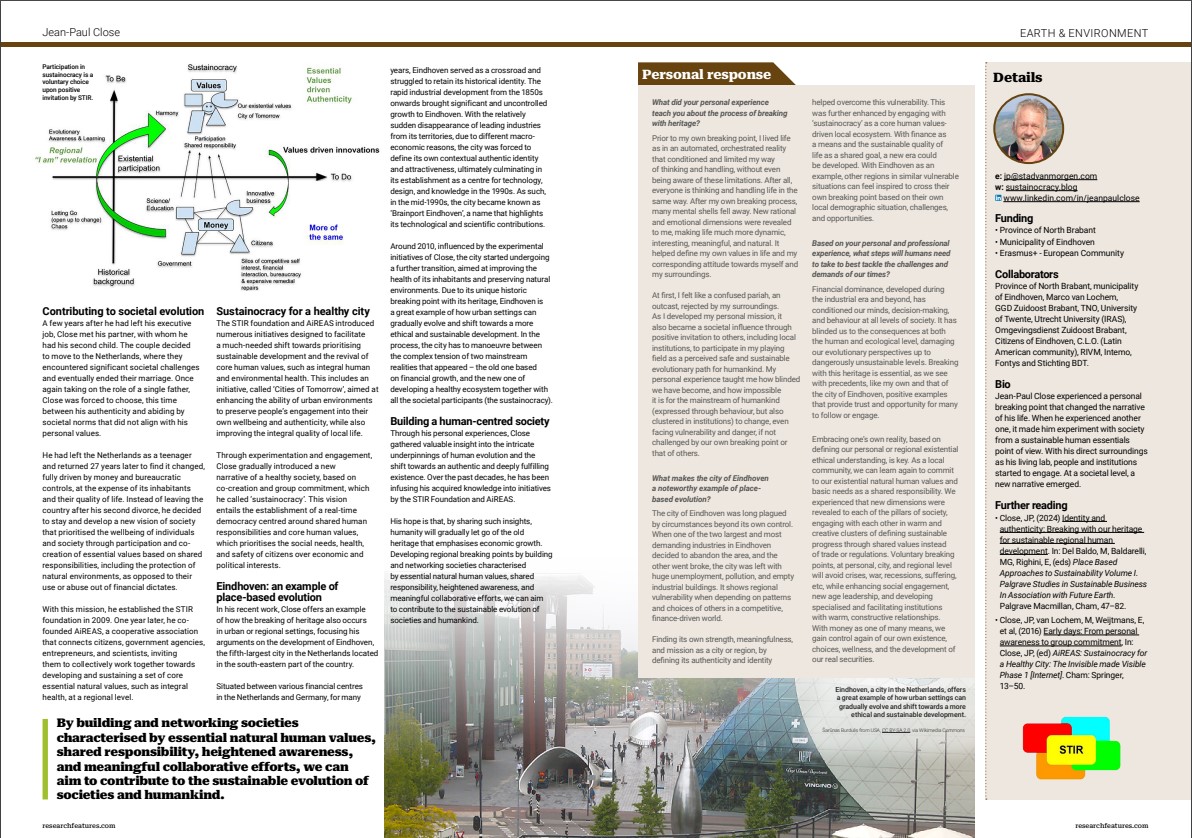
10000 years ago humankind developed the desire to own and control things. This had disastrous effects on our psychology, taking out the worst of our behavior. It may arguably be a phase in our human development, necessary to learn to deal with our impulses. In our current era this mentality has brought us on the verge of societal collapse and sincere doubts about the sustainable perspectives of our species, despite all technologies and science at hand. In a recent publication about Place Based Sustainability, an article was included about the breaking with this history of societal conditioning around financial growth and status. Instead of developing the mainstream attitude, I personally decided to step out and define my own human values based reality. A reality that would become Sustainocracy over time. The article also describes the process of the city of Eindhoven to define its own authenticity and identity as a city.

We see this break away attitude appear more and more, also in regional development, where quality of life gains in importance rather than just financial growth. In this short video I describe the painful human phase of greed, suppression, misuse of people and resources, warfare, etc that we are leaving behind us. Instead we define our authenticity and identity as wellness driven species, integrating ourselves back in a symbiotic way with ourselves and our natural environment.