Home » Posts tagged 'paradigm' (Page 3)
Tag Archives: paradigm
“City of Tomorrow” game
Putting Planet, People, Profit, Passion and Progress into Practice
Recently we played the entrepreneurial “City of Tomorrow” game for the first time. In the STIR foundation we support the idea of integral human development as expressed in the chapters 15 and 16 of my free book last year, not just the rational side of it as our system is educating our children today. As Sir Ken Robinson so beautifully stated in his much applauded TED talk “the current education systems kill creativity” and Mitra shows in his “hole in the wall“, children have a much higher self-learning ability than our schools appreciate or even stimulate. Yet despite the famous anthropological and anthroposophical views and knowledge on the development of the human consciousness through spiritual, emotional, physical and rational experiences, the system remains the system, locked up in bureaucracy and self supporting prejudice.
We see that current educational formats serve a paradigm in which politicians see the human being as a little robot in the machinery of money driven/dependent economies of growth. Such robots need to learn how to behave like robots within a system, brainwashed about the importance of money, a job, debt, fashion, consumerism, the state, their dependence on the system, etc. The learn to calculate and write a letter but nothing about the importance of social relationships, feelings, spirituality, sustainability or responsibilities.
The paradigm that we support is totally opposite which is why both are difficult to match. The way a complex human society is structured in either paradigm differs enormously which is why the current educational system will sooner see our propositions as a threat to them rather than an opportunity. It is even worse than that. The current education system has no identity of its own because it is chained in dependence to the money which allows it to exist. This comes from central government which dictates the normatives that the schools need to comply with. So the education system has hardly any opinion of its own, just a hierarchy controlling that what is done is done according to the guidelines that allow them to stay alive financially. They are themselves expensive robots in a system.
So we are not seen as a threat to the educational content (who cares?) but for their financial continuation. That is why the system remains closed to all influences from outside, even common sense.
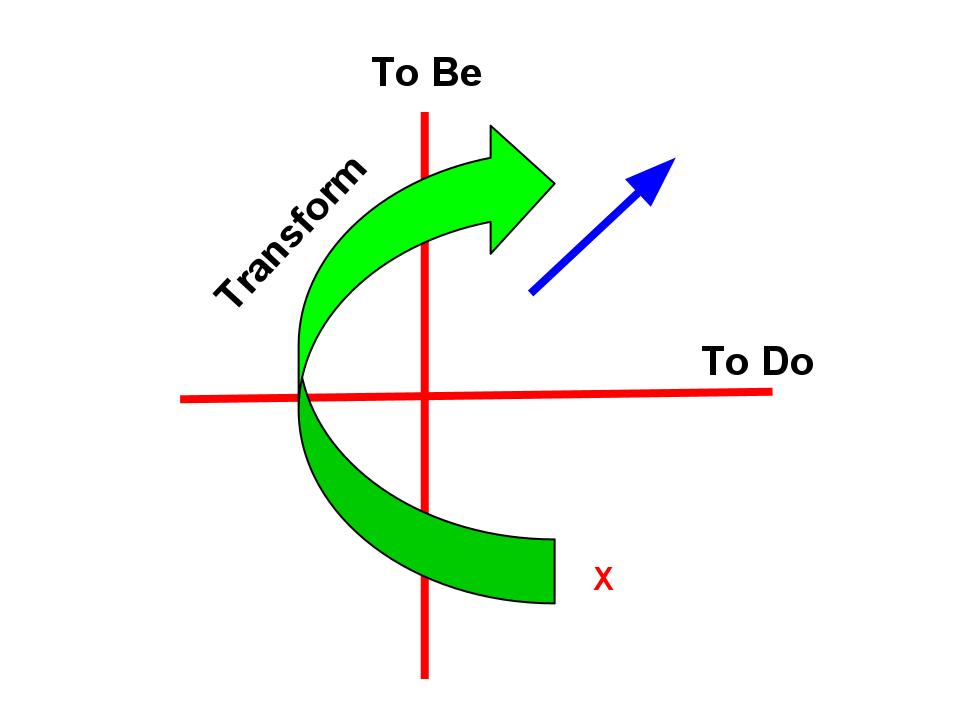
Transforming from one complexity to another
If we cannot change the system we can in fact stand next to it. We should never forget that even the most locked up human organization consists of people. And individually people do become aware of the need of a new society and other ways of education. Some, not all, are willing to use this personal awareness and influences to take action within the structures in which they are employed. They become the internal transformative hero’s that link already with change and seek internal opportunities that make a difference.
We positioned our initiatives on human awareness right at the place where the young adults would leave school to start their life in the real world. Our program is called “entrepreneur of your own life“, linking the increasing requirement of entrepreneurship in the old money driven economies with the self-leadership and sense of responsibility in the value driven society that we are trying to develop. We asked the high schools to allow us to give their students a view into real life with a bit of our counselling. It is also in the interest of the school to pay attention to this even though they find it difficult to let the real world enter their world. When we propose to provide a low cost bridge through our game they become enthusiastic.
We had done one of such days already before in a multicultural setting trying to show the tremendous opportunities of cultural diversity in a community if you choose to make the best of it together. It had been a great day . Now we were facing a highly technical setting with 500 students in two groups.
One of the coaches, Jules Ruis, suggested to make the day into an adventure and the students into hero’s. Overnight he developed a simple game but with great educational value. It was based on economics but could easily and secretly be changed into buddinomics by me.
The ingredients of the game are:
- a large bunch of students 17+ years old
- technological innovation companies that show their innovations
- coaches that carry specific information
- a bunch of camera’s
- a value system in exchangeable cards
We played that day with about 200 students that started without knowing much more than that they would have to collect information at the stands of the enterprises and the coaches that walked around as wild cards. They had been teamed up with people from different years, whom they did not know personally, and the elderly student was made team leader.
They had to assemble the team, work together towards the end of the day, trying to figure out what they had to do to win? During the evolution of the day and every encounter with a coach the complexity of the game would rise, requiring the teams to perform and place the product exhibitions and information into new perspectives.
Watch the filmbook (in Dutch) of the day here
The end of the day was spectacular from an awareness point of view. It was amazing for us to see how self-leadership and adaptability got these youngsters on their way and how fast they managed to adjust their views with new input. At the end of the day they were allowed to present their views in public and with cameras present. For the highest years present the presentations were key because they were invited to continue the game for another year. Their prices:
- a job
- a scholarship
- a starting capital for a new business
The effects of the game had not just affected the students. The high school had become so motivated that it started to open up for reorganization and further partnership with the foundation and others. The game will be played now at least twice a year and every year again with all the students. While we do so we are going to step up the challenge every time inviting the students to deal with real life complex problems within the simulation of the reality of the game.
The business enterprises also started to readjust their activities and organization inspired by the game. Most found each other during the game to partner up in purpose driven ventures. They also committed to further invest in the initiatives led by the foundation and based on local for local cooperatives between government, technical innovations, education and science, social innovation.
And even the local government representatives were so enthusiastic that they proposed to open up their structures for more student involvement and participation. At the end all participants will become partner and judge of the final game of all students: defining their own city of tomorrow, based on their own home town and for which they can take responsibility themselves with what they have learned at school and are triggered to learn by placing their knowledge into their daily reality, simulated in complexity by the game.
The entire process is sponsored by the partners to maintain our independence and avoid any client/supplier relationship or chain dependencies. This way the game can be purpose driven in which the virtual reality transforms into reality.
Expanding our ambitions:
On 12.12.12 we now wish to play the game for 4 consecutive days in Eindhoven (The Netherlands) with students from all over Europe. The game will then be called “Europe of Tomorrow” giving already away what the main topic of the event will be. The game will be combined with an international congress on sustainable progress. It will again be great fun to see how our young adults will react to the modern reality and eventually change the world through their own new levels of consciousness and adaptability.
Call for Leadership
When the human world is in crisis entrepreneurship and society call for true and transformative leadership. Why is that? And what kind of leadership?
The very first thing we have to acknowledge when the human world is in crisis is that the way we organised our world has become obsolete, else it would not be in crisis. Trying to restore old securities is therefor no sign of leadership at all, it is called management. Management will never get anyone out of a crisis simply because the paradigm (the total set of values on which human interaction is based) has cracked up. It served its purpose in the past but now cannot be revised and needs to be replaced with a new paradigm. And that introduces two leadership issues: Definition of the new paradigm and the intense en risky transformation exercise from one paradigm to the other. Let us deal with each separately.
Definition of the new paradigm: We can distinguish five different paradigms that humankind can apply. In times of crisis we have seen four that have been regularly been called upon in history: The State, The Church, Money and Technology. The one that has not been seriously used is the one that places the individual human being at the center of all our strategies. While we placed artificial human invented systems in place to conduct our progress we noticed that they invariably ended up in crisis. For the very first time in modern history the individual human being has sufficient access to information to become aware of its own evolutionary responsibilities and create a culture of progress through cooperation. This paradigm means that we leave all artificial structures behind and get ourselves into a purpose driven culture of individual responsibilities shared through our common progressive, evolutionary objectives. The shift between paradigms is intense because it places responsibilities at the individual level through self-leadership and at community level through result drive sustainable progress. Political leadership is asked or forced to let go and facilitate the process of self-leadership of the people. We are seeing this happening around the world while corporate leadership is asked to take purpose driven humanistic initiatives to drive progress with the power of result driven united talent and energy, demanding a totally new business culture and structure.
Transformation between paradigms: The transformation between paradigms demands from leadership strong professionalism that goes way beyond technical or financial leadership. It requires strong understanding of human fears and hopes, the psychology of change and charisma to conduct the long term change by producing short term securities for all the people involved. It is a very humanistic type of leadership, a servant kind but also strongly demanding from the people on the verge of dictatorship. Sustainable progress is not a political discussion or democratic choice. This type of leadership that has nothing to do with the drive for power over people but the drive to provide comfort through change by getting people to provide comfort to themselves by taking responsibility. It requires strong insight, will power, anthropological/anthroposophical understandings and perseverance giving people their own share in the fruits they achieve through their own productivity.
Does that mean that the other paradigms are obsolete? From an operational leadership point of view: yes, because they cannot be placed at the kernel of human progress anymore. But the learning that we have reflectively embedded in our collective awareness is important to use those paradigms to feed the new one in development. Moral awareness that was claimed by religions is needed to provide ethical guidance to the humanistic drive of purpose driven communities, the state is needed to provide territorial cohesion and interaction between groups while technological innovation is required to provide the necessary tooling for humankind to produce abundance for all. The speculative money system needs to transform into a true value system that does not measure and speculate on shortages but values abundance through result driven investment of individual and collective talent and energy. This part of the transformation of values is probably the most complicated one since most of the old paradigm has glued all current human systems around monetary dependencies. To break through that the crises need to do their work because human interaction will only encounter dangerous opposition from the old power positions. This impasse will slow down the processes of the paradigm shift at the expense of human suffering. The introduction of new value system based on different criteria can slowly make way for large human structures that can break through the protective walls of the old money driven paradigm. That’s why I see a huge chance for technology driven corporate business organisations to make the shift first and become creative in valuing their people while creating a movement of change through visionary, multidisciplinary cooperation with other actors in this holistic approach.
The call for leadership is hence a significant one. Extremely few people today unite the conditions that profile the transformative leader. They cannot necessarily be found in the current leadership positions because those are jobs for high level managers guided or puppeetered by the self-interest of powerful shareholders. The true leaders that will stand up are currently without a job but with a personal mission. They may have lead significant ventures in the past which have provided them with the network and experience of old paradigm people management. Their personal enlightenment, together with a renewed energetic impulse to become the true instrument of change (they have no leadership ambitions but strong desires to see the paradigm shift). Others stand up and start anywhere in society or in a corporate organisation with sufficient skills and freedom to make the difference already today. On them the speed of the paradigm shift will depend and with them the sustainable progress of humankind that needs to be addressed.
 Sustainocracy, the new democracy