Home » Posts tagged 'sustainocracy' (Page 85)
Tag Archives: sustainocracy
Surprise at city awards for climate battle
Sept 23rd, 2014: Siemens and the C40 Cities Climate Leadership Group (C40) announced the winners of the City Climate Leadership Awards 2014 at a ceremony held on Monday night in New York City. The Awards honor cities all over the world for excellence in urban sustainability and leadership in the fight against climate change. The winning cities in the ten award categories are:
Amsterdam (Finance & Economic Development)
Barcelona (Intelligent City Infrastructure)
Buenos Aires (Solid Waste Management)
London (Carbon Measurement & Planning and Air Quality)
Melbourne (Adaptation & Resilience)
New York City (Energy Efficient Built Environment)
Portland (Sustainable Communities)
Seoul (Green Energy)
Shenzhen (Urban Transportation)
Read here the entire press release
In the international network circle of AiREAS (citizen’s driven healthy city cooperation, that started in Eindhoven and focuses on air quality and human health) people reacted with surprise that highly polluted London was awarded for Air Quality.
AiREAS is not submitted for these or any other award. We are hence not surprised. If you don’t buy a ticket don’t expect to win the lottery. It is not the state of pollution that matters but the effort a city does to solve the issue for human health and vitality. We @AiREASnl and City of Tomorrow (@STIRfoundation) reason using 4 paradigms, not just one. The award winning cities have every right to be highlighted, in their fragmented technologically innovative way.
What people tend to forget is that cities are the old conglomerates of “industrialised” financial and technological dependencies. People who live in cities enjoy the centralized facilities but depend for their basic needs (water, food, energy, clothing, etc) entirely of the system’s dynamics of the city with the surroundings, still totally based on money. To get access to money the citizens need to work or speculate. Due to system automation cities only develop consumers but not labor. Cities sustain themselves with growth, change, inflation or go broke.
Big enterprises such as Siemens depend on these huge city’s investments in technological solutions so award those that excel in this, rather than those (such as Eindhoven) that develop living lab solutions with their own population and entrepreneurship. In large cities systems prevail over human, responsibility driven interaction, simply because financial flows give old power to the political and economic structures. They however cover just part of the solutions.
Local responsibility is extremely cost and bureaucracy saving, very challenging even for the local creative forces that get involved in their own sustainable city progression with the development of a circular local economy, yet demanding a new local leadership mentality. It requires facilitating support from the policy makers, is not directly taxable nor instantly part of the global economic reality, so no reward system is in place yet to back it up. Local value systems appear in the city based on value creation and sharing. These subsystems detach from the large economies producing a power shift in the city.
That’s why solutions like Sustainocracy and AiREAS are not (yet) receiving global awards simply because they do not fit marketing communication plans. They just solve key local issues through co-creation, they don’t buy or sell them.
Four paradigms
Of the 4 paradigms available to cities, economic lobbies and fragmented power positions around public dependencies tend to push to a single focus, the one of technological innovation only, offered by the big global players. “Smart Cities” is not (yet) about people but mainly about (business) systems. From an overall global sustainable progress point of view we see that the other 3 paradigms need to be respected too, else the cities enter into chaos anyway. These other complementary 3 are however not money driven, hence hardly ever highlighted:
- Chaos: cities have to accept the collapsing of old obsolete structures and economic efficiencies to open up for overall renewal based on other types of innovative solutions (people, planet, profit) in a more holistic approach.
- Awareness: cities have to allow and help their self aware and responsible citizens to develop solutions of their own and connect to the evolution of their own community. This requires freedom for experimentation and innovation from inside the community. It opens up a new economic reality of cocreation, universal ethics, commitment and best practice from within.
- Harmony: cities need to learn to focus on harmony between nature, people, authority (rather than power) and their own regional self sufficiency.
Those cities that develop themselves using all the four paradigms (Sustainocracy) become strongholds of human evolution that contribute to the whole as well as the regional self. They become pearls of co-existence, harmony and flexibility. Then they will be rewarded by evolutionary progress and need to address the challenge of growth (in population) because of a livable, integral attractiveness, fulfilling the “sustainocratic dream” of sustainable human progress within, among others, climate awareness.

Jean-Paul Close – Sustainable progress starts at individual level and expands through value driven cooperation
Jean-Paul
The problem, the consequences and the solution
The problem:
The statement below is also referring to pollution, city convergence, life style, mobility, hunger, migrations, financial manipulations, power abuse, etc.

Awareness break through
The consequences
Need I say more? It is in our self interest to do something about it. Consequence driven investments damage economies and societies while proactive attention may give an innovative boost that keeps us busy for centuries. The Dutch have experience since we suffered our own water catastrophy in 1953, killing 1500 people. The implications now would be devastating, affecting 47% of the country. Time to act?

Solution:
The easiest way to “solve” this is to wait for the problem to pass by itself.
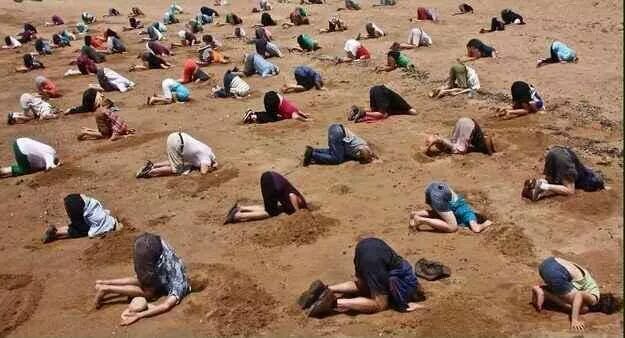
This is NOT the solution, despite being the easiest way to address the problem

This is NOT the solution either. Power abuse around money in fact stands solutions in the way.
The problem will indeed solve itself over time but scientists, economists and religious leaders now tend to agree that by that time there will be no human beings left to assume responsibility for our species.
10 years ago I stopped blaiming the world for unawareness and lack of sense of responsibility. For most individuals the issues are too abstract and mindblowing to picture one’s own responsibility. Surrounded by definitions of economic patterns and efficiency tools I could not find any definition for sustainable human progress that I could relate to myself. So I created one.

Just try to adhere in commitment to this and things will change, for you and your surroundings
The commitment to myself and my natural surroundings evolved into the STIR Foundation, the cooperative venture AiREAS and FRE2SH and the STIR Academy for 21st century society and entrepreneurship. It changed my life and many others that got involved in these ventures. We can now involve the world by providing guidance, tools, inspiration and innovation.

The STIR cycle for sustainable excellence and progress
Try it. It will change your lofe and that of your surroundings, always for the better.
Jean-Paul Close
Smart Cities Europe
Both the sustainocratic ventures AiREAS (healthy cities through air quality) and STIR Academy (sharing best practice and education on multidisciplinary cocreation) have been approved as valid partners in the Smart Cities approach of the European Union. See for yourself….
*****
Dear Stakeholder,
We would like to thank you for your interest into the European Innovation Partnership on Smart Cities and Communities and the submission of your commitment for action, following the Invitation for Commitments which closed on 15 June 2014.
It is with great pleasure that we accept your proposal as an eligible commitment under this European Innovation Partnership. Your commitment will be an important part in our common effort to build a dynamic market-place for smart city projects and solutions in Europe.
Following your indication, you are invited to join the action cluster K. Please feel free to indicate if you believe that your commitment should also contribute to other action clusters or if you think that your commitment should be fully moved to another action cluster.
Please note that the kick-off of the action clusters and hence the start of the implementation phase of this partnership will happen on October the 9th in Brussels. Further detail will follow soon.
We look forward to working with your organisation in the future.
Yours sincerely,
The Smart Cities & Communities Team
*******
 Sustainocracy, the new democracy