At this moment in time, safety is hard to find in the Netherlands and the world. In fact, the negative development has been going on for several decades after a short-lived reconstruction period after the Second World War. In principle, humanity has been unsafe since it started waging war out of various forms of self-interest. Political and financial interests drive people apart in competing, polarizing, negative energy fields. These extremes build up in tension until they explode. That can be done differently, but then we have to let go of that political and financial conflict of interests. A new role appears for our institutions and our democracies.
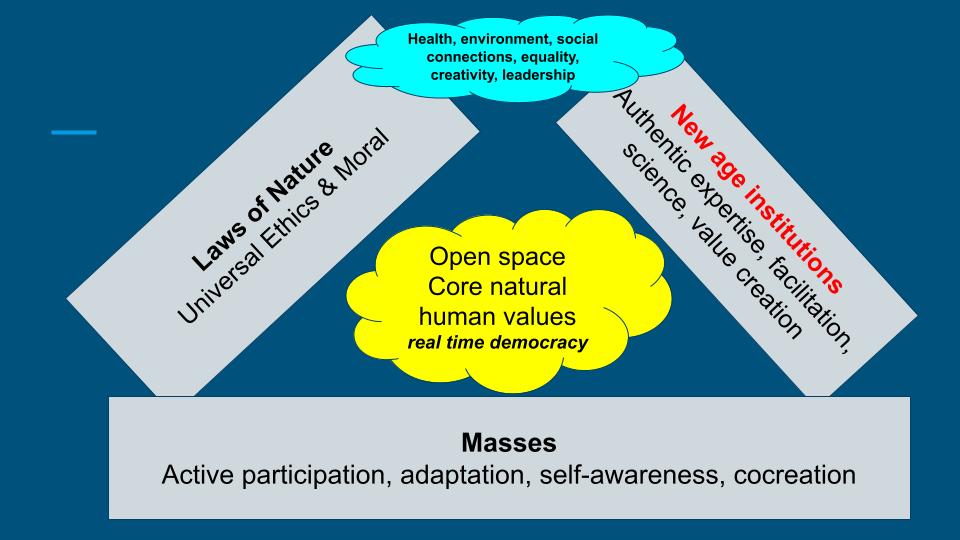
In Sustainocracy, safety is one of the five essential conditions for our existence as natural human beings and therefore a shared responsibility. That responsibility starts with respect for each other and for our natural environment. By this we mean two essential main things:
- Acceptance of each other’s differences: appearance, clothing, faith, culture, voice, language, etc. We humans are all equal but no one is the same. By accepting each other in our diversity, we can also be curious about each other, enter into dialogue, listen to each other and develop together, without fear, judgment or prejudice. If we learn to respect each other, we can also include our natural environment in the respect.
- Pursuing a commonly accepted higher goal: Sustainocracy is about the five essential values of our existence. Self-interest is thus linked to the common interest of which nature around us is a part. Creating, caring and sharing together is the norm. This can be interwoven with rituals, celebration of coherence and loving expressions among each other.
The COS3i social inclusion approach is based on this as a priority in our human existence, in mutual coherence with each other and with our natural environment. In Sustainocracy we have created all kinds of expressions to help us with this. The concept of together for example via the English word UNITED:
- U – Understand ….understanding the importance of cohesion and our personal commitment to it
- N – Need ….the need to belong somewhere, to be together and function as a group
- I – Involved ….our direct involvement in the group process from our own authenticity
- T – Targeted …purposefulness from the common higher goal of general well-being
- E – Entrepreneurial ….enterprising, doing from being, creating and adapting
- D – Devoted …..with the heart, connecting with each other, with meaning and motivation.
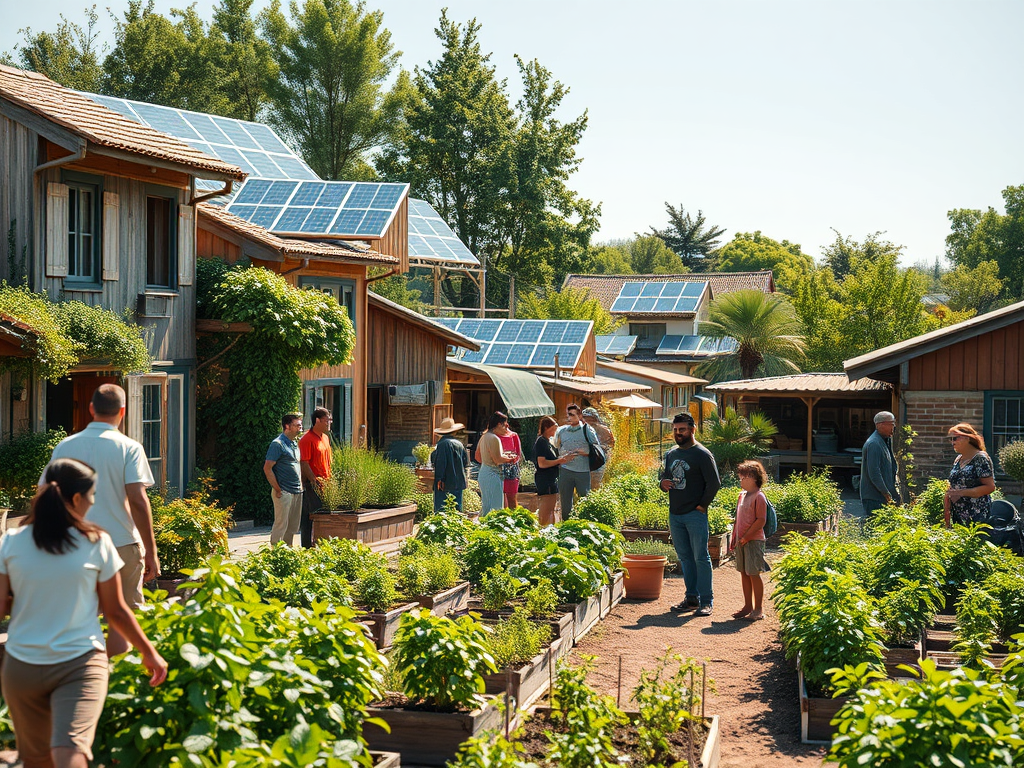
This approach is implemented intergenerationally so that our young people see adult role models that they can mirror in their development. Role models that radiate peace and inspiration, not coercion, control or unrest. COS3i clusters of self-reliant communities can build mutual networks and relationships in the same peaceful way. In this way, cities and regions can develop without political and financial competition but on the basis of constructive, positive cooperation, exchanges and coexistence. The major challenges can also be tackled in this way by having clusters work together, whereby some clusters can develop unique institutional properties that serve as instruments for the higher purpose (knowledge, innovation, infrastructure planning). But our instruments never take over the responsibility from us as human beings.
 Sustainocracy, the new democracy