Home » Articles posted by Jean-Paul Close (Page 149)
Author Archives: Jean-Paul Close
The purpose of life
Recently I met a few biologists. I wanted to relate allergies of pollen with our measurements of air pollution. Pollen is not necessarily a pollutant but a natural contribution to our environment. It becomes a pollutant when the pollen reaches huge quantities due to the intervention of human regional design that focuses on the concentration of single species for urban or rural planning purposes. When in a cocreation process of healthy cities all these issues are relevant. Human influence is much more widespread than the simple registration of particulat matter.
Our discussion took a strange turn when I refered to our awareness driven multidisciplinary actions around core human values (sustainocracy). The biologists raised their sholders and claimed that nature would take care of us as a polluting species that causes its own anthropocene. Afterall the human being is a simple and temporary wrinkle in the evolution of life forms and will eventually be eliminated in the natural processes of cleaning up.
I refused to go along with this simplistic attitude of laisez faire, the reluctance that everything is outside our scope of influence anyway, which would give us as species the free ticket to do whatever we like. I asked the biologists what the purpose of life is if we are exempted from protecting and sustaining it? To my surprise their reaction was that life has no purpose at all. In their view the essence of life is useless, senseless and without any special contribution to anything. How could seemingly intelligent people, who had made it their scientific job to research lifeforms, come up with such statement?
There was no discussion possible and I left with the inner query to prove the contrary. Life in my view is the most valuable thing that the universe has produced, a miracle of dead material that groups together in a diversity of living formats. How can that be called meaningless and useless? But then we get to the question of its “purpose”. Why does life exist? What does it contribute?
When I studied the mechanisms of the first sparks of life in a specific environment, that moment when molecules group together and become a life form, just like that moment of our own individual conception, I had determined that unique and rare ability in the universe called “awareness” even at the most elementary level of our submolecular existence. It is this unique way energy and mass combine in vibrant frequencies that interact with their surroundings. As soon as this happens the molecular and energetic reality actually starts to exist. Something that we are not aware of does not exist. Awareness hence is a fundamental condition to elevate nothing into something. Life forms develop around awareness to feed, meet, breed, sense danger and love, react and make choices.
The purpose of life hence is the confirmation that the universe exists, that we exist and that we have reached a point to actually try to understand what existance really is. We can perceive, process and reflect about it. What use would a universe have if it is not conscious of its existence? It would cease to exist if there is no way to be able observe or sense it. Our evolution within life is based on the development of awareness, the processing of what is. In that sense life is the single purpose of any existence whether dead or alive. We need to protect life and develop our awareness as we live in order to observe the intensity of what it is to exist, not just as a human being but as a living self reflective universe. The purpose of life is the awareness that things exist.
I am aware so I exist. I am aware because I am alive. Life’s purpose is hence our proof of our existence and that of all living and non living forms.
Life’s mechanisms apply in Sustainocracy
The basics of life apply throughout all life forms
The universal reality of life has very specific patterns that are also applicable to the success of human society and organization formats. We have however never realized how it worked while we experimented with our evolution as species with a mentality of an upgrowing child.
The essence of life, already at molecular level, consists of a variation of our understanding of “deeper awareness driven bonding”. One can ask oneself what mechanism gets loose molecules to connect together into a format that becomes alive? In a unique series of STIR lectures (the secrets of life) I already showed the vibration properties of all molecules. Within this pattern of a large diversity of vibrations there is a unique, particular and rare potential of resonance that makes two or more molecules bond energetically into a functional relationship. They don’t fuse but “connect” forming a new entity that is not covered by our chemical table of elements. They become alive in the most basic form, the fundament of all living complexity. This happens only when the environmental conditions, vibration properties and proximity are optimum.
Deep awareness
When we look with deep awareness at our surroundings with our own energetic awareness sensors (eyes, nose, ears, touch, etc) we recognize the evolution and the intercommunication of lifeforms with their surroundings through smells, colors, tasty gifts, shapes, etc. This intense mixture of communicative activity resonates between the diversity of species in a unique way, for feeding and reproduction, producing an ecosystem that is alive and sustains itself through core values. This natural selection produces the evolution of species, including us.
To human structures the same can be applied.
Sofar in the evolution of humankind we have encountered points of singularity at regional level but never as a species. They were mere catastrofes that ended up in our history books, often manipulated, romanticized, admired or misunderstood. For many thousands of years we could express our greed and competitive agression without sensing the limitations of our global environment. The Earth seemed to be so unlimitely large and abundant that our behavior and mentality just focused on the only thing we could do best: serve our self interest from a material and territorial point of view. Curiously this process is “normal”, despite its millions years and many generations of human beings coming and going. Life performs in four steps:
* growth (until colapse)
* chaos (competition)
* awareness (adaptation)
* harmony (symbiose)
Humankind has gone through the growth phase for many thousands of years. We encountered competition along the way but growth was predominant. As humankind grew the competition intensified. It became a battle beyond territorial bounderies not just for expansion of land but also resources.
The current size of our population worldwide and our devastating interaction with our surroundings, has reached a point of singularity of its own. Competition at this stage is lethal and devastating. Modern humankind needs adaptiveness and change!
Out of this deeper awareness new human networks and organizations develop that are better suited for the next phase in the evolution of humankind, the era of awareness based adjustments. This new humankind has outgrown greed and focuses on productive harmonization with our surroundings through gamechanging innovation. The other part, the greed version, colapses and will disappear as a system not as a human condition to overcome.
Sustainocracy
Sustainocracy is based on clustering human deeper awareness around value driven cocreation communities. It is like those early molecules getting together in the right awareness environment to create the first living molecular entities. Human individuals connect in exactly the same way in sustainocratic ventures. It is called an awareness driven cocreation community, an ecosystem. Only people connect that reached the level of deep awareness. They understand how it works and take personal or institutional benefit.
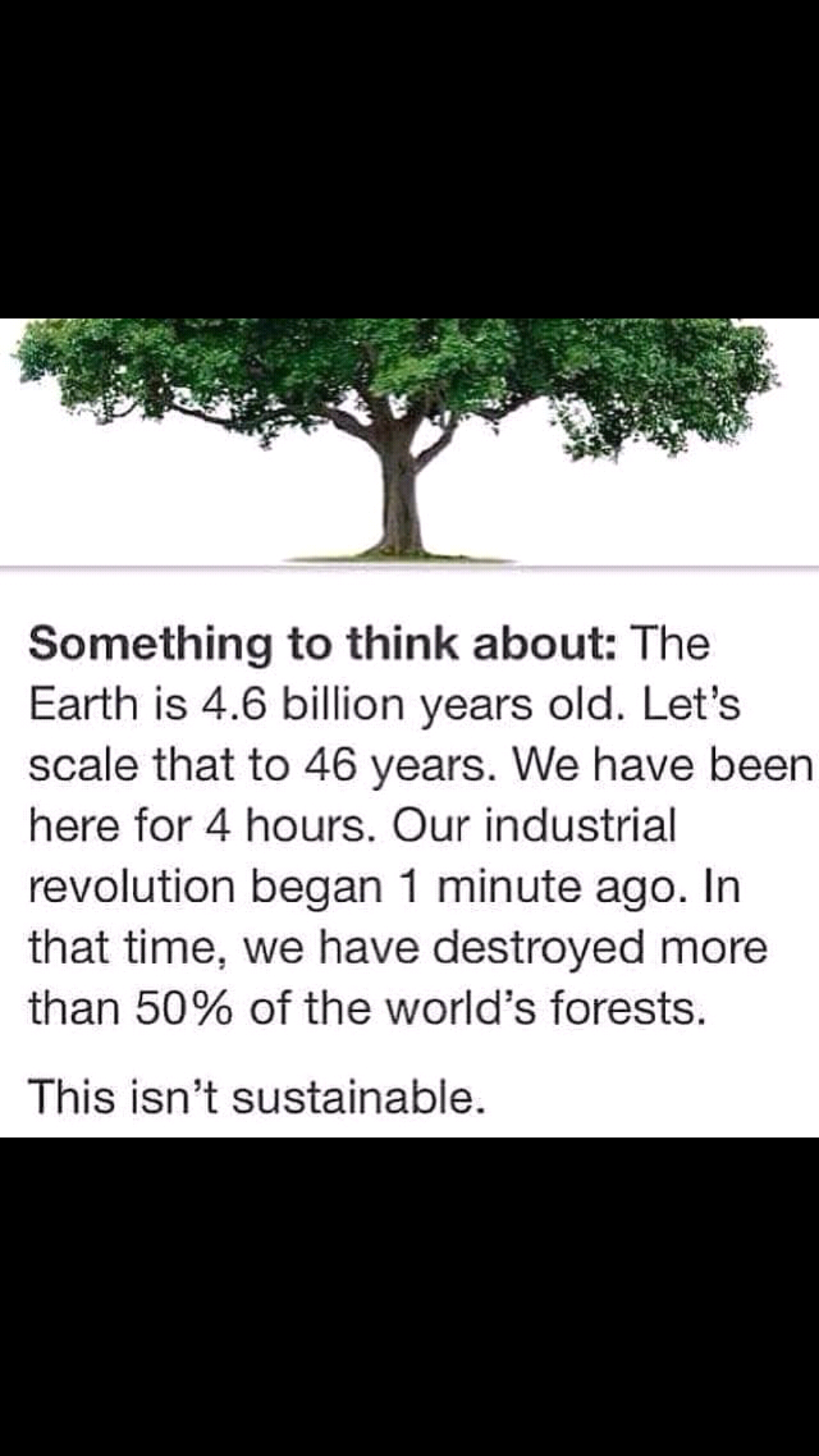
In nature the ecosystem produces a balance. Every time the ecosystem is out of balance than counter measures appear that restore the balance again. We call this the law of opposites, or in human term: leadership. In our own awareness we refer to our ability to adjust, to modify our own behavior, creativity and organizational formats to suit our own evolution best.
Based on this resonance we can create value driven communities of people that resonante around a specific topic of sustainable wellness. We create a purpose to bring those people together in a living process of harmonization. In Sustainocracy we defined the 5 core values of life. When we find unbalance in these core values there are always people who sense this and look out for bonding energies to seek for new harmonizing steps. We call this dynamic awareness based clustering.
This awareness based evolution of humankind has new behavioral patterns, a new society format and its own vocabulary. Sustainocracy is a practical and real precedent of such evolution.
How to combine governance with sustainocratic processes?
The inspiration came from a Dutch region referred to as “Rijk Dommel en Aa”. The region is not formally registered as such. It comprises two mid sizes cities and 5 smaller communities. It is surrounded by canals and rivers which make it a rectangular territory.
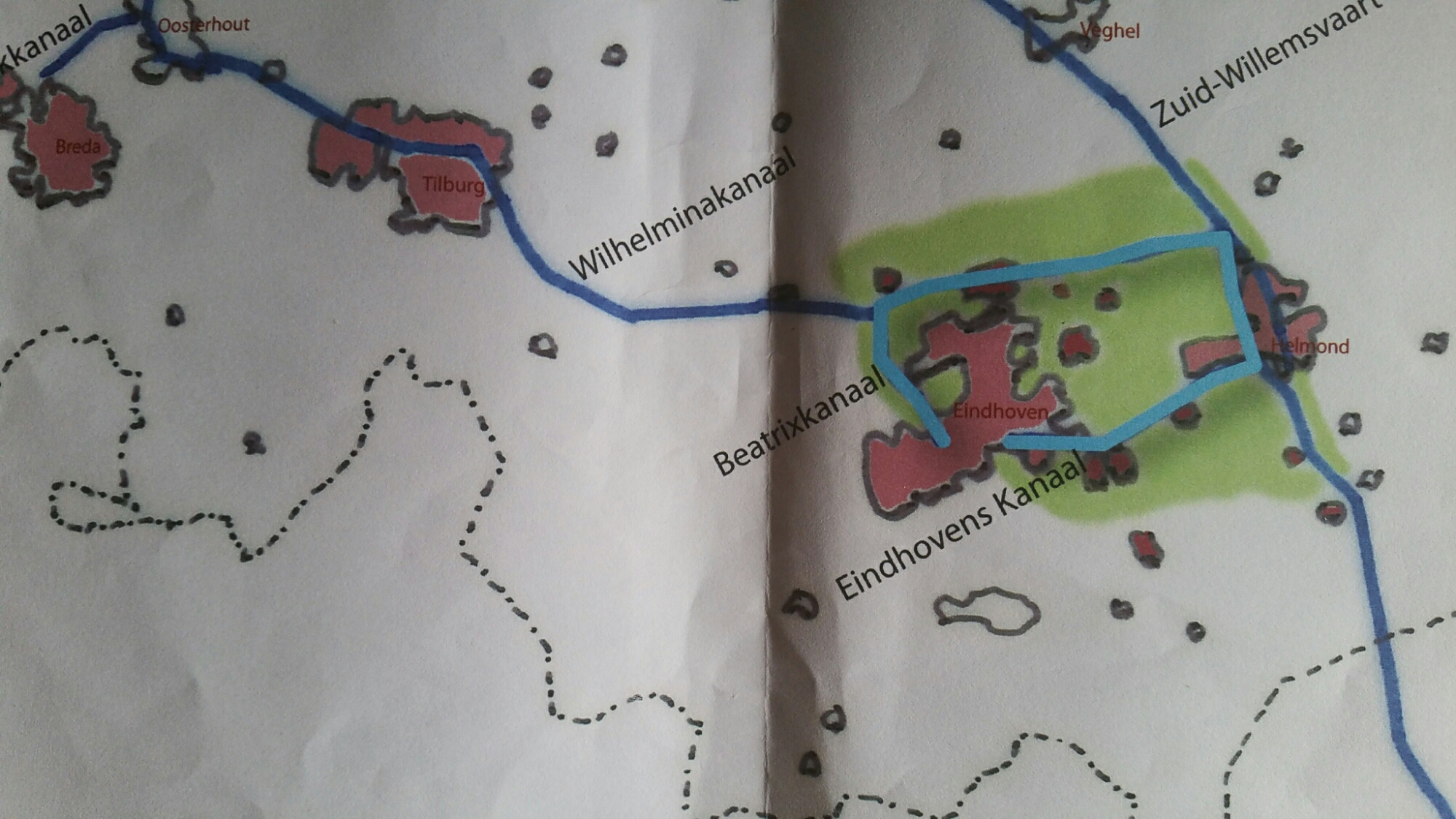
The region is drawn with light blue
This confinement had been for some years a place to develop regional cocreation at government level. At one stage someone asked me to look at the region from a practical sustainocratic point of view. Two converging lines came together, governance and peer 4 regional sustainocratic development. How do we unite those lines into a functional format that enhances the combination rather than drive them apart?
Differences
Governance tends to deploy itself around “files”. These files normally live a life of their own within the context of current political-economic steering mechanisms. Rijk Dommel and Aa had its own traditional files for the region:
- Mobility
- Energy and Water
- Nature and Recreation
- Housing and living
- Farming and Food
The focus that government had agreed among themselves was to facilitate the population’s spare time (recreation, sport) development.
When Sustainocracy started to look at the region, that hosts 400.000 residents with an multiple equivalent of regular visitors to festivals, activities, recreation, tourism and special events, it introduced the 5 core values for regional development (health, safety, basic needs, self resilience and self awareness). At provincial level we are developing the Health Deal, inspired on the Healthy City commitment in Eindhoven through AiREAS. During a first multidisciplinary encounter the people present were asked to come up with ideas to simply enhance this particular member of the leading core values: Health.
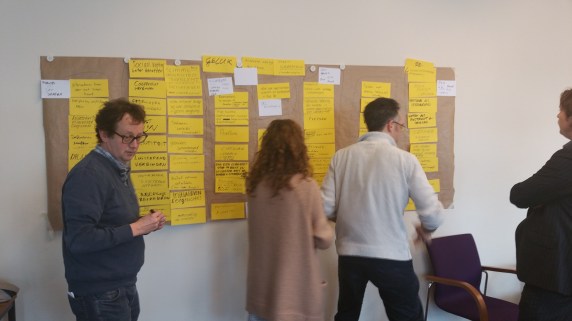
In the cocreation exercize 6 areas of attention were defined:
- How can we involve all people and institution into this health driven process? (involve)
- What are the impediments and problem spots in the region? (impediments)
- What are the admirable initiatives that can be highlighted and supported? (initiatives)
- What experimental initiatives can we define? (experiments)
- Can we organize events for people to experience what we want to achieve with their help? (events)
- Let’s investigate in the region what residents feel about the subject? (research)
Health, files and areas of attention
With “health” as leading topic the files and areas of attention could easily be combined into a matrix.

Just one meeting was needed to populate the matrix with multidisciplinary teams that develop the ideas into projects with the corresponding commitments.
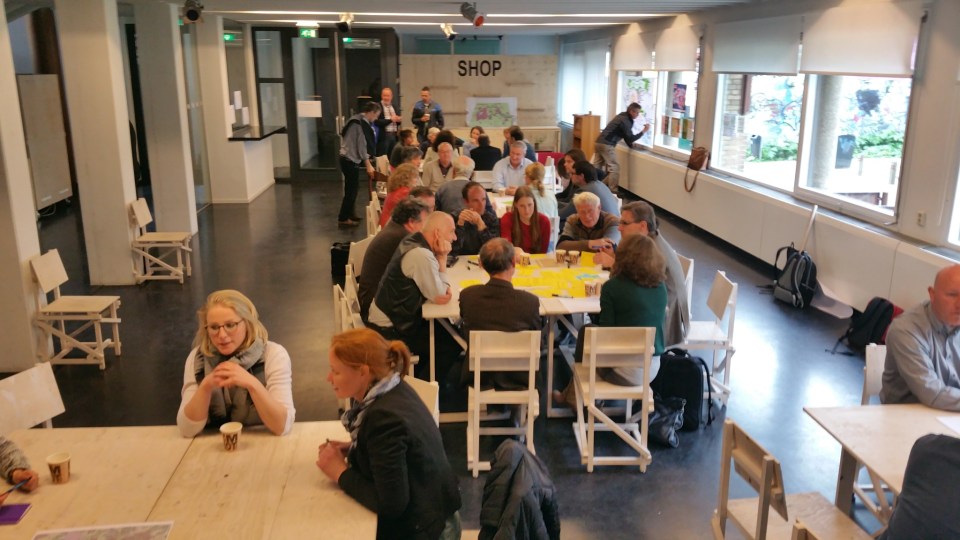
The multidisciplinary tables in action
When a project is defined it is seconded by all and deliveres a measurable result that can be related to the higher sustainocratic purpose, Health in this case. Since all key partners are available to commit resources the project can get rapidly equiped with the finances, technology, human creativity and hands on power to get into an execution phase. The process can be repeated as often as needed in the region with increasing involvement of all stakeholders together.
The process is fast, dynamic and very effective. One of the polical executives mentioned with a degree of surprise: “In one afternoon extremely difficult and complex projects are defined here and committed, what normally takes us 30 years!”
Many regions around the world are now coming to see how we do this. India, China, central Europe, Turkey, etc are candidates for developing sustainocratic platforms soon.
We tend to work in three steps with them in Eindhoven:
- Come over to learn and get inspired
- Come over to discuss how to implement it within their own regional complexity?
- Implement locally and establish a cooperation to work together
That is how Sustainocracy expands by combining governance with new guidance based on core human values and integral societal involvement.

