Home » AiREAS (Page 47)
Category Archives: AiREAS
System versus change
“What happens when you lock up 300 eager pioneers in a container of a sinking ship on shipwrecking course with the message that they have to save the ship without food nor support while the ship’s captain and his team party on deck inside their self made safety rafts?”
That was the feeling I got yesterday when I was invited to the first “Smart City and Communities” encounter in Brussels. It was organised by the EU for the 300 smart city commitments that had been gathered earlier this year. People from 30+ countries had invested in creating ideas, some already in phase of implementation, and travelled to Brussels to see if they could get support to further work it out or expand their work. Many of the pioneers had gone little further than expressing an ideal, often technology based, in need for cash. Others, like myself, presented working instruments for change, with a 4 year precedent, hardly any money need and ready for growth.
When you arrive at such EU scene you feel somehow “selected”. After all you received acknowledgment that an idea seems valid for the future of Europe. You expect to be received accordingly. After all, Brussels is the capital of Europe and well known for the many billions of public tax money that is used to sustain banks, governments and, above all, them EU selves. As pioneer of a new era one feels suddenly welcome in a systems reality that can facilitate our growth and new stability. We can indeed save Europe but need support, freedom to create, connections and means.
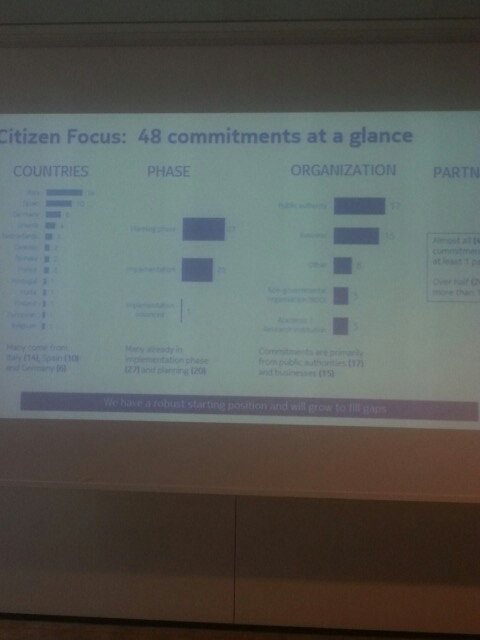
When we arrived at the meeting centre our cheerful sentiments changed rapidly. The reception inside was a hidden away garage hall where we could collect a badge. A labyrinth of stairways and corridors, resembling a mix of hospital and prison, took us to a side room where we could listen to the monotonous program explanation of a lady with limited communication skills and no charisma. We were asked to join one of the 6 clusters to see how to take steps along a 6 month time line from idea to successful implementation.
Had no one read our commitment? We were not in for such old time industrial nonsense. We were ready to work and expand across Europe. During the opening speech it was made clear that technology would not be leading yet the clusters were managed by people from the largest technological organizations and lobbyists of Europe. Who was fooling who? On the EU Smart City site we could see the billion euro lobby of the big ones and we were there to expose ourselves to them.
The message was clear: “You have to save Europe”, create things that we can eventually sell to others in the world, become successful fast, “it is the performance that counts”, economy rules. “Money needs to make more money”. But there is no money for you so try to strengthen each other. The message was enhanced by a chaotic, hierarchy driven structure, old fashion techniques, boring presentations and set-up. One single piece of bread per person with water for lunch (various people had no lunch!), bad air circulation, over heated meeting rooms, low quality programming, bad hosting, hopelessly poor cocktail ending, it all showed the lack of understanding of EU management forces on how change and entrepreneurship works or how to create involvement.
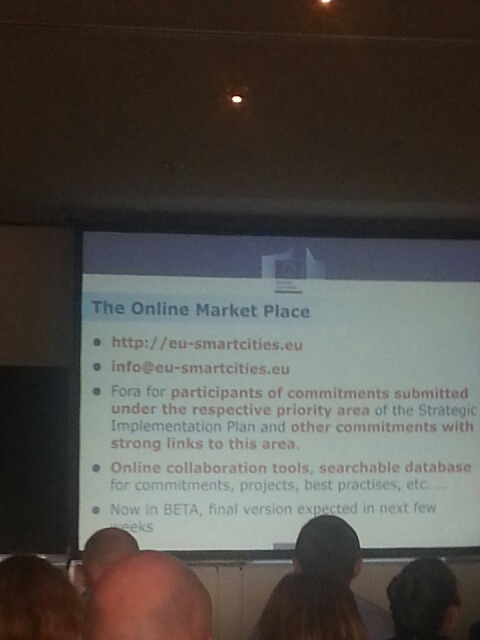
The overall impression was of a shambles, with total lack of creativity, highly managed, cheapest of the cheap, encounter. For me and my people it felt like an insult when we consider the personal effort we put into co-creating our wellness with strong innovation plans and proof.

System versus culture change
Not the system’s dynamics of mismanagement and political abuse made the day successful for us. It were the 300 beautiful people that had come and tried to connect in the scarce moments of open interaction. Many pioneers had just come for money but those of us who really had something to work with started their own structuring and openly began searching for network contacts to work with. What the system did not achieve was achieved by these people themselves. It showed very clearly the difference between two worlds:
* System oriented people: hierarchy, management, instruct, money driven, growth oriented, avoid change, time managed, fragmented, standards, bureaucratic, etc
* Change oriented people: visionary, (ex)change oriented, value driven, changed and desire growth, entrepreneurial, leadership, break through, etc
The pioneers for change felt of course bored, insulted, misunderstood, abused, etc while the system’s reality tried to structure feedback, avoid chaos, risks and change. They were two different worlds. The system’s world does not understand the world of change. In essence that is the problem of Europe. The EU system tries to solve its issues by applying what caused them in the first place, their own money driven, blindly managed rigidness, influenced by big multinationals that equally have difficulties upholding themselves. The tax payers money should be used to provide a sense of progression and innovation rather that a bureaucratic status quo.
It is good to have met some people who are also in the field of change. If the system wants to uphold itself it has to open up to the invitation of change or be prepared for chaos. That is the evolutionary law of living complexities through counter forces interacting on each other.

Those focused on economic growth only fear chaos and stand progress in the way
Brussels city
It was magnificent when we could turn our back to the prison and cold mechanisms of this encounter to enjoy the human chaos of a beautiful evening on and around the Gran Place of Brussels. We needed a couple of hours and few drinks to shake off the old age disappointment and gather back the positive can-do energy that characterizes our pioneering spirit. Two public demonstrations on the streets showed the discontent of other people. The beer was good, the evening nice and warm, the food great and the atmosphere overwhelming. Not at all bad after all.
AiREAS international blog
The first Local AiREAS in Eindhoven (Holland) is a precedent of co-creation around local hotspots of global attention. In this case the attention went to the effects of air pollution on our health due to direct (exposure) and indirect (global warming) consequences.

Air quality -> Human health
Working together in a purpose driven way by creating Local AiREAS in other cities, and a network of interaction between them all, demands a transparent reflection which we try to achieve via the new International Blog.
http://www.globalaireas.wordpress.com
We describe the earliest experiences in Eindhoven including the difficulties that we had to overcome to make it happen. Such difficulties can also be expected elsewhere in the world. We can learn from each other buy anticipation, sharing best practice and inspiration.
Feel free to follow the development of the global AiREAS movement to create healthy cities and wellness based communities, at its earliest phase of pioniership and growth. If you feel professionally or personally committed to the higher purpose or know people who are feel free to connect and develop with us the entrepreneurship 21st century for sustainable human progress.
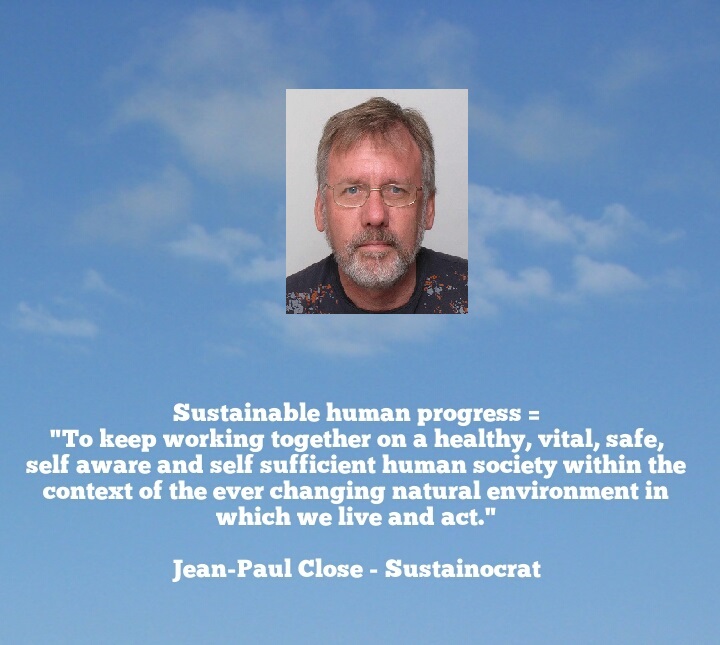
Sustainable human progress
Surprise at city awards for climate battle
Sept 23rd, 2014: Siemens and the C40 Cities Climate Leadership Group (C40) announced the winners of the City Climate Leadership Awards 2014 at a ceremony held on Monday night in New York City. The Awards honor cities all over the world for excellence in urban sustainability and leadership in the fight against climate change. The winning cities in the ten award categories are:
Amsterdam (Finance & Economic Development)
Barcelona (Intelligent City Infrastructure)
Buenos Aires (Solid Waste Management)
London (Carbon Measurement & Planning and Air Quality)
Melbourne (Adaptation & Resilience)
New York City (Energy Efficient Built Environment)
Portland (Sustainable Communities)
Seoul (Green Energy)
Shenzhen (Urban Transportation)
Read here the entire press release
In the international network circle of AiREAS (citizen’s driven healthy city cooperation, that started in Eindhoven and focuses on air quality and human health) people reacted with surprise that highly polluted London was awarded for Air Quality.
AiREAS is not submitted for these or any other award. We are hence not surprised. If you don’t buy a ticket don’t expect to win the lottery. It is not the state of pollution that matters but the effort a city does to solve the issue for human health and vitality. We @AiREASnl and City of Tomorrow (@STIRfoundation) reason using 4 paradigms, not just one. The award winning cities have every right to be highlighted, in their fragmented technologically innovative way.
What people tend to forget is that cities are the old conglomerates of “industrialised” financial and technological dependencies. People who live in cities enjoy the centralized facilities but depend for their basic needs (water, food, energy, clothing, etc) entirely of the system’s dynamics of the city with the surroundings, still totally based on money. To get access to money the citizens need to work or speculate. Due to system automation cities only develop consumers but not labor. Cities sustain themselves with growth, change, inflation or go broke.
Big enterprises such as Siemens depend on these huge city’s investments in technological solutions so award those that excel in this, rather than those (such as Eindhoven) that develop living lab solutions with their own population and entrepreneurship. In large cities systems prevail over human, responsibility driven interaction, simply because financial flows give old power to the political and economic structures. They however cover just part of the solutions.
Local responsibility is extremely cost and bureaucracy saving, very challenging even for the local creative forces that get involved in their own sustainable city progression with the development of a circular local economy, yet demanding a new local leadership mentality. It requires facilitating support from the policy makers, is not directly taxable nor instantly part of the global economic reality, so no reward system is in place yet to back it up. Local value systems appear in the city based on value creation and sharing. These subsystems detach from the large economies producing a power shift in the city.
That’s why solutions like Sustainocracy and AiREAS are not (yet) receiving global awards simply because they do not fit marketing communication plans. They just solve key local issues through co-creation, they don’t buy or sell them.
Four paradigms
Of the 4 paradigms available to cities, economic lobbies and fragmented power positions around public dependencies tend to push to a single focus, the one of technological innovation only, offered by the big global players. “Smart Cities” is not (yet) about people but mainly about (business) systems. From an overall global sustainable progress point of view we see that the other 3 paradigms need to be respected too, else the cities enter into chaos anyway. These other complementary 3 are however not money driven, hence hardly ever highlighted:
- Chaos: cities have to accept the collapsing of old obsolete structures and economic efficiencies to open up for overall renewal based on other types of innovative solutions (people, planet, profit) in a more holistic approach.
- Awareness: cities have to allow and help their self aware and responsible citizens to develop solutions of their own and connect to the evolution of their own community. This requires freedom for experimentation and innovation from inside the community. It opens up a new economic reality of cocreation, universal ethics, commitment and best practice from within.
- Harmony: cities need to learn to focus on harmony between nature, people, authority (rather than power) and their own regional self sufficiency.
Those cities that develop themselves using all the four paradigms (Sustainocracy) become strongholds of human evolution that contribute to the whole as well as the regional self. They become pearls of co-existence, harmony and flexibility. Then they will be rewarded by evolutionary progress and need to address the challenge of growth (in population) because of a livable, integral attractiveness, fulfilling the “sustainocratic dream” of sustainable human progress within, among others, climate awareness.

Jean-Paul Close – Sustainable progress starts at individual level and expands through value driven cooperation
Jean-Paul
 Sustainocracy, the new democracy