Home » AiREAS (Page 48)
Category Archives: AiREAS
The problem, the consequences and the solution
The problem:
The statement below is also referring to pollution, city convergence, life style, mobility, hunger, migrations, financial manipulations, power abuse, etc.

Awareness break through
The consequences
Need I say more? It is in our self interest to do something about it. Consequence driven investments damage economies and societies while proactive attention may give an innovative boost that keeps us busy for centuries. The Dutch have experience since we suffered our own water catastrophy in 1953, killing 1500 people. The implications now would be devastating, affecting 47% of the country. Time to act?

Solution:
The easiest way to “solve” this is to wait for the problem to pass by itself.
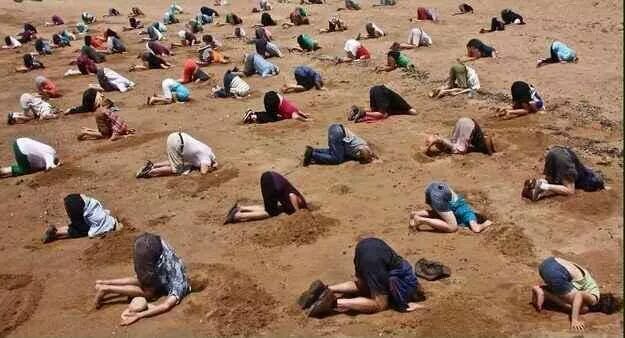
This is NOT the solution, despite being the easiest way to address the problem

This is NOT the solution either. Power abuse around money in fact stands solutions in the way.
The problem will indeed solve itself over time but scientists, economists and religious leaders now tend to agree that by that time there will be no human beings left to assume responsibility for our species.
10 years ago I stopped blaiming the world for unawareness and lack of sense of responsibility. For most individuals the issues are too abstract and mindblowing to picture one’s own responsibility. Surrounded by definitions of economic patterns and efficiency tools I could not find any definition for sustainable human progress that I could relate to myself. So I created one.

Just try to adhere in commitment to this and things will change, for you and your surroundings
The commitment to myself and my natural surroundings evolved into the STIR Foundation, the cooperative venture AiREAS and FRE2SH and the STIR Academy for 21st century society and entrepreneurship. It changed my life and many others that got involved in these ventures. We can now involve the world by providing guidance, tools, inspiration and innovation.

The STIR cycle for sustainable excellence and progress
Try it. It will change your lofe and that of your surroundings, always for the better.
Jean-Paul Close
Smart Cities Europe
Both the sustainocratic ventures AiREAS (healthy cities through air quality) and STIR Academy (sharing best practice and education on multidisciplinary cocreation) have been approved as valid partners in the Smart Cities approach of the European Union. See for yourself….
*****
Dear Stakeholder,
We would like to thank you for your interest into the European Innovation Partnership on Smart Cities and Communities and the submission of your commitment for action, following the Invitation for Commitments which closed on 15 June 2014.
It is with great pleasure that we accept your proposal as an eligible commitment under this European Innovation Partnership. Your commitment will be an important part in our common effort to build a dynamic market-place for smart city projects and solutions in Europe.
Following your indication, you are invited to join the action cluster K. Please feel free to indicate if you believe that your commitment should also contribute to other action clusters or if you think that your commitment should be fully moved to another action cluster.
Please note that the kick-off of the action clusters and hence the start of the implementation phase of this partnership will happen on October the 9th in Brussels. Further detail will follow soon.
We look forward to working with your organisation in the future.
Yours sincerely,
The Smart Cities & Communities Team
*******
AiREAS: Air quality curiosity and BBQs
Our civilian sustainocratic initiative AiREAS designed its own low cost real time city measurement network for registering and displaying air quality in near real time. We use state of the art technology, scientific modelling insights, etc. and measure ultrafine particles (UFP or PM0.1) that are smaller than a virus, PM1, PM2.5, PM10, ozon, temperature, SO2, etc. Our network was installed and calibrated in December 2013. Since then we collect and store valuable data.
Making the invisible visible from an air quality point of view is necessary in our multidisciplinary attempt to co-create a healthy city. Having the data is one, interpreting them is a totally different story as this unexpected event will show.
Unexpected peak
One of our partners, Imtech, in charge of data storage and ICT, is experimenting with data display on mobile telephones. I have the test app now on my phone to do some early fieldtesting. Another partner, ECN, in charge of the equipment development, has an internal display tool for testing and benchmarking purposes. This tool I use too to compare app and network data when necessary.
Every day I look at the status of the city. On the app I generally see the network as a bunch of green balls. They change color when the norm is reached (orange) or passed (red). On the computerbased tool I can see more detail and summary over time. There I often detect sudden peaks that come and go fast.
On the monday morning of Juli 21st I looked again on my app. The traditional boring green balls were all flashing red and orange. Here I display what I saw that morning:

It immediately triggered my interest. What could cause such sudden city pollution, particularly in the field of PM2.5? The other measurements did not show the same peaks.
I contacted ECN and they not only confirmed what I saw, they added that the peak had been gradually building up from midnight onwards! That was strange. We expect traffic related peaks but not a nighttime buildup when the city is expected to be at rest. Was there a fire somewhere? Quick research revealed that no special events were reported.
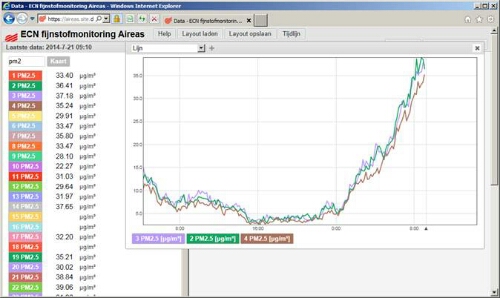
The sunday before had been a nice, warm summer day. The evening was warm, humid and windstill. Many people were still in town as their holidays would begin a week later. Reports from our civilian network spread over town added two issues to be considered:
* many people had been barbequeing that evening
* lots of people had complained of respiratory difficulties and a sleepless night
That night a fog had been building up over town from midnight onwards and slowly disappeared around 10 am that monday morning. The pollution peak had coincided with the fog, not the human BBQ activities. We were puzzled.
Someone suggested that our network was measuring water droplets as if it were finedust. That plausible idea could be eliminated because we use drying techniques before counting the particles and other foggy days had never shown such peaks. And water does not necessarily produce respiratory discomfort.
The local hospital also entered the debate. The hospital has operation chambres where also meat is burned, for instance to close wounds. CO2 concentrations in the OCs at one time had been high causing people to loose concentration and complain of fatigue. There is a natural relationship between healthy air and the number of ions in it. Ionizing the space helped overcome this problem. Then a new problem occured. Personnel had complained of nausea after closing wounds with burning techniques. Research showed that a specific combination of air moisture, ions and gases from burned meat caused chemical reactions that produced the sickness.
The question now arose if this could have occurred in the public space? The theory now is that on that sunday evening people massively BBQed in Eindhoven. The city is geographically located in a shallow dip. The bbq fumes accumulated in the city and were not dispersed due to the lack of wind. The high humidity caused fog to develop from midnight onwards. The water condenses on the finedust producing chemical reactions with the gases from the burned meat. Sensitive people who inhaled this experienced breathing problems, sickness and a sleepless night. At 10 am the problem disappeared as the fog lifted.
Conclusion
The explanation seems plausible as it could be contrasted with the experiences in the hospital that had been researched. Some AiREAS partners have promised to try to simulate the event in a lab environment to confirm the analysis or offer new insight. From a healthy city point of view we feel motivated to introduce bbq alternatives and innovations in town. We also have a new impuls to see if in wintertime similar situations occur when burning wood in stoves for heating. What does this do during foggy days?
All people involved were impressed with the multidisciplinary interaction to come to a plausible explanation. Many people were triggered positively to participate in the debate. It has not ended yet of course but the curiosity has pinpointed us to an issues that we can solve ourselves as citizens through awareness and innovative response.
AiREAS is creating Local AiREAS initiatives throughout Europe now. Maybe we can share experiences both in the field of public space as special environments s.a. hospitals.
Jean-Paul Close
Co founder of AiREAS
 Sustainocracy, the new democracy