Home » multidimensional world (Page 16)
Category Archives: multidimensional world

Merging the silos into sustainable human wellness development
Our current society model, also referred to as “the system”, consists of functional silos that interact on the basis of self interest and financial dependence, within a mindset of financial growth. Regional governance is based on facilitating this model while attending any negative consequences through policy making, regulations, taxes and bureaucracy. Issues are seen as a cost, covered by taxes and debt while our basic needs are treated as consumable and speculative commodities, not as shared responsibilities.

The increased needs for financial means has diverted from care and regenerative productivity into speculation around shortages, causing large areas of poverty, institutional financial tunnel visions and massive citizen dependence on financial means, deprived of ways to be self sustaining while resident in every growing cities. Also the environmental issues, where resources are extracted from (the extraction economy) in a seemly unlimited way, are reaching a point of no natural recovery.
It is hard to pinpoint a sole responsible for the existential values that are important for our integral long term sustainable existence as a species, let alone our wellness. These essential values all seem to be in severe jeopardy. The only way to address this is by taking our responsibility together, with all silos engaged. Interaction not based on their money dependence or hierarchical interests but by contributing to these shared essentials. But who is supposed to do the engagement work where equality is leading among all islands of engagement? If any of the silos does this, the engagement develops according the DNA of that silo, not the core essential human values.
That is where the STIR foundation moved in as a research foundation about human behavior around creating perspectives for its own sustainable existence. STIR started to invite the silos into coalitions that restore and sustain prioritized essential human values at regional scale. STIR researches the way the different old silos react to this invitation, seen from their old comfort zone, their self interests, their expertise and their possible presence in the center of the shared commitment. Below we see one of such prioritized platforms of engagement, called AiREAS. It is about restoring and protection our health and health environment together.

The picture above may lead to the confusion that AiREAS is receiving the responsibilities of the silos in a delegated way, as a separate institutions. This is definitely not the case. AiREAS is a partnership organization, with a purpose and meaning. Each partner is asked to carry their own responsibility and gather in AiREAS to connect with each other and strengthen each other’s commitment by developing programs together. STIR chairs the AiREAS interaction in a contextual way, safeguarding the contextual essence and commitment while doing the project management in the multidisciplinary environment. Redrawing the picture we arrive at this. The bubbles of each start overlapping when accepting the invitation.
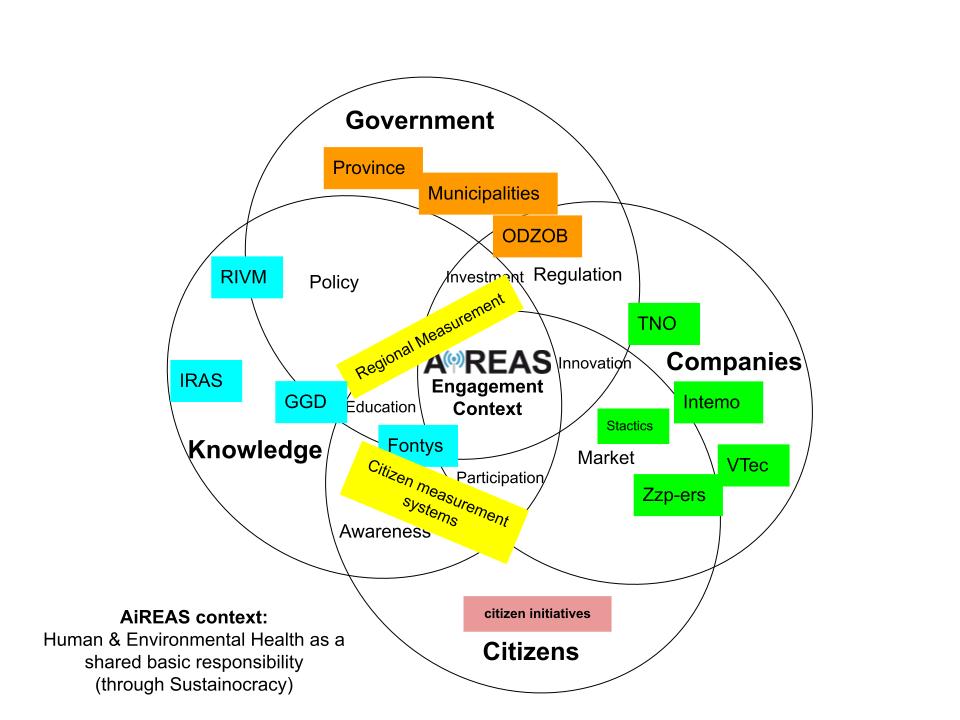
There where all silos meet and overlap, the open space of co-creation and integration appears. It is developed under guidance of AiREAS and STIR in order to assure the framework in which the co-creation takes place. The further away one stands from the central overlap the more one does things oneself, or allows other traditional (self)interests to play a role in the commitment. It is up to the participants themselves to decide where to stand in the picture. Often it starts shyly self centered somewhere in the outer boundary, pinpointing responsibilities to others while protecting their self interests. But gradually one gets to taste the value of co-creation and regeneration, also for themselves. Then the move to the center and the joy of the meaningful positive “can do” energy in the community is a fact.
The rules in the converging center are different than in the outer perimeter of each silo itself. In the center the results count, not just the discussion or intention, including the impact driven contribution of each of the participants (members). The center is based on absolute equality, respect and trust among the participants, without hierarchical power positions, impositions or limitations. It is the commitment to achieve regenerative health and a healthy environment that counts and the concrete actions that are designed to get there in an integrated way. STIR pulls the zipper towards integration until integration becomes a valued position for refueling the short and long term successes of each of the participants. Meanwhile the region is and stays healthy and with an unpolluted environment.


West Turkey work visit for a mental health project
For years, the City of Tomorrow has been working with Stichting Bij de Tijd, among others, in the field of young people on a European scale, according to the insights of Sustainocracy. We make grateful use of the exchange opportunities offered by the European Erasmus+ programme. In all those years we have welcomed and inspired thousands of young people, teachers and education representatives here in the Eindhoven area. People often come up with an idealized image of the Netherlands that only partly corresponds to reality. We then show the major challenges we face and how we try to shape them, including the mindset change that Sustainocracy stands for. In this way we often nuance the image people have of their own situation in their home country.
Travel to Turkey
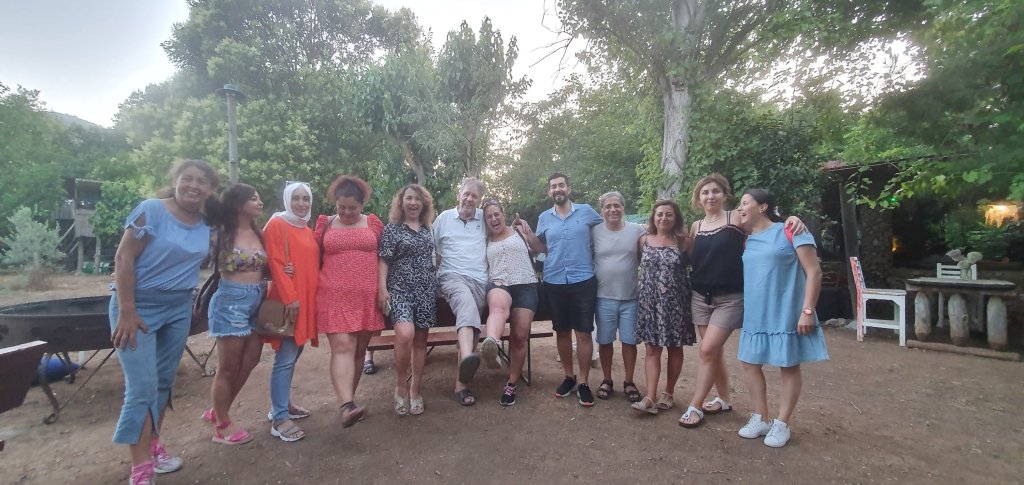
This time, the City of Tomorrow was invited to participate in the “Jump to Mental Health” project that was to be carried out for five days near Fethiye in Western Turkey. Representative teams from four countries (Turkey, Poland, North Macedonia and the Netherlands) participated in a program to strengthen the mental resilience of people, especially youth. One of the most important techniques according to the City of Tomorrow is that of open, natural and human value-driven contemplation. So look, feel and interpret for yourself and do not rely on (pre)judgments from the manipulative media, populism or marketing from interest parties.
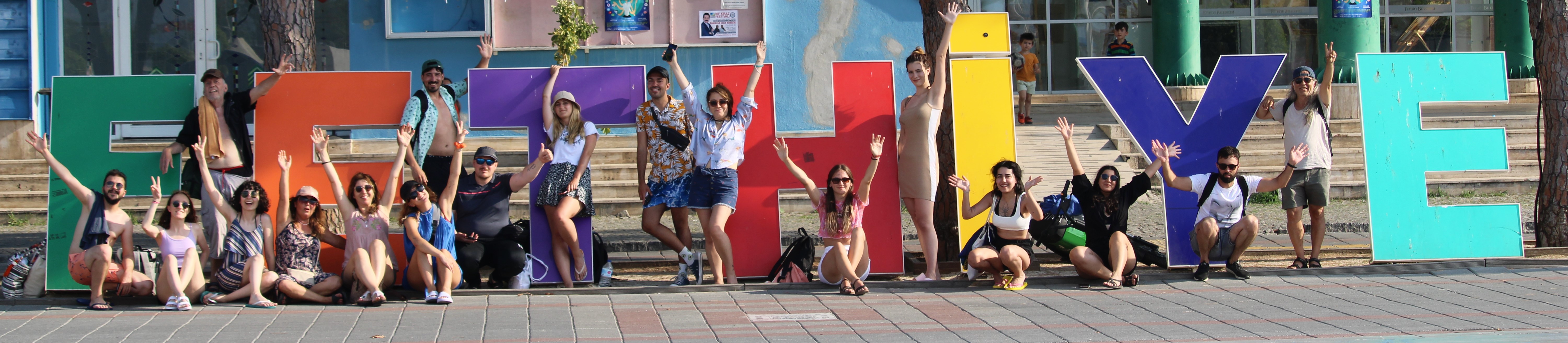
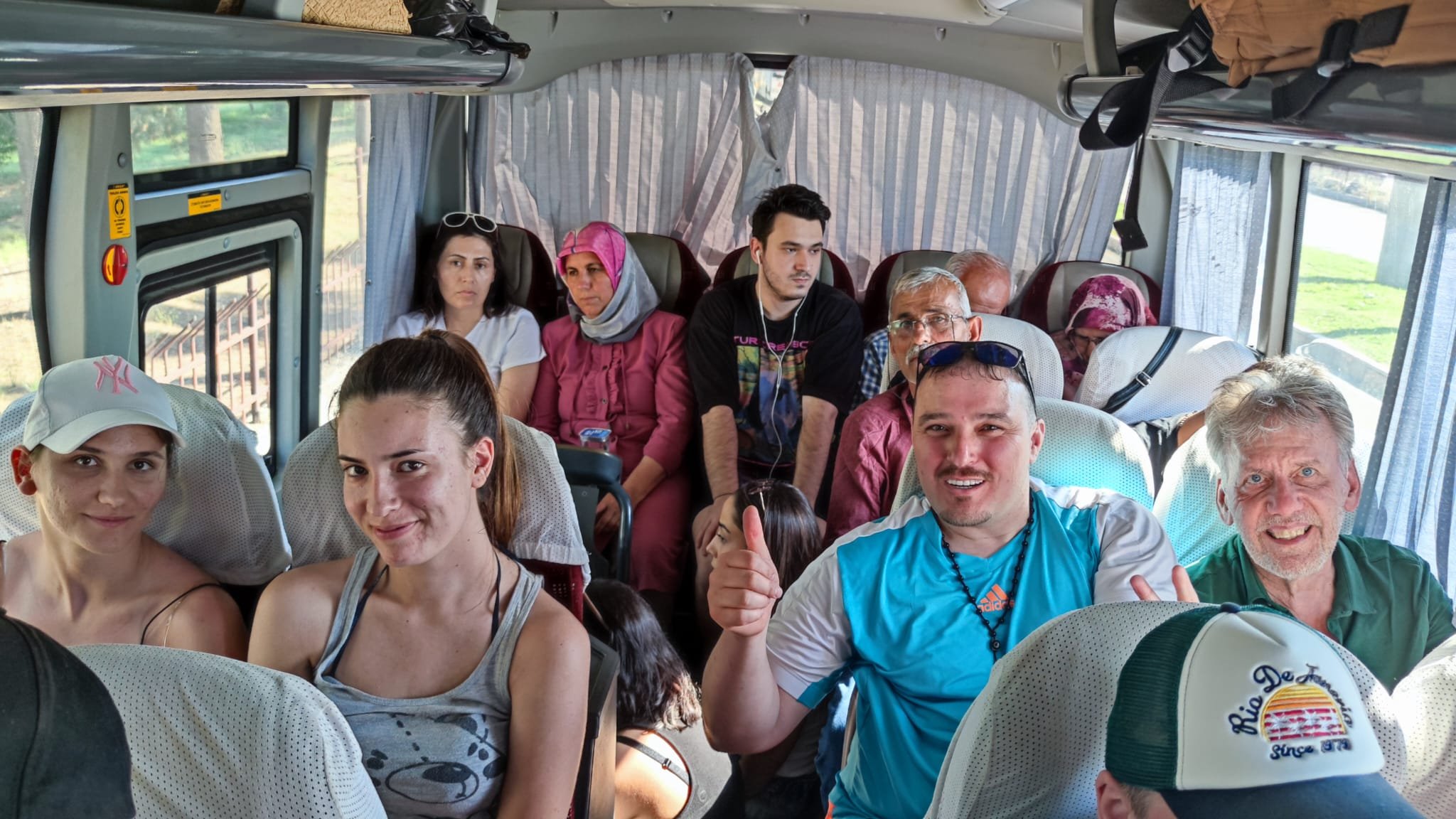
For the outward journey I had chosen Amsterdam (Schiphol) – Antalya. Amsterdam and Antalya are roughly the same size, with a population of around 1 million people. Yet the cities have their own unique character, culture, history and geographical location. Antalya turned out to be lively, with a good modern and accessible infrastructure, spacious, clean and (certainly by the highly inflated, speculative Dutch standards) cheap (in the sense of affordable). The flight had taken 3.5 hours and now we had to take a bus trip to Fethiye of an extra 3.5 hours.
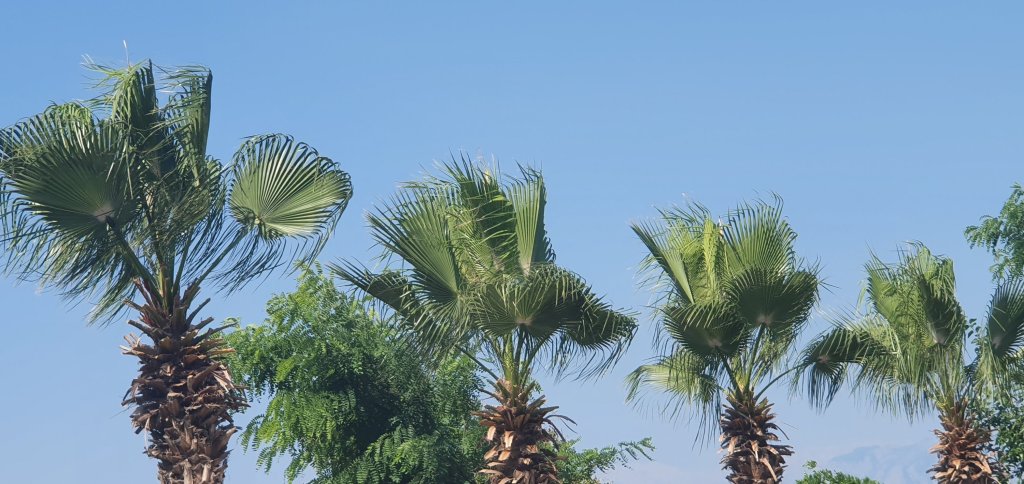
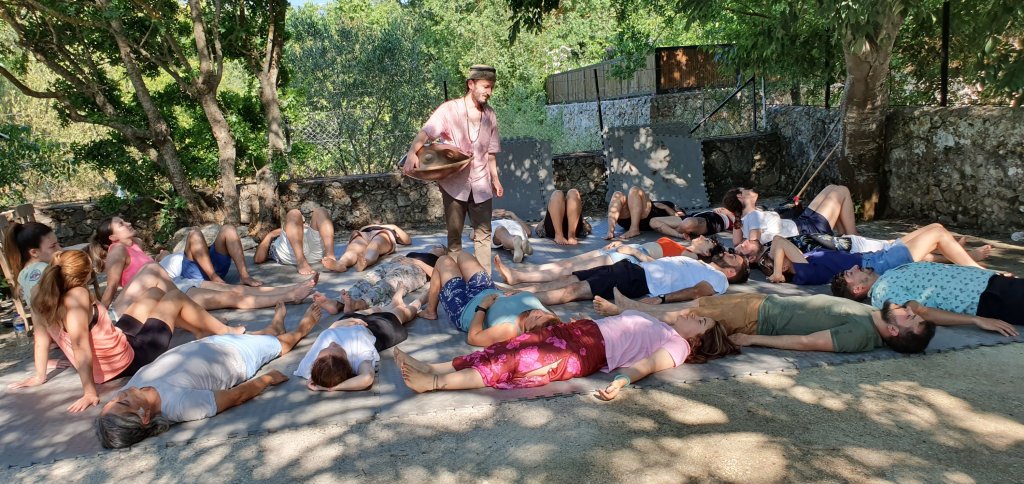
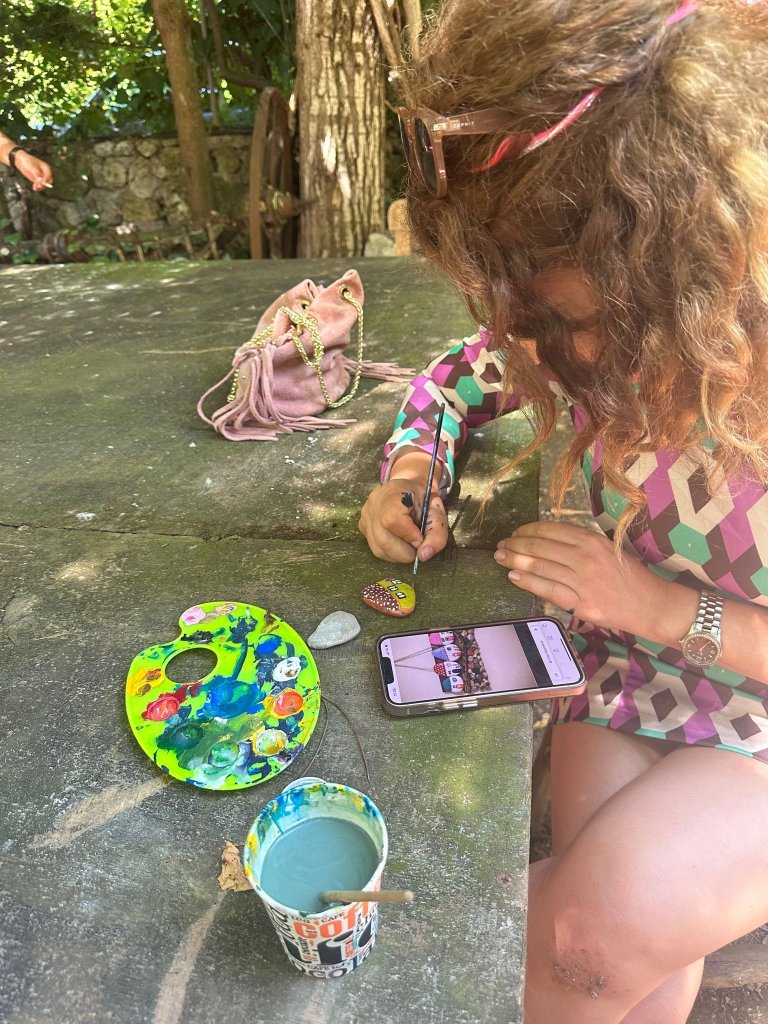
Our five-day workplace was in the mountains near a historically abandoned place called “Ghost City” and also “the Stone City” (Kayaköy). The workplace itself was a green, community-like oasis, with fruit-bearing trees and shrubs that provided a lot of cooling in a mostly very hot climate and surroundings. All kinds of housing, from tree houses to tents and mud huts, formed the accommodation. During five days we were immersed in workshops that could stimulate mental health.
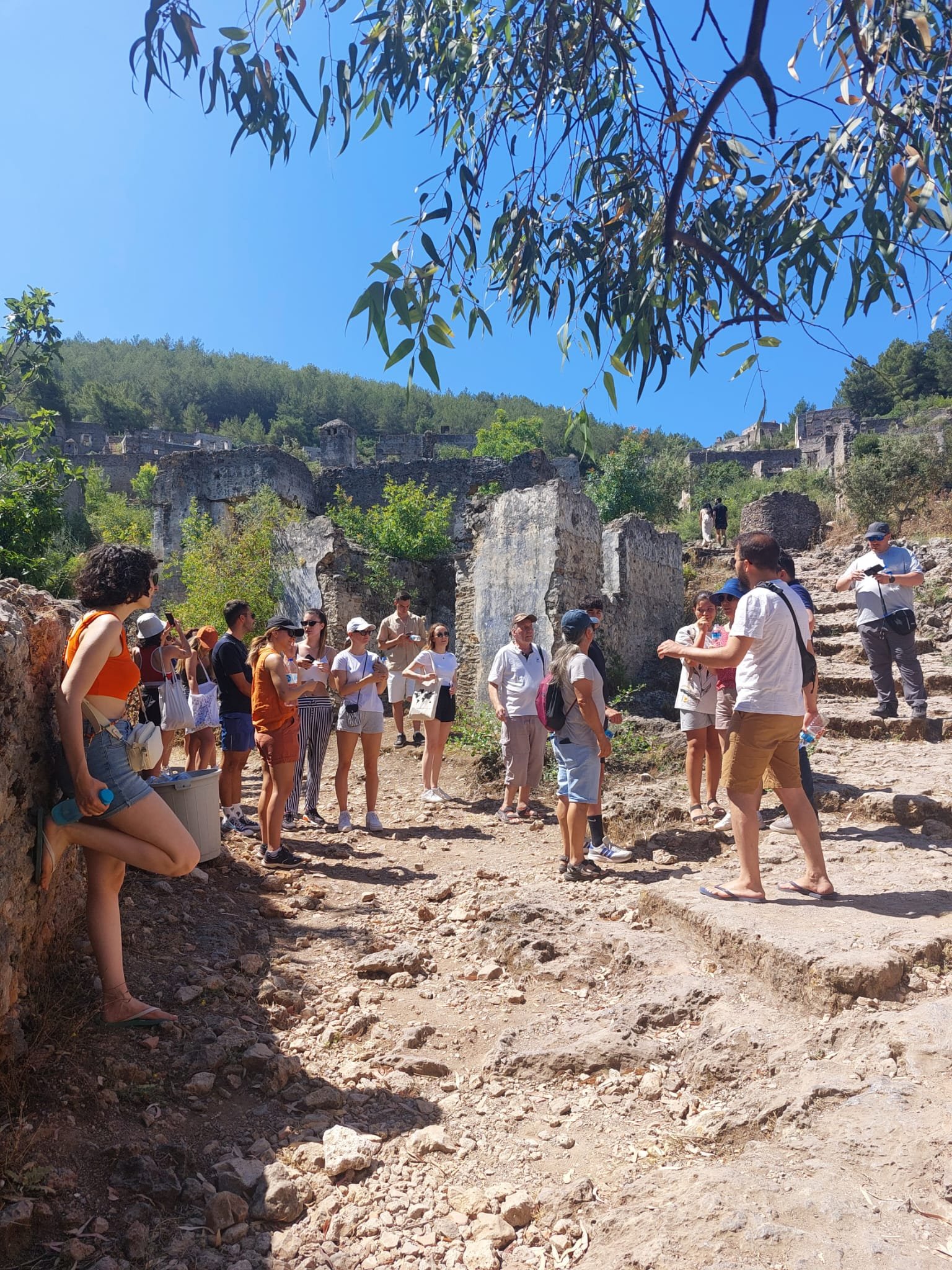
There were also trips, such as the introduction to the abandoned Stone City, an ancient community of Greeks who exchanged the area with the Turks for another territory after the First World War. The Greek Turkish overlapping history and culture of many thousands of years can be seen all over the region. The highlight of the program was the boat trip that took us to different swimming locations along the rocky coast during a whole day. Along the way a rich lunch was offered and there was wonderful dancing to pleasant music.
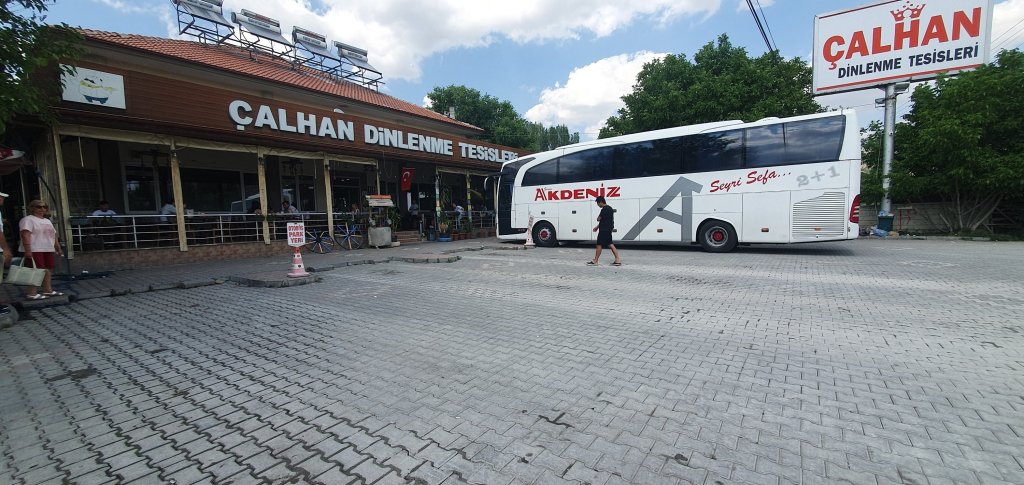
On the last day I still had time to visit the coastal town of Fethiye itself. The teachers from the local schools, who had visited us in Eindhoven through the same Erasmus+ exchange, had already come to see us at the mountain resort. It was a great reunion with these special ladies and gentleman. This coastal town has known all kinds of names and societies throughout history, all of which have left their visual (and maybe invisible) markings behind. In our modern times, the place is a sought-after tourist destination by the sea, with islands, beautiful hidden beaches and rocky coasts visited by the many pleasure boats as we have experienced days earlier. The town appears spacious, clean, modern, cosy, friendly and with many facilities. Cars were largely taken our of the town while space had been made for biking. Still local people complain about the exodus of young people due to lack of employment and opportunities.
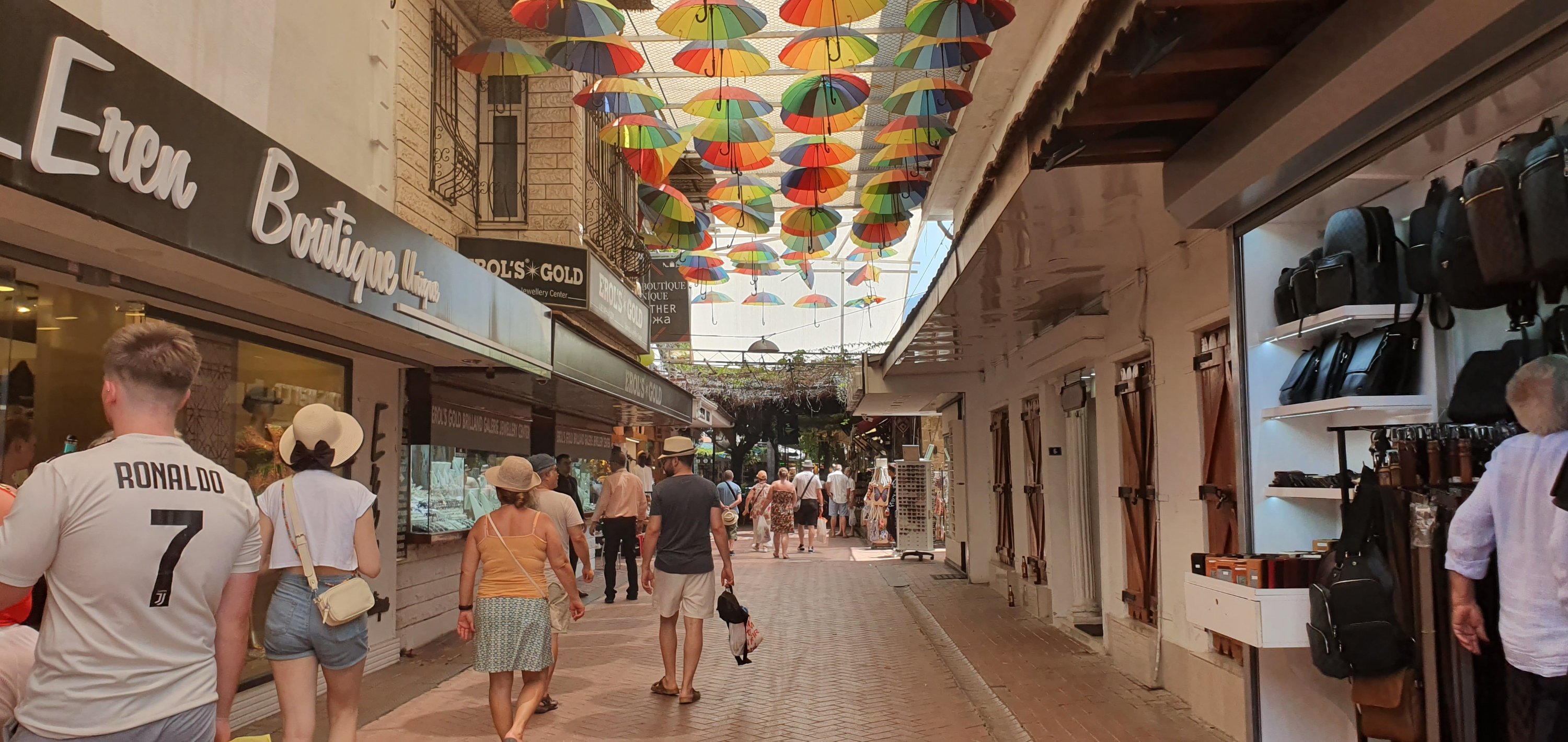
The project itself aimed to provide the participating youth workers with tools and insights that they could also use at home. The creativity that was put into the workshops has clearly produced inspiration. Also the journey itself, the inspiring location, the link that can be made everywhere with the essential values of our existence according to Sustainocracy, the comparison between the way of doing things in this part of Turkey and the home base, getting to know the other participants, the teamwork, etc are all sources of impactful information to be processed for possible use.

We will check whether this actually happens in a follow-up interviews with the participants, as well as the processing of their evaluation of the trip and the program. As far as City of Tomorrow is concerned, there is a solid foundation on which to build further. Many dimensions of learning and experience around the essential values, or lack thereof, are present and a rich treasure to draw from for awareness, new forms of entrepreneurship and design of social structures that promote the mental well-being of everyone. Hopefully we will see many young people from all countries take advantage of our offer and the exchanges that we prepare and further develop with these experiences.



Why we need to help Nashif in Uganda, explained by Nashif himself
It is often difficult for us western people to imagine the situation that young people go through in African countries. Nashif was born in Uganda but does not have the same opportunities as local young man because is considered a refugee. That is because his parents were refugees. Social discrimination, financial exploitation, abuses, etc are not uncommon. No matter how entrepreneurial he is, he is surrounded by a negative mindset and culture towards him. He recently finished his education as a veterinarian but he can not put his knowledge into practice because of his needs for medical instruments.
Listen to Nashif here, the podcast we recorded to share his passion, his plans, his enthousiasme but also the drama of tough difficulties. A GoFundme page has been opened to help him forward. For us it may be little contributions, for him it is the development of a professional life.
 Sustainocracy, the new democracy