Home » Sustainocracy (Page 78)
Category Archives: Sustainocracy
Social inclusion
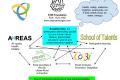
When our AiREAS POP research revealed that our exposure to air pollution was related for 50% to our selves, lifestyle became important also for us citizens. The other 50% was due to the political economic structures that feed our lifestyle. So when we address our lifestyle we address pollution, undesired illnesses, expansion of health care costs, wellness in general and even politics. This is a mayor revelation. We used to pinpoint to governance, now we can pinpoint to ourselves. In fact, our reality is what we percieve and make of it. Perception and make ability of change is an interesting concept worth exploring. Making visible the invisible is an aspect of AiREAS that goes beyond simple measurement of air pollution. We try to visualize the effects of behavioral change on our health and quality of life.
That’s how we arrived at creating COS3I. The S and 3 make a heart shape which refers to the passion of wellness driven cocreation. The COS3I word stands for Cooperative in Social Inclusion, Integration and Innovation, hence the 3i.
But social inclusion in what? In our STIR case we decided to invite people into our core human values as defined in Sustainocracy. Rather than moralizing about air pollution and our own responsibility we wanted to get social inclusion into care for health and our opportunities. This represents a total turn around for people’s thinking, transforming from structural dependence to self leadership, through awareness and engagement.
But people do not relate to stuff they do not see. A new dimension is therefor added to our human interaction. It is one of the positive enquiry, the positive invitation. the engagement to genuin values. When we started doing this all kinds of circles of common interests started to appear. Each could be related itself to social inclusion but also used to engage other citizens.

Each of these circles has very passionate people that wish to share their passion with others. We create neighborhood festivals in which we announce workshops and let people experience the circle’s energy with the invitation to engage. Despite the difference in focus the final effect of all circles together is a vibrant neighborhood and powerful wellness driven awareness and mentality. In the end the air quality improves through the social interaction, purpose driven social innovation and positive inclusion.
So internationalized that we lost our own authenticity?
Are we too internationalized in Eindhoven? Is this happening in other cities too? We arrive at interesting insights when we launched the magazine “150 years Living in Eindhoven” these days. We asked our international community what we could do for them to integrate better into our society and stay longer? Their response was mindboggling and uncovered yet another level of modern city’s vulnerability.
In the reigning political, economic and speculative reality it is lucrative for a town to focus on pleasing those who come from abroad for a couple of years. After all they bring talent and extra productivity. It is good to have them and often these new residents bring in fresh cash. It is therefor a strategic move to make them feel welcome. The longer they stay the better it would be, in theory, for the economy. But analysis reveals that people tend to leave within a few years…Why?
We asked our visiting students and expats about their challenges and interests.
In Eindhoven our local population has important problems to find proper housing. Waiting lists for rental homes are long, up to 8 years. It is therefore surprising that the visitors have everything taken care of. Keeping a housing shortage for locals drives up the costs of housing and living, which is seen as an economy of growth. Shortage for expats and students however would keep them away and this is not lucrative. Is it all again just economics that rules? How does this money based focus on internationalization affect the community as a whole?
*What do you miss then?*, we asked during the presentation of the magazine, which we presented in English too in order to get newcomers to engage with our roots. The surprising answer was “there is no local stuff to enjoy. Where is the local culture in Eindhoven?”.
Indeed, everything seems concentrated on engaging with the foreign people, including presenting a wide choice of things from their original home culture. All the local elements have disappeared. “Even our local architectural herritage”, states editor in chief of the magazine Peter Tholen. The local alderman, Mary-Ann Schreurs, said that this was “due to the economic success of the city, motivating it to modernize its herritage”. Old cities with their historic centres had, according her, suffered poverty and hence did not have a chance to destroy their historic properties in order to replace them with modernism.
So the richer you are as a community the less engaged you are with your roots? That is an interesting viewpoint….and highly disputable….
In Germany, France, the UK, Italy or Spain people can enjoy the local atmosphere in cities. There is the local food, local drinking habits, local language, local architecture, local climate. In Eindhoven we have the international diversity and rain. That’s it. There is nothing else according the people consulted. This is one of the reasons people get bored and leave again after a few years, as stated by themselves. They go to Berlin, Barcelona or London. That is an interesting conclusion. What we are proud of as a city seems to be also our mayor handicap. Our excessive focus on internationalization….
Who makes the difference?
According to the visiting population the nightlife in Eindhoven was boring. It is gradually changing, but not because of the locals. It are the contributions of foreign people who introduce their own initiatives to combat the absence. The local people are too occupied with surviving in an economically adverse climat in which they hardly can rotate their homes, have difficulties to find a job, feel financially blocked by excessive taxes, imposed financial responsibilities, social securities and limited career options. It is a huge contrast with the international community that gets all the facilities, is well paid and has a large potential of time, need, motivation and means to deploy themselves into the city.


“Rather than helping the foreign population we should help the locals”, became the overall suggestion. The lack of opportunity these locals have due to the regulated shortages seems to reduce their engagement to social life. “We are motivated to do things with our lives here because it is all new,” students state, “and share WhatsApp and social media to help each other”. Locals don’t. They are reluctant to engage out of fear to loose social benefits. Or they feel competitive jealousy among each other caused by the shortages and lack of opportunity. Their individual or collective comfort zone and autopilot is limiting them to do things in a different way….
This observation was also relevant for foreign residents someone stated. “I have been living here for five years and had never been in this expat center”. Also foreign people tend to engage with what they like at first sight and then stick to it without creating regular change in their habits.
The vibrant livelyness of introducing a game or challenge has to be focused therefor on the creation of awareness that there is diversity to engage with while getting people, foreign and locals for equal, to step out of their comfort zone once in a while and try something new.
Local government says it does not want to stigmatize people and wants to treat them all as equals. But is this true? There is a distinction between the facilities and motivation of the local population and for those who visit. From an economic point of view these groups are perceived differently and treated accordingly. There is no equality, not in the investment nor development of opportunities for people who are long term residents. All effort seems to be focused on the growth of new people from elsewhere because of the fresh cash they represent.
The international community even offers voluntary work to see if they can make a difference for the locals. It was amazing to come to such insights. How vulnerable is a city when it depends entirely on the influx of money from elsewhere? How vulnerable is a city when it’s herritage is destroyed and its old culture eliminated, and with it its attractiveness for everyone? And: “How vulnerable are people and communities who easily get fixated by their comfort zone?”. How can this be changed? And with what effects on the human beings themselves, the society, economy and local culture?
STIR Foundation is focussing on core human values in which regional resilience is achieved by engaging all citizens into these values. It is referred to as “awareness driven regional cocreation”. Such insights demand further research and most definitely progression in the social inclusion for the wellness development of the entire community. True equality is not just reflected in true equal opportunity but also in the stimulus to make use of it. The opportunities have not been taken away by the arrival of international people but through the speculative governance over its local population. It is the international population that helps the community restore its old values and engage with new ones in a true potential identity crisis.
For STIR and our mission it has been an eye opener and an interesting challenge to connect the two worlds into a culture of interaction and progression, based on true, authentic local value creation, recognition and sharing. This may be the biggest justification for the introduction of a local city currency.
150 years living in Eindhoven
Eindhoven grew from a small rural town of 6000 citizens in 1850 into the world known vibrant multicultural community of over 220.000 today. Many people lived here for some time to study or work in one of the multinationals or local enterprises and have still memories or even family ties. Others consider moving to or visit Eindhoven, not just because of job opportunities but also because of the local focus on a healthy environment and intercultural interaction.
This global Eindhoven-minded community has now access to a unique series of stories that describe its culture and development over time, as described by the top historical story tellers resident in town while using original photographs.
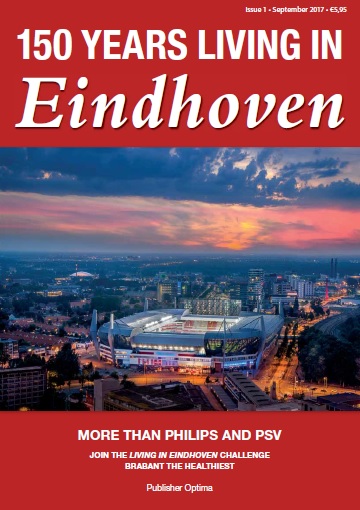
On Sunday 17th the series is released and presented in the Expat Hub for our local international community. If you are living abroad and interested in the magazine and series (2 editions per year over 3 years) you can contact our partner Eindhoven News (eindhovennews@gmail.com). The price is 5,95€ plus postal charges if we need to send it to you. This first edition describes all kinds of aspects of the development of Eindhoven over de the last 150 years such as Philips, DAF, the digging of channel, the anexation of villages, the care system, etc.


The second edition, due in October 2017, will deal with people, choices and the reaction to challenges that have been decisive for the city as it stands today.
 Sustainocracy, the new democracy