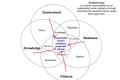
I asked ChatGPT to help position the online tutorial about Sustainocracy.
Introducing a word and societal concept that hardly anyone in the world knows is difficult. Announcing a tutorial about it on a global commercial learning platform is nearly impossible, even though its application can “save the human world”. So I asked ChatGPT to come up with a suggestion for a persuasive title and a price. This is the result:
Sustainocracy Unveiled: Your Guide to Sustainable Societal Transformation for 49,99€
The arguments of the artificial intelligence platform for the relatively low price setting was that I could always increase it. At this stage it was important, according ChatGPT, to lower the possible barriers for participation and reach out to an as wide audience as possible. I indeed agreed but as an old business developer I still had the inner bias around the emotional perception of “cheap” is “low value” rather than “easy access”. But this is not business development, it is an invitation to a way of thinking. That makes the difference. The price is therefore only relevant in combination of the title. This needed not be commercial. It had to be persuasive. The result speaks for itself.
Sustainocracy Unveiled: Your Guide to Sustainable Societal Transformation

STIR Academy goes online and worldwide with the Sustainocracy challenge
Sustainocracy can be seen as “the next step” in the evolution of humankind, one that we can initiate ourselves, engage politics and economics with, make institutions transform and solve many world crises together. Our alliance with learning environments, students, teachers and online platforms helps us to inspire you, other people and institutions across the world to use the ideology and methods for their own empowerment and sustainable development.
The challenge we announce through the link is the first of an entire learning platform to be developed over the next few years. It is meant to get those who engage to develop and experiment with the Sustainocracy mindset for sustainable human progress. Maybe you feel inspired to join and become part of the movement and evolution?
https://www.learndesk.us/class/6608651009654784/introduction-sustainocracy

Political culpability for humanitarian and planetary Anthropocene.
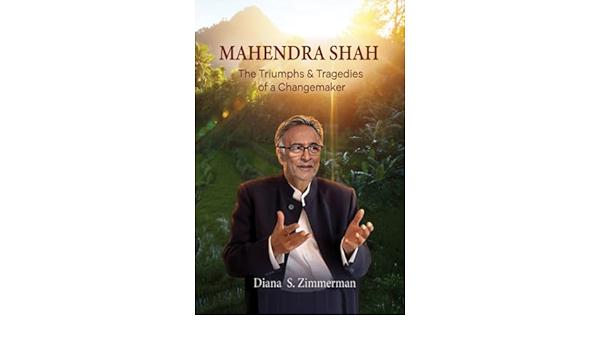
For over 30 years Dr. Mahendra Shah has been delivering analytical report after report to the political and operational hierarchies within the United Nations. All the papers that he, together with his collaborators, produced are publicly available. He has now published an autobiographic book in which he lists in great detail his professional trajectory as an executive in this United Nations environment. Millions were spend on analyses, reports, with great human efforts and sacrifices of family life, all because they were sensed as important for decision makers and the quality of sustainable life of humankind on a planet with finite resources.
STIR Foundation was privileged to pre-read the manuscript. We see it as a documented proof of the wicked bias of political powers that neglected systematically the warning signs and documented advice in favor of other priorities and certain (self) interests. It is evidence of political culpability for humanitarian and planetary disasters that are being suffered. Never before have we read such a clear testimony. Read it yourself and draw your own conclusions.
It is high time that this systematic abuse is stopped and transforms into a new format that harmonizes with life, involving all human beings and our natural environment. Sustainocracy is an example of a positive invitation, also to politicians, business people, scientists and legislators, to develop our shared responsibilities for the essential values for our existence together. These are not expressed in money, costs, politics or commodities. They are shared responsibilities. Having the choice people can do what they did with Mahendra´s work: boldly neglect it and hide. Or they can decide to acknowledge their responsibilities, act as a consequence and be praised for it. This also is relevant for business leadership as a whole. It is never too late and we at STIR will defend the continuous invitation and praise for those that do take the step and chose the side of sustainable wellness as a co-creation. Like Mahendra did when he decided to invest his time better and with immediate effect in his Zen Resort of Bali as a 4 x WIN entrepreneur.
But we can also imagine that others will take the route of well documented blame and call for justice to those that have systematically neglected the historical advice or the invitations to take responsibility. The words “we did not know” can not be issued anymore as an excuse. One way, or another, there will be a turning point with a before and an after.

 Sustainocracy, the new democracy