Home » Posts tagged 'ethics' (Page 2)
Tag Archives: ethics
The spiritual dimension of business ethics

Thanks to Prof. Laszlo Zsolnai (University of Budapest), who did the tremendous job of selecting and editing the 18 high quality papers, I received my personal copy of this highly recommendable publication.
The book refers to our 3 day encounter in September 2012 in Visegrad, Hungary where each of the papers and many more were presented. I reported about the extraordinary encounter through this same blog “why everyone avoids spirituality” .Why everyone avoid spirituality
Today, at the time of appearance of this book, we are 2 years further in time. The venture described through my paper in the book is now extending into varios cities across the Netherlands and will also be deployed throughout Europe. Other Sustainocratic ventures were born and grow equivalently proving the spiritual and scientific significance of this international publication, the first of its kind.
City development is a complex ethical issue

Recently I was asked to participate in the Power to the City debat
Modern city development is a confrontation with ethics
City development is a human path along ethical breakthroughs and value driven leadership, based on wellness and harmony. Some cities in the world take the lead (eg New York, Eindhoven). Many others show horrible signs of decadence, speculation and chaos.
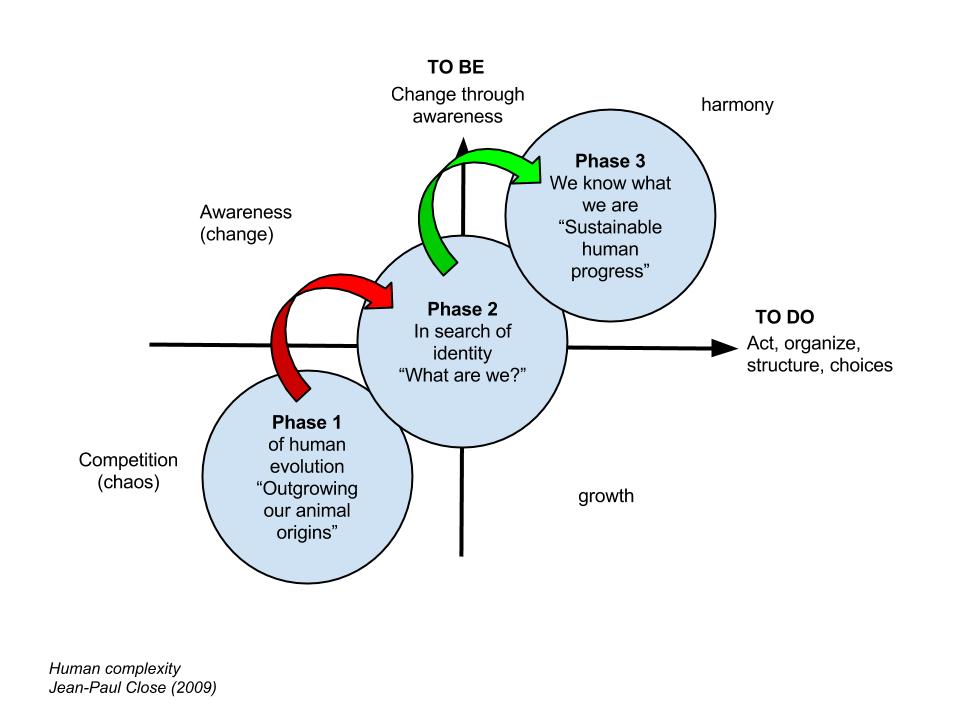
Leaps in Ethics guides our evolution
Using the complexity model (organization versus ethics, TO DO versus TO BE) in relation to the impressive explosive expansion of cities we can see that the city environment has become the utmost melting pot of speculative decadence and an ethical leadership challenge without precedence.
Just have a look at the evolution of London from 1800 till now:
The expansion leap of the city is especially spectacular from 1950 onwards. It is fully in line with the mathematical exponential function of doubling over a fixed time 1, 2, 4, 8, 16, 32, 64 etc) as explained so magnificently by Dr. Bartlett in 2002 and so neglected by the general people out of unawareness or complexity while manipulated by self interest of banks and governments. Where does ethics come in when a doubling time of just 30 years requires millions of homes to be built and financed? When all this spectacular affluence of people needs food to eat, energy in their homes, products, services and medical care to overcome their accidents and illnesses? Where is it when all the above has been economized in controlling hands of politicians, bureaucrats, banks and competitive business enterprises that only have growth on their mind of power and control? What happens when all this needs to be connected with infrastructures of roads, logistics and waste management? Where does one place priorities?
For decades the choice was obvious. Attending “Growth” had priority number 1 and was complicated enough to manage and interesting enough for greed and apathy to develop hand in hand.
Consequence driven governance
When you are a city government between 1950 and 2000 you tend to see this evolution as a big, growing pile of costs to be dealt with in 4 year democratic blocks. The city financing comes mainly from taxation (soil, real estate, consumption patterns) often with the burden of a national government in between as political and bureaucratic extra. The political focus easily becomes related to income through taxes, city services, lobbies and expense priorities, and in many cases even very personal interests of enrichment, power and manipulation. The evolution of the city tends to be chaotic and based on urgency to solve growth pains rather than moral planning. In this short video we see someconsequences of chaotic growth:
Big infrastructural needs and survival initiatives of ordinary people mingle. This short video is just as clear. Just wonder where the kids play…
The total lack of ethics results in unprecedented levels of pollution, sickness and ghetto forming, even in modern cities of the western world. The distance between rich and poor grows including decadence at both extreems. Secondary consequences, such as air and water pollution, criminality, sustainability issues in humanitarian and ecological ethics, etc. are unfortunate burdens that did not immediately fit into the expansion model of working with political or economic priorities of growth. All this is crazy if we realize that placing all 7 billion human beings sholder to sholder in rows “bud to belly”, the entire world population would fit into the smallest province of the Netherlands (Utrecht). And many know how small the Netherlands is already.
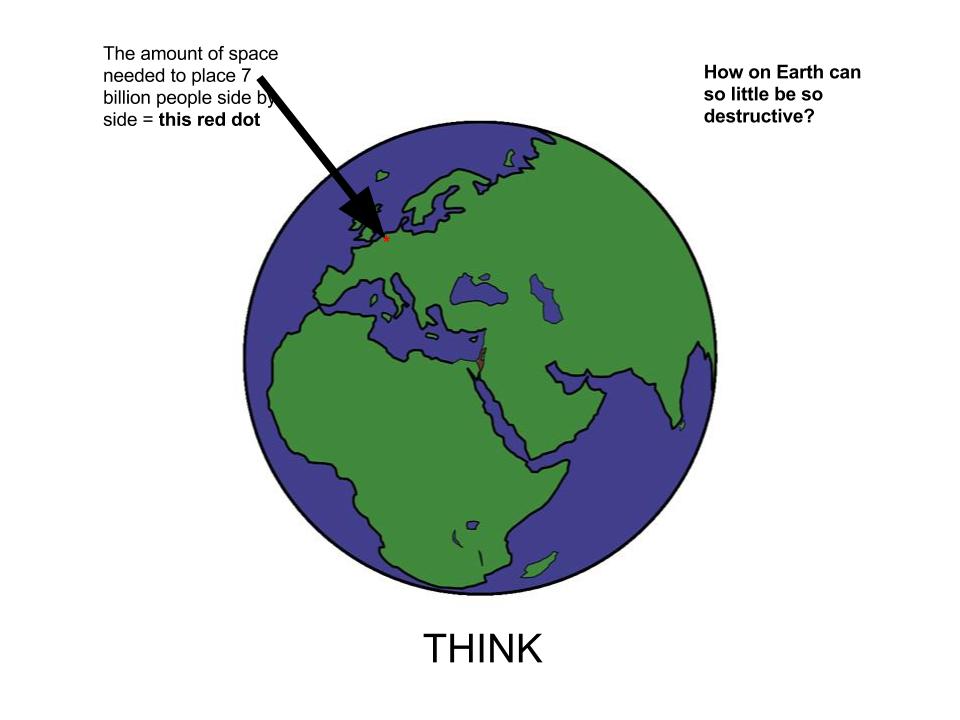
Impressive truth
If all people together occupy so little space why are we such a huge, destructive footprint on our planet Earth? That’s because we use our time, space, creativity and interaction wrongly.
Ready for change
The cities have grown so big, complex, problematic and vulnerable from management point of view that a new way of dealing with its household and community interaction is needed. The old bureaucratic model of tax versus expenses does not cover the needs anymore. Nor does the model of consumer economics that make people in cities extremely vulnerable for financial speculation, destruction of values, illnesses, etc. Cities tend to run into severe debt while responsibility piles up without apparent solutions in the old model.
The Sweed Hans Rosling made an interesting TED speech about the statistical growth of our global populations and the evolution of wellness versus poverty using his usual creative presentation techniques:
Rosling addresses the paradox of ethical need of child survival to stop the exponential expansion of the human population. He refers also to the moral need to bring together wellness by taking responsibility together. His logic makes sense even though the complexity of harmonic interaction with our environment with involvement of all structures of society was only briefly referred to.
As mentioned there are very powerful speculative forces at work that have always gone beyond governance control, facilitated by politics from the economic interest point view. Take for instance the tremendous food requirement for such large city populations (70% of all people in the world are consumers through money dependence in cities and they do not contribute to their food productivity) has stimulated the same speculants that corrupted the real estate market to do the same in the other commodities markets.
These people (real estate, food whole sale, politicians, banks) only care for the financial benefit and there are no laws against their malicious practice. Behind all these manipulative figures we find millions of real people suffering and dying, but this does not bother them. They often determine the rules of the game, the countries laws and public pressure out of self interest. The tension between such contrasting challenges and world views is a confrontation with our moral evolution. The ethical breakthrough tends to come through three means:
- When the masses stand up against their dictators. The Arabic spring was an example as a response to raising food prices. The Mexican youth movement in response to the student massacre by corrupt politicians and drug cartels, is yet another. 100’s of such hotspots can now be found in the world. And it spreads through social media and brave bottom up leadership.
- When crisis, catastrofes or depression give room for change. In many places fragmented power distribution makes executives aware that they cannot stop the public movement of change. The open up for dialoge and exchange their position of power to block for their authority facilitated change and gain admiration for that.
- When ethical leadership takes over from financial management. New value systems appear. They develop in parallel with old obsolete formal structures. They are not transactional but based on value creation and sharing. New organisational complexities arise that eventually take over from the old ones including the new level of ethics in their structure. Sustainocracy is a working example that invites executives from the old world to take responsibility also in the new one and bridge the transformation in a peaceful way.
Complex transformation
No matter what the outcome is per city the transformation processen are enormous because everything that evolved for centuries and especially the last few decades is being challenged to change. Many cities experience this as yet another cost but in Eindhoven we see it as a modern multidisciplinary value creation process, an emerging economy based on spirituality (the natural force of purpose driven living connectivity) and creativity (true 21st century entrepreneurship) that is more powerful than the old speculative one.

FRE2SH (city self sufficiency) in action
The biggest difficulty is to transform a working city of cement and cars into a biodiversity of health, safety and productive interaction. We do not start from scratch but transform our past into sustainable progress. This will always go accompanied with tearing down old structures and developing new ones. Precedent appear allover the world but decadence and greed still rules. When ethics reaches the levels of global governance the human world will enter its next evolutionary phase. The 3 level of ethics, the one of harmony with ourselves and our environment.
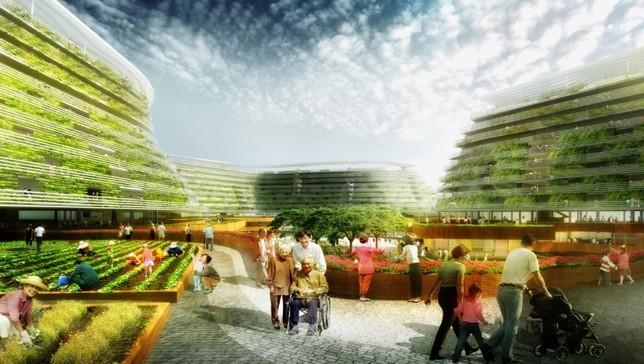
Visions start developping
The transformation of government is visualized in this summing up:

Transforming from one governance to the other needs others to become participatory too.
Jean-Paul Close (Founder of STIR’s City of Tomorrow)
Health is a responsibility not a cure
Often I am asked to speak about the AiREAS organization, a multidisciplinary cooperation that co-creates “healthy cities, with healthy people in a healthy environment”. The presentations have to do with the importance of “health” for the progressive stability of a community, such as a city and the current lack of it, causing all kinds of crises. I then call for responsibility and awareness with a strong sense of urgency. Now I make you also part of the challenge that affects everything and everybody.
What is “health”?
The World Health Organization (WHO) already defined health in 1948:
“Health is a state of complete physical, mental and social well-being and not merely the absence of disease or infirmity.”
Healthy people tend to take health for granted while only people with a direct or indirect health problem become aware of the importance of health for their well being. This would indicate that health is only a point of attention for sick people. They tend to rely on health care, a reactive structure within society that deals with the visible part of disease or disorder. The lack of proactive attention to health is showing up in global issues, the local productivity and cost of living. The proactive nature of AiREAS for human health and a healthy environment is breaking through into those cultures where the societal sickness has become a serious impediment. People and policy makers open up to the issue of what “health” really is and become surprised of the ethical issue of negligence that has affected our species to an extend of lethal proportions. This breakthrough in awareness leads to a totally new perception of our reality and a new phase of ethics that transforms our societies in a complex wave of interrelated innovations.
In order to make people aware of what health is I use a few animated films. This one has proven to be significant:
Mitochondria are the little engines of our cells. Some believe that they are evolutionary remains of the first single cell life forms that represent complex life on Earth already 600 Million years after Earth was born out of stardust, 5 Billion years ago. The single cell’s working is an illustration of how life works at microscopical level. There is no sign of pollution, just an intense repetitive harmonic interaction with a large diversity of inter-molecular relationships. Water is a key carrier.
A human being consists of billions of such cells with mitochondria. These cells of our own body, together with cells of the bacterial world that populates our organism in symbiosis, help us to live life comfortably in a well orchestrated, material and spiritual complexity. In essence every living human body is a universe of its own with billions of species interacting and helping us live a comfortable life. Trying to understand this in a rational way is the same as trying to find out how life and the universe work.
But what happens when we pollute this delicate living interaction?
Pollution
Then I ask my audience what could happen when we pollute the mitochondrial world? What if we tamper with the harmonic interaction at atomic and microscopical level? This is the case when I show the effects of Ultra Fine Particles (UFP) on our body, as discovered in AiREAS and other scientific research at microscopic level. UFP’s may have a biological nature that is solved by the defense mechanisms of our human body. We refer to pollution when the UFP’s contain human made substances that our body cannot deal with. They produce infections, blockage of arteries, lung and brain problems, intestinal disorder, etc.
The WHO has declared Air Pollution as number 1 cause of death in public space, 3 times more than traffic accidents!
By comparison:
- The water catastrophe in Holland in 1953 claimed a one time amount of 1500 human deaths. The Dutch government decided to take protective action by starting the construction of our water defense systems that are now being seen as one of the modern world miracles and a source of inspiration and innovative economic progress.
- Air pollution in the 21st century claims over 3000 deaths per year in this same country. Instead of declaring its a catastrophy the money driven government wants to make it into a business case first.
The immorality of the current system’s approach is one of the key issues that we will face. 1953 was a time frame within the moral sensitivity that remained after WorldWar I and II. Since the 70’s this morality has transformed into a financial dependence in which human wellness is subject to business development rather than ethics.
AiREAS is “Making the invisible visible”:
“What you cannot see does not exist” is a common awareness problem. Most people are unaware that pollution causes three levels of reaction at molecular level:
- Infectious deformation at birth or at a later stage in life (physical and behavioral)
- (Premature) Death
- Genetic disturbance
All these issues do not show at once, they appear gradually and shock people when they give birth to a baby with visible and invisible problems, develop cancer and other diseases inside their own bodies, suffer the premature death of a loved one, or face death oneself, all due to our overall lack of awareness and related negligence.
We have been pollution our environment to such an extend that it is causing climate change, global heating and general disturbance of our habitat. When reflecting on the mitochondria people suddenly realize is that our microscopical reality is a mirror image of the universe that surrounds us. When we pollute our surrounding we pollute our microscopic self as well. The anthropocene (the era in which human beings affected life on Earth in such a dramatic way that it can be traceable for ever in the future) is not just a potential archaeological reality but also biological and genetic.
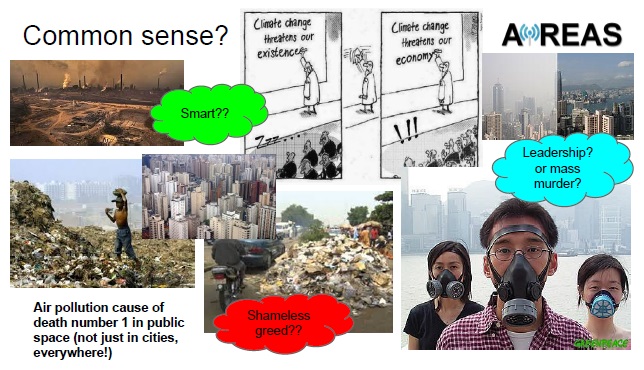
Common sense or shameless greed?
It is tough to accept that the lifestyle issue that causes the visible consequences today in healthcare costs and human suffering already dates back in development for many centuries. It just got more intense over time and hence more apparent. In any gathering I can safely state that 70% of all the people present will die of some sort of cancer that could have been avoided. The same goes for all those who read this, including me and my loved ones. For some the drama of awareness makes them feel desperate, others, like me and many feel highly motivated to stand up and develop ethical alternatives for society.
Scientists claim that our species and way of organizing ourselves will auto-eliminate our human species within 250 years. Banks, money driven governments and businesses are to blame and so are we in our greed to consume at the expense of our evolutionary well being. It is hard to accept that people who feel healthy today already have severe illness programmed inside their being simply because of the pollution that has accumulated inside and around us.
We suddenly realize that “health” is not a matter of curing a decease yet a collective responsibility towards life itself. It starts with ourselves.
3 levels of ethics
This then brings me to the evolution of ethics (the philosophical science of determining what is “good behavior”) and the gradual break through into awareness that appears around the world:
- Negligence and unawareness
- Reactive to illness
- Proactive for health
But awareness is not enough. Our current societies are built around negligence (fragmented money driven interests of economies of growth) and the reactive, consequence driven secondary economies (health care, insurance and consequence driven tax on consumption).
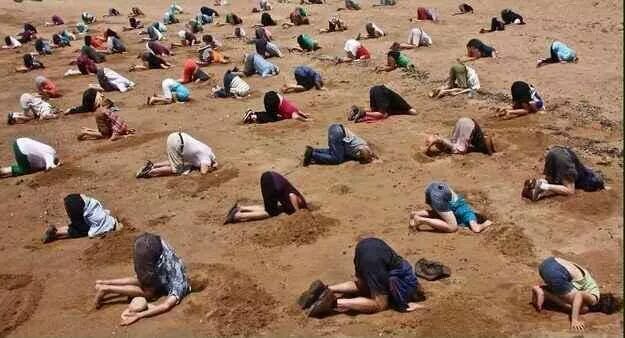
People claim responsibility world wide
Healthcare is only dealing with the superficial issues of illnesses in an economy directed by medical care and pharmaceutical industries. They do not cure the problem, they suppress it, mask it, stretch it or cut it away.
To take responsibility in a proactive way in a community that is not just addressing the holistic issue of health, we also challenge the entire system’s complexity built around economies of care. The care taking system is not based on ethics but financial instruments that use the human being, just like the banks expose us to debts and governments sustain themselves through taxation. We see that the political and economized care system itself is unhealthy, unethical and inhuman, part of the problem rather that the solution, despite the human passion of people who populate the workforce of caring professionals.

A huge humanitarian problem is facing us
From an economic point of view the costs of lack of health are unbearable. In Holland alone the costs have multiplies by 5 in 8 years time (from 12 to 72 billion between 2006 and 2014!)), not just because we grew more ill or older with an equivalent increase on demand of care. The cause of the exponential cost explosion is the same as what caused the bank crisis in 2008, being the system’s corruption and total lack of morality in finance driven care organizations that use human fear and pain to increase their own institutional financial wealth. While certain governance and human beings break through into awareness and sense of responsibility it are the corrupt secondary systems and their leaders that oppose and maintain a degree of system sickness that is as difficult to address as health itself, simply because the financial lobby is more important than the human wellness.
Ethics is hence an issue that goes beyond the human being and addresses also the way we organize and redefine our societies. This is the biggest challenge humankind faces. Awareness only breaks through into change when the pain is highest, i.e. when it is almost too late. This means that we have very limited time left over to take corrective and proactive measures at the expense of our disappearance as a species if we don’t. And even if we react with urgency we still face the issue of making “the invisible visible”, just to find out that the damage may be beyond repair.
AiREAS is step 3 in structured ethics:

The new society is proactively human value driven. AiREAS is a precedent of Sustainocracy.
AiREAS and its sustainocratic working is hence not a cure, it is a collective ethical responsibility, an evolutionary step and a precedent that could be adopted by the United Nations, the human rights organizations and the International Court of Justice. By making the precedent visible and known to the world we invite the world to follow our example out of holistic self preservation.
AiREAS uses the puzzle pieces of the same society that make up the phase 2 (reactive) ethical community yet in a different, phase 3 ethical composition. This drawing shows how it works and that is very easy to implement if the right people, at the right levels of authority are willing to accept the invitation to co-create health and step from the dis-harmonic phase 2 type of society to the harmonic phase 3 type.
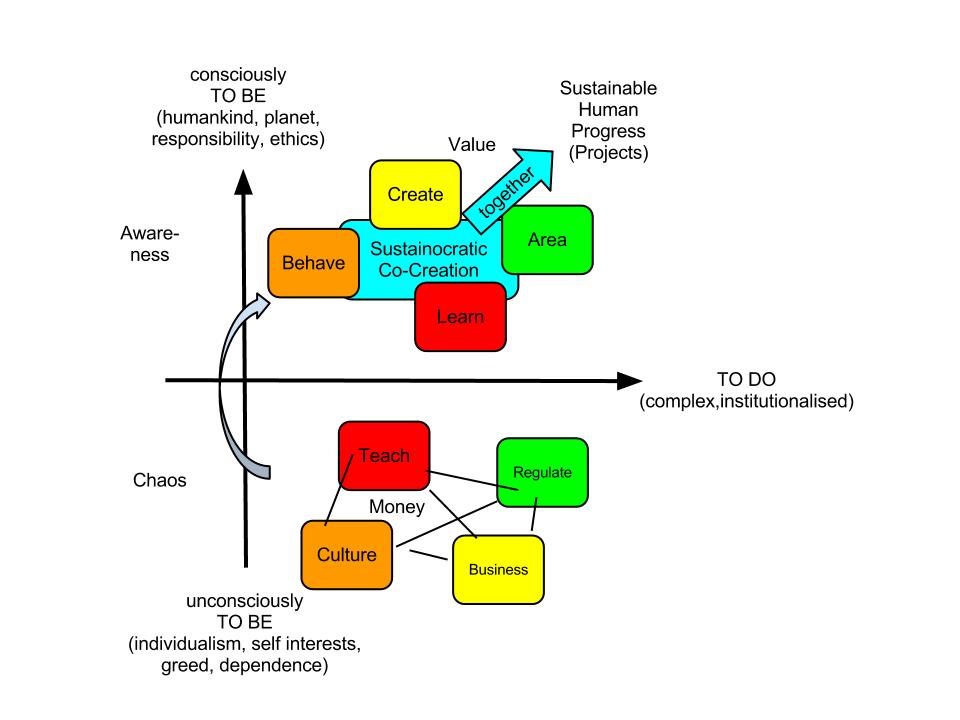
AiREAS is connecting responsibilities around the purpose represented by the blue field of co-creation
- Create: business innovators
- Area: local government
- Learn: scientists
- Behave: local citizens (culture)
- Sustainocrat: the representative of human values in jeopardy
Jean-Paul Close
Sustainocrat
 Sustainocracy, the new democracy