Home » Posts tagged 'united nations'
Tag Archives: united nations

Political culpability for humanitarian and planetary Anthropocene.
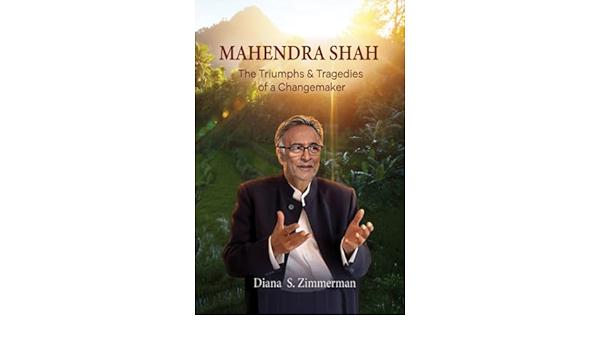
For over 30 years Dr. Mahendra Shah has been delivering analytical report after report to the political and operational hierarchies within the United Nations. All the papers that he, together with his collaborators, produced are publicly available. He has now published an autobiographic book in which he lists in great detail his professional trajectory as an executive in this United Nations environment. Millions were spend on analyses, reports, with great human efforts and sacrifices of family life, all because they were sensed as important for decision makers and the quality of sustainable life of humankind on a planet with finite resources.
STIR Foundation was privileged to pre-read the manuscript. We see it as a documented proof of the wicked bias of political powers that neglected systematically the warning signs and documented advice in favor of other priorities and certain (self) interests. It is evidence of political culpability for humanitarian and planetary disasters that are being suffered. Never before have we read such a clear testimony. Read it yourself and draw your own conclusions.
It is high time that this systematic abuse is stopped and transforms into a new format that harmonizes with life, involving all human beings and our natural environment. Sustainocracy is an example of a positive invitation, also to politicians, business people, scientists and legislators, to develop our shared responsibilities for the essential values for our existence together. These are not expressed in money, costs, politics or commodities. They are shared responsibilities. Having the choice people can do what they did with Mahendra´s work: boldly neglect it and hide. Or they can decide to acknowledge their responsibilities, act as a consequence and be praised for it. This also is relevant for business leadership as a whole. It is never too late and we at STIR will defend the continuous invitation and praise for those that do take the step and chose the side of sustainable wellness as a co-creation. Like Mahendra did when he decided to invest his time better and with immediate effect in his Zen Resort of Bali as a 4 x WIN entrepreneur.
But we can also imagine that others will take the route of well documented blame and call for justice to those that have systematically neglected the historical advice or the invitations to take responsibility. The words “we did not know” can not be issued anymore as an excuse. One way, or another, there will be a turning point with a before and an after.

Alternative definition for Sustainable Progress
The current and most widely used definition for sustainable development dates from 1987 (Brundtland) and is totally useless for sustainable progress. It says:
“sustainable development is development that meets the needs of the present without compromising the ability of future generations to meet their own needs.”
This statement is not sustainable itself as it cannot pinpoint individual responsibility to anyone or current generations let alone future generations. Consider for instance what the definition of needs is of today? Needs of who? The material wealthy or the poor in Africa or Asia? Your needs? My needs? Do they refer to the needs of business or political economies, luxury or primary needs? Business needs maybe?
How about the needs of future generations? How would we know what these future generations will need? They might for all we know require massive amounts of oil for medical purposes, yet we burn it all up right now. How can we take responsibility for the abilities of future generations if they are not just dependent on our left overs but also on important other variables that have nothing to do with human behavior, s.a. climat changes for instance. Do we blame the human who killed the last Dodo because he was hungry? Or do we blame ourselves for not creating responsible alternatives for nutrician before the Dodos were made extinct in the first place. How many species have to perrish before we take responsibility for the current generation?
In fact, who would control what we use, how we use it and determine if it affects future generations at all? Is this control our individual responsibility? How can we measure this? Who is to blame if we judge incorrectly and who judges? And how can I worry about compromising future generations if we already compromise current generation around our globe? In fact, this most popular definition is a open letter that allows us and anyone to do what we please without taking any responsibility. As it stands it has been insignificant since the definition appeared and introduced a green washing wisdom in industrial and government policies around the world. It may have made us a little more aware but certainly not more sustainable in development or progress, on the contrary, and not at all responsible towards future generations as we wouldn’t know how. And really, who in command cares?
In my own foundation we work on the development of workable cooperative organizations around projects that address sustainable progress of humanity itself, segmented into key issues. Interestingly we could do absolutely nothing with the definition. We found it perfectly viable to introduce some basic environment awareness in capitalist industries but totally useless when projected onto the complexity of current humanity itself.
This motivated me to come up with one of my own, just like probably hundreds of other responsible people around me over the years. My definition for sustainable progress is:
“Sustainable progress is the development that continuously improves human health, vitality, safety and dynamic progression in optimal relationship with the constantly changing environment in which we live and act.”
I found that this definition places the responsibility with each and everyone of us, as individuals as well as business and public entities, in the here and now. It became the basis of the cooperative innovative business identities that are being developped by us around real issues that concern us today, s.a. energy, quality of life, education, smart mobility, air quality and polution, food, water, etc…
The definition helps us to define our visions away from material goals and determine specific higher purposes that matter and have a positive effect on our selves, our current generations and our environment. We feel it contributes to true sustainable progress in a measurable and accountable way with the satisfaction that whatever we do in this context it will always serve also generations to come.
 Sustainocracy, the new democracy