Home » multidimensional world (Page 37)
Category Archives: multidimensional world
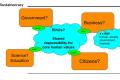
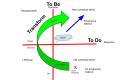
Part 1. Our forced solidarity with the financial system has serious flaws. We need new ethics to counter them.
Our current money dependent society is based on a law abiding solidarity with the financial system. Despite having brought us many benefits it is also the main threat of our self destruction. Humankind is in desperate needs of new generalized ethics to transform the self destructive trajectory into one of sustainable human progress with newly structured shared wellness. Sustainocracy provides these ethics, based on the old evolutionary principles of core human values and share responsibilities. But first let´s look at the flaws of a system that we have been obliged to be part of.
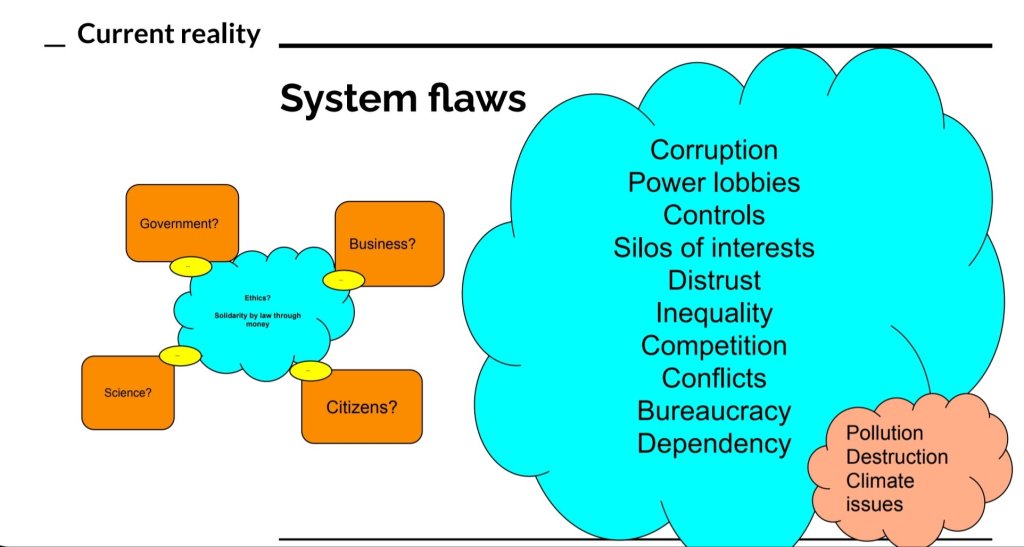
The problem we face is that the ethics of our forced solidarity with the financial system has important flaws that are managed by the same people that force the solidarity on us through their own interpretation of justice.
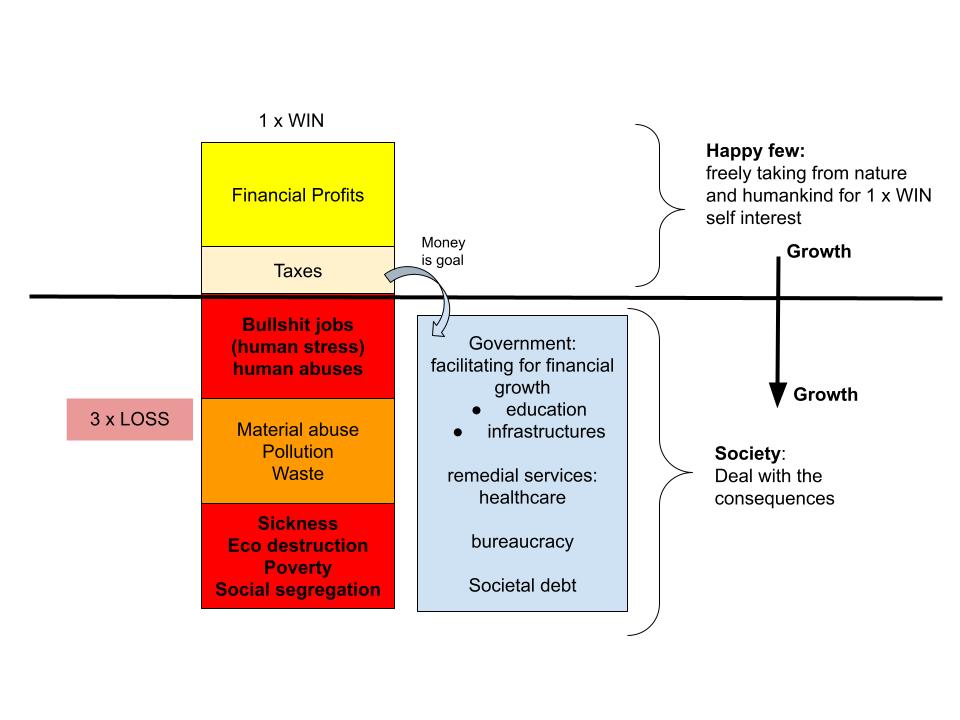
The problem started about 10.000 years ago when we began to take from nature for free to claim ownership instead of using from nature for our sustainable needs. It became a type of ownership that was not just related to a particular desire to control our wellness. It was also a way to claim self interest over other people who had not made the claim. We gradually institutionalized both the capitalization of what we take from nature for free and the condition of ownership. This created the duality of people who own and those who donot. Those who donot remain having the natural right and need to use the benefits of nature even if this is being taking away from them by those that claim the ownership.
Those who own started to make the naturally provided elements available to others only against favors, nowadays expressed mainly through money.
The institutionalization of ownership also gave rise to defending and protecting this ownership through defensive aggression, systems of law and formalization of heritage. It hence gave power to those who own over those that do not. The conversion of ownership, inclusing the exchange of ownership (trade), into a financial system with protective laws, dependence, structures of control, financial speculation, competition, finance based governance, etc also gave rise to conflicts, abuse of power and corruption, some of it even supported, certainly not challenged, by the systems of law.
Other conflicts were caused by human rights activists that claimed better sharing of the benefits of ownership as well as access to the decision making. This gave rise gradually to a caretaking society that keeps the masses calm enough to not stand up against the ownership hierarchy by providing basic needs. The needs became only accessible through financial means, demanding from the people even more solidarity with the financial system and its services. This includes the interpretation of democratic right that we know today in many countries. This right allows people to participate through elections but does not allow people to vote for the alteration of this system. In many cases it is also nearly impossible to challenge the flaws such as corruption or power abuse.
When we refer to sustainable progress, the tendency of the system is to look at the application of technology and expensive care systems that remediate the negative consequences of this unlimited and destructive economized taking. It does not look at itself as the kernel of all the problems. With a population of 7.5 billion people, the system and its services have overrun all the natural auto generative limits of the Earth resources. Also the impact on the human being as a species has been disastrous from an integral health perspective.
How can we transform such a deeply anchored, but highly obsolete and even disputable system into one that brings back our sustainable human perspectives?
Part 2 will show the way Sustainocracy does this in different regions.

Unity in Diversity
Our online Peace event today was about avoiding that prejudice could destroy our relationships or create unnecessary conflicts or misunderstanding. We looked at four totally different countries:
Guatemala (by Alfredo Vasquez)
Alfredo gave a great presentation made in Prezi. It showed the enormous amount of indigenous cultures in this small country in Middle America, the historical influence of the Mayas and even the meaning of the name Guatemala (area of many trees).
Hungary (by Andras Laszlo)
Apart from the online presentation, Andras selected a set of videos about Hungary that he invites us to watch. Here is one already…
He also shared a PDF with us with more information.
Nigeria (by Ukpeme Okon)
Apart from all the comments provided by Ukpeme she also shared a few illustrative videos about Nigeria as it is today.
The Netherlands (by Jean-Paul Close)
A lot can be said about the Netherlands. Jean-Paul highlighted a few elements through a presentation and also chose a video illustrate the flatness of this watery country.
 Sustainocracy, the new democracy