Home » multidimensional world (Page 40)
Category Archives: multidimensional world

Ethics in Sustainocracy
The word ethics refers to norms or rules in a community that are considered for just and right handling. Some ethics are based on traditions and rituals in a particular society. They may not exist in, or even be conflictive with an other culture. Think of the tradition in the Netherlands of Saint Nicolas with his jumpy and joyful black servants, referred to as Black Piet. In the Netherlands this was a well accepted tradition that was celebrated every year, over and over again. Until people from some other countries moved to the Netherlands and related the rituals and festivities with their old slavery traumas. The Dutch felt offended as the tradition was never in their mind related to slavery at all. The newcomers felt offended because in their mind there was a clear relationship, also with the Dutch involvement in slave trade in the old ages. It is not easy when ethics diverge so much among groups in a same society.
The ethics dictated by certain churches and their religions are often contrary and conflictive with the ethics in open and free societies. Think of the position of women for instance in different religious or political environments. The interpretation of right and wrong differs and may give rise to conflics.

Our current Western society uses the ethics of solidarity by law through money. This means that everyone in these communities has to contribute to society through money driven processes (labor, taxes, consumption, timely payments, etc). This is not a voluntary decision, it a lawful and regulated demand. Society is seen as a cost that needs to be covered through contributions. Money makes this world turn. It has been gradually accepted as a norm, a standard. This paradoxly gives situations of lawful obligations to financially support the healthcare system. This tends to grow out of proportion due to the amount of illnesses caused by this society model. Yet it does not stimulate a healthy lifestyle.
The solidarity claim through money gives rise to all kinds of issues such as inequality, discrimination, power play, corruption, bureaucracy, public apathy, etc. This also leads to conflicts, wars, instability and injustice from an humanitarian or ecological point of view. The money claim may justify this, even by law, while putting a lot of money in remediating the damages. However, the ethics needed for sustainable human progress, do not. There are plenty of signs that this society format is on its way to eliminate our sustainable expectations as a species. In other words, we destroy ourselves.
Hence the introduction and rise of Sustainocracy with a different mindset. Sustainocracy means: Sustainable human progress and a real time democracy. The ethics in Sustainocracy is based on our shared responsibility for our core natural and evolutionary values. This responsibility is not uncommon to us. In our family life with care for our children and our elderly family members. We tend to apply Sustainocratic norms and values. In fact, Sustainocracy is based on these family values. It is key to also apply these to society as a whole in order to regain our sustainable resilience.
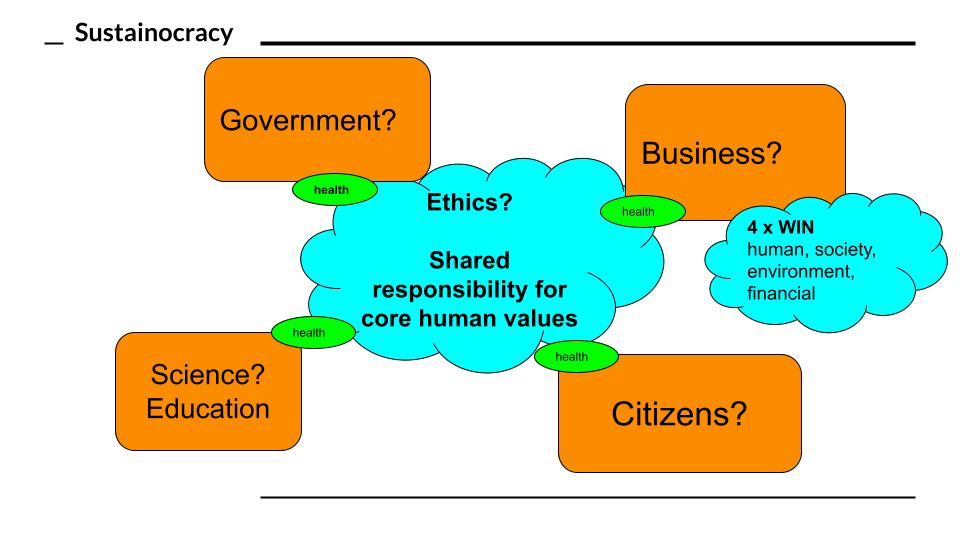
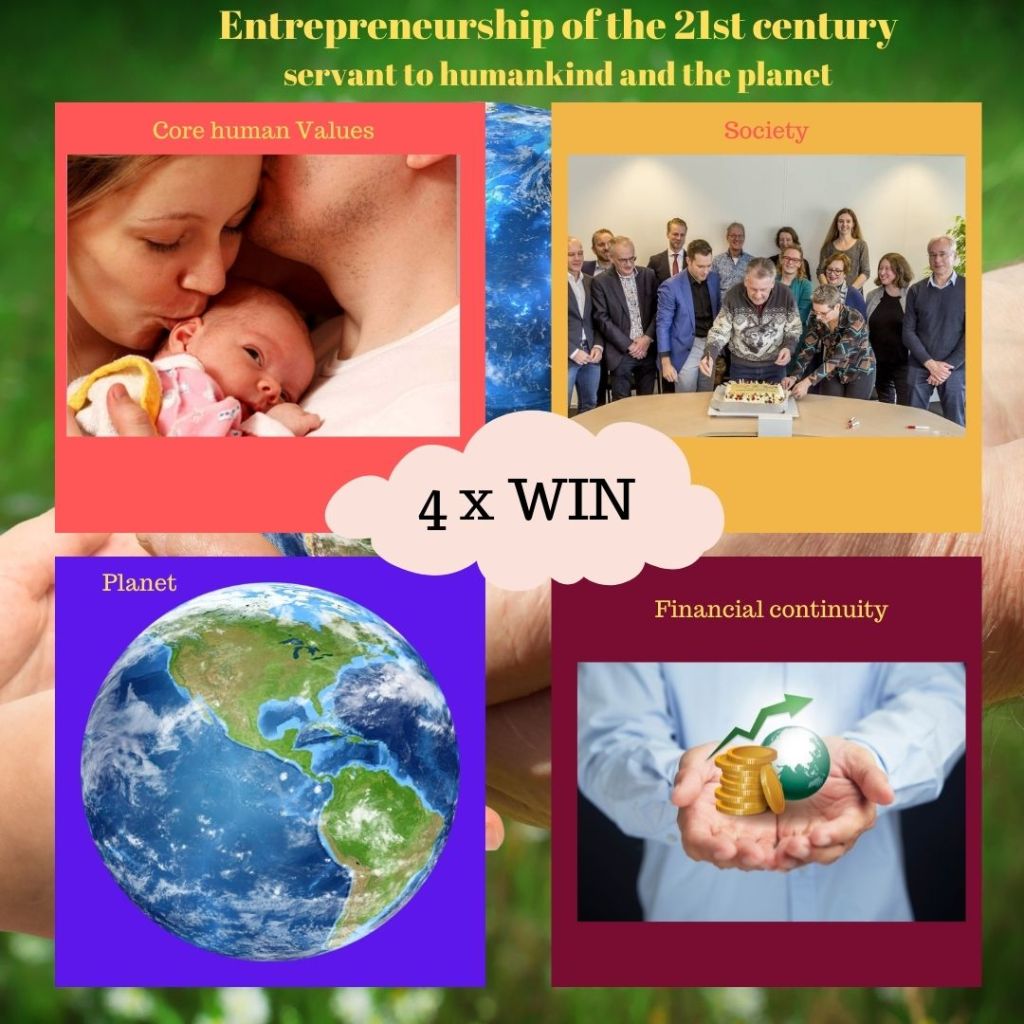
This shared responsibility gives rise to regional self determination and self sufficiency together. The type of solidarity is towards each other and our environment as living species. Money does not necessarily play a role in this, it is a means, one of many others, not a goal on its own. Health is a goal, just like air quality, healthy food resilience, warmth and protection, etc. Sustainocracy does not see society as a cost, yet as a 4 x WIN values driven, cocreation community. It shares values instead of owning or selling.
Our current money dependent and ethically structured society is not 4 x WIN at all. It is still based on the old industrial era in which business takes freely and abundantly from nature to economize these resources through products and services for financial profitability (1 x WIN). The government supports this through the provision of services, infrastructures and remedial measures at a cost. This is also the origin of the ethics in this format of society. Can this be enhanced by the shared responsibility philosophy of Sustainocracy? Yes it can, as we are showing in the region of Eindhoven with a diversity of communities that apply the methods with involvement of government, science, education and business.
Is there any possible compatibility between the money dependent ethics and the one of shared responsibility? Well, there is, especially at its cocreation level. That is why the space helt by Sustainocracy is getting more and more popular, also for institutions, especially those that are in their authentic strength and not in some kind of survival mode. Taking the shared responsibility part as leading, the solidarity with the money layer can be enhanced with efficiency, elimination of unnecessary costs and bureaucracy, while streamlining the organizations to a very agile level. The cocreation level based on our core values challenges our current society structures and functioning, giving rise to numerous innovative impulses. The community becomes adaptive, innovative, progressive and warmly dynamic.
If however the money based solidarity is forced to be leading then we see the responsibility become second rated at the level of expensive remediating structures. We see a passive society, moving from crisis to crisis and playing an inhumane powerplay to sustain itself.
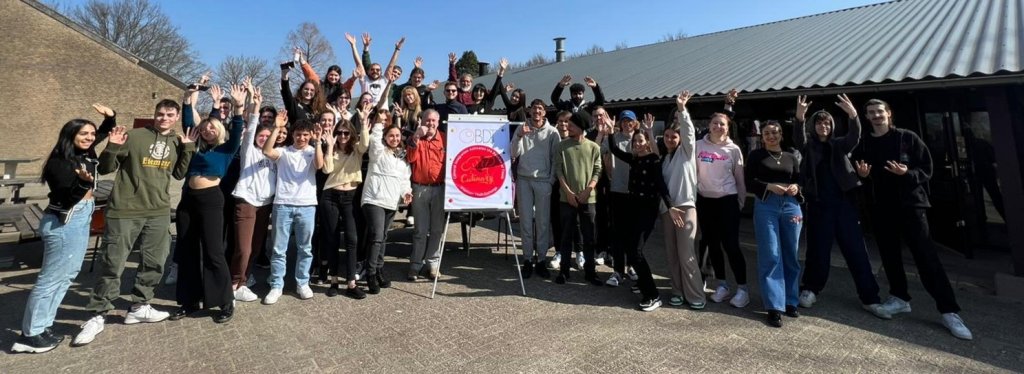
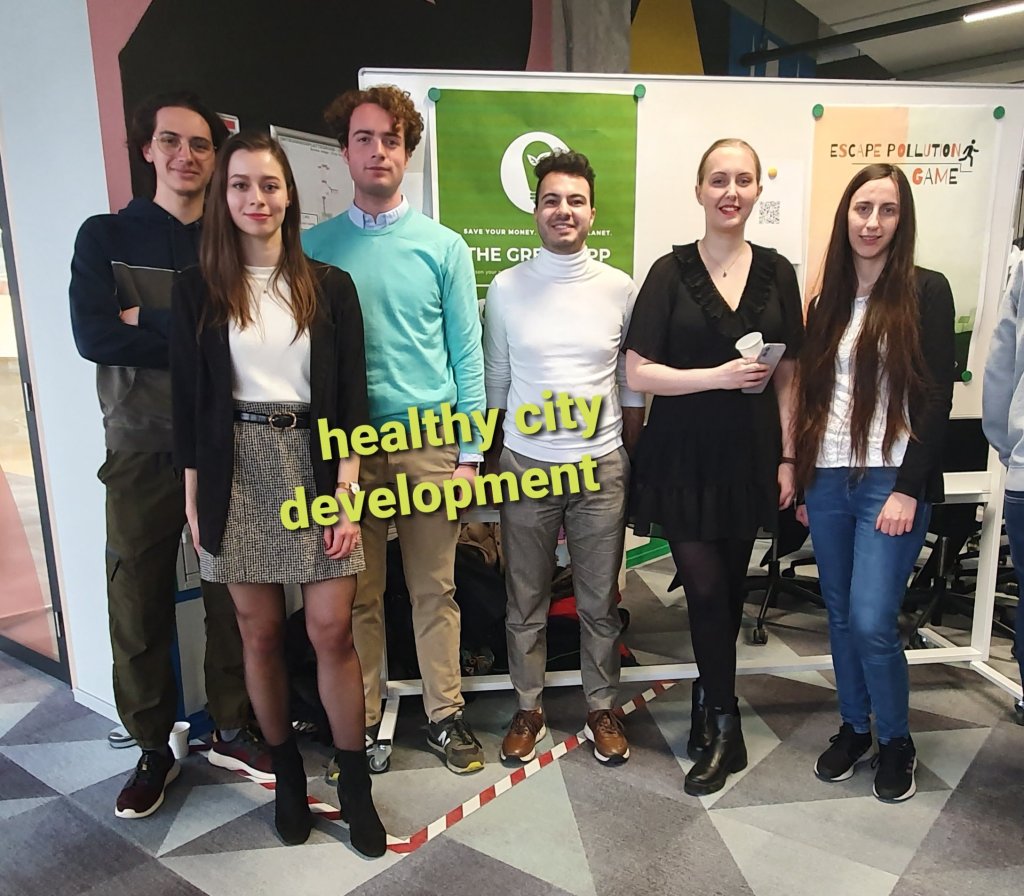
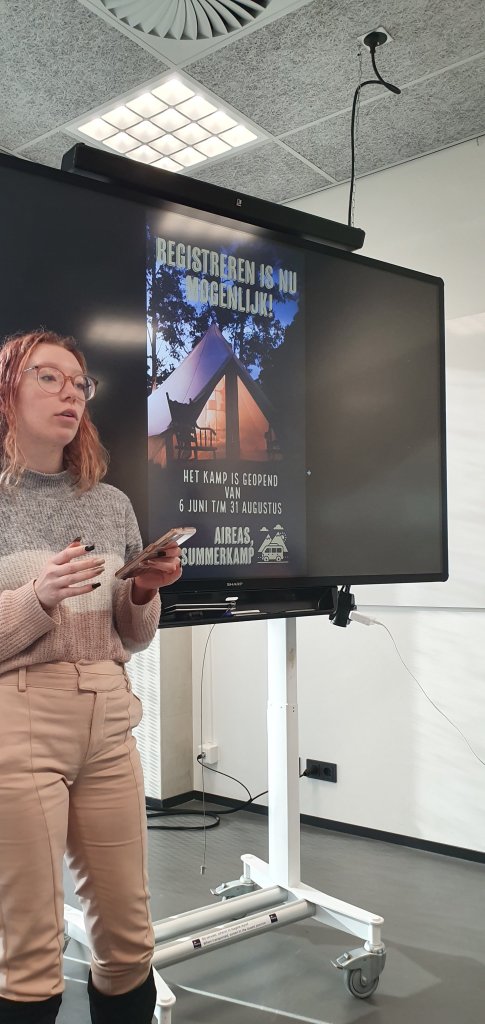
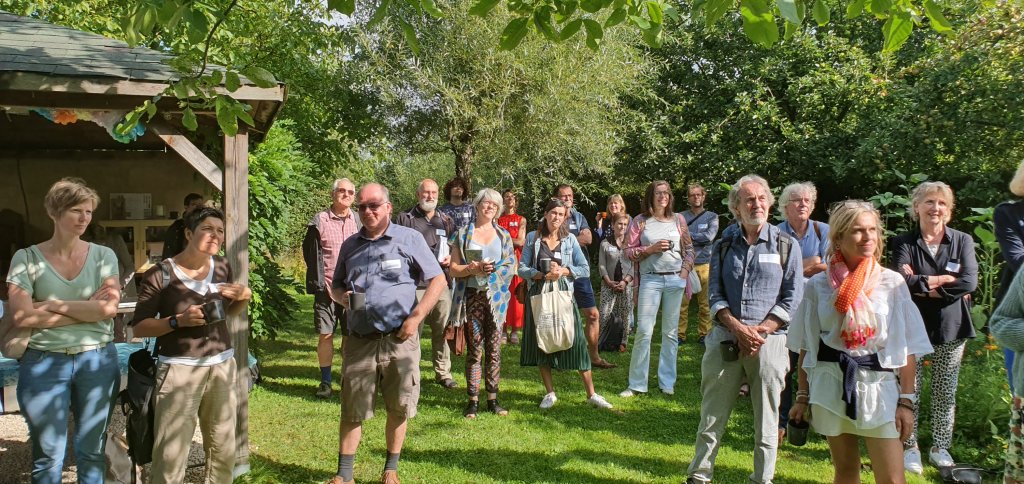
That is why increasingly governments feel very comfortable in the sustainocratic multidisciplinary clusters, to work out complex issues and implement change. Also business is happy in this constellation, especially if the enterprises develop the 4 x WIN attitude and functioning. This cocreation environment is ideal to find institutional purpose, test innovations and provide proof concept. These feed a new economy of growth that will help spread the core values even further. The photos below show numerous 4 x WIN events that we organize with our institutional partners.



Greening the city visualized
Jan Kamensky surprises us with great visualizations of greening the city space for health and a healthy environment. Have a look at a few of his transformations that could become reality soon.

Our image of a culture is not always based on reality
Prejudism is a horrible human factor that creates many unnecessary conflicts, fears and misunderstandings. If we want a peaceful, progressive world we should eliminate prejudism through curiosity about the other, dialogue and and open mind.
On April 20th at 17:00 we organize our 4th online Peace gathering. We will highlight 7 different cultures from all around the world. What do we know about these cultures? Where does our knowledge or lack thereof come from? Do all the Dutch walk on wooden shoes? Are all the Germans villans as they make us believe in American Hollywood movies? Do people in Africa live in clay houses and wear grass skirts? Do all Chinese eat Sushi? Is Brussels the Netherlands? Let us meet with reality and admire the beauty of the cultures around the world instead of judging or fearing them, often based on nonsense and misinformation.
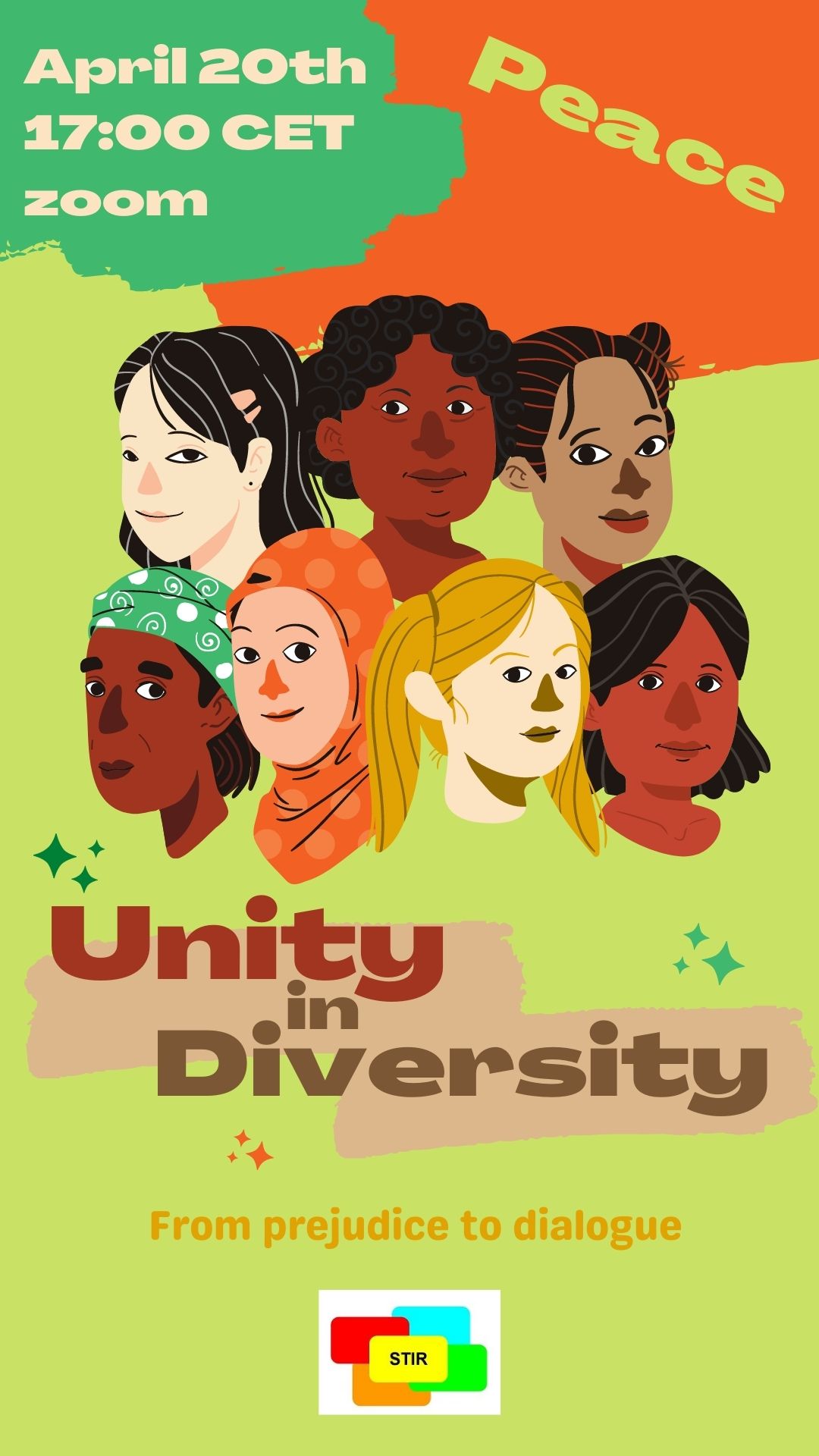
For free registration please use this link.
 Sustainocracy, the new democracy