Home » Society (Page 112)
Category Archives: Society
Happiness, what’s that?
The October open public evening lecture of the STIR Academy dealt with “happiness”. Why is happiness so important to us? What is it? How can we produce it?
Happiness
Happiness is key for progress. It represents an inner feeling that is hard to describe in words. The sensation can occur at any time and even under the strangest circumstances. It feels like a sort of joy yet it is more than that. In reality happiness is produced by endorphin’s, a set of hormones that are released by the brain under certain circumstances. It helps to develop our self esteem to address the challenges of life. In fact, happiness is an evolutionary development right from our single cell origins of life, and even further back: the very first harmonic connection between molecules to produce life.
One of the previous STIR lectures dealt with the “secretes of life” and the harmonic musical relationship between elements that are attracted to each other under extremely specific circumstances. They do not fuse or react but combine harmonically into something called “life”. This unique format of interconnection produces a standard frequency to which certain elements are attracted. In fact this molecular “musicality” of attraction is what triggers the endorphin in our body. It defines “purpose” on the unconscious levels, which we then try to figure out at the level of consciousness. Since we are blessed with self reflection we interpret the injection as pleasant which helps us learn and understand our progress in a pleasant way.
Happiness is hence produced by interaction of our senses with our molecular musical origins. That is why we can react with happiness when seeing certain colors, smelling certain smells or hear a certain sound. We can experience this happiness over and over again when we recall this trigger in our memory. There are various large fields of activity that make us happy and each field has to do with our living organic essentials:
- Food
Eating itself makes us feel happy. It is not just the mere consumption but also the activity of achieving food, preparing it and the satisfaction of eating and having eaten. Food is also a team exercise of the human being that makes us challenge each other in competition and join forces in productivity and consumption. In many cultures eating together is a daily ritual of happiness.
- Reproduction
The selection process of finding a mating partner, sexual activities, having children and raising them is a process of continuous joy and happiness. The inner excitement, the courtship, the surrendering, the development of a family and experiences of trust and togetherness, are key happiness values that push us towards reproduction in a positive way despite the worries, reduced levels of personal freedom and commitment to a single partner. We find harmony inside and outside through contrasts and excitement.

The voyage through life produces happiness
- Accomplishment
The voyage of life is full of obstacles. The experience of happiness is produced at the excitement of a prospect to do something, even if the adventure only takes place in our minds. The living fact of undertaking action through the expectation of certain results makes us feel happy throughout the entire process: the prospect, the trajectory, the achievement and the permanent memory.
Happiness is a true engine in life that makes us overcome fear, worries and insecurity. The positive tends to win from the negative, producing a forward sense of progression and even accept defeat through the happiness of having tried. Succeeding in complex challenges is taking the best out of people.
Music, accomplishment, teamwork
- Environment
Our natural environment is part of our physical and spiritual nature and origins. We are a living combination of everything that surrounds us. We are earth, wind, water and fire, combined through senses. We take a special joy in experiencing our roots through observation and interaction. We enjoy the colors, smells, feeling, tastes etc of nature. It provokes our instincts to express ourselves through art, movement, dance and music. Our happiness makes us create communities and cultures that are as diverse as nature itself.

Colors and natural harmony produces feelings of happiness
When we summarize happiness we come to a large set of key words that are all part of our continuous quest for harmony by addressing the challenges of life in a pleasant way. We enjoy every step forward, every achievement and cherish every positive memory. There is absolutely no reason why a normal healthy person should not be happy every moment of the day, learn to become aware of it and take joy in living life through managing it even in the most adverse conditions.
Happiness overcomes crises
Our economic world is in crisis. We see ourselves surrounded by the effects of a transaction based society focused on consumption and debt. Broken up families, individualism, loneliness, manipulation around debt, etc have become the unhappy rule of a lifestyle in which happiness was based on creating differences, the having and taking, selfishness. We see cities full of people who don’t know each other. The natural harmony has been severely broken up and people do not even know it anymore. Sense of happiness is sought in artificial tools for excitement such as over-consumption, alcohol, drugs and attractions parks. The more financial wealth the less happy people tend to get. The larger the debts the bigger the unhappiness. In our natural essence debt does not even exist. It is an unnatural inhibitor of happiness. Our societies are based now entirely on financial dependence eliminating natural inner happiness by placing fake happiness triggers around us as consumables. It makes people blunt, unaware and often even emotionally sick.
When however a financial crisis strikes the human being discovers again its natural origins and starts taking joy in the warmth of the community and the challenge of addressing life through creativity and purpose. It is happiness that solves the crises not capital injections, rules or debt systems. Despite all negative communication through the media about financial disasters we see large groups of people discover happiness and develop communities based on the values of joy and happiness rather than materialism. Happiness is produced by the voyage through life, the sharing and giving, the positive and our sense of progression. Indeed money does not make anyone happy. It may produce some sense of security in a money driven society but true happiness is found inside, right at the molecular basis of our being that arose billions of years ago when money, systems and societies had not yet even been invented. Happiness is the oldest feeling ever of the evolution of species and comes even well before fear.
STIR Academy
The academy invites people to a world of human health, safety and self sufficiency. The awareness of our feelings and the origins and purpose of our senses, including happiness, is key to produce sustainable human progress. Through emotional, spiritual, rational and physical interaction, research and awareness programs people

A sense of freedom is key to experience happiness to the full.
are invited to let go of their systems dependence and reconnect by taking responsibility of their own. People who break through in higher self awareness become active in sustainocratic ventures where sustainable human progress is the same as personal wealth.
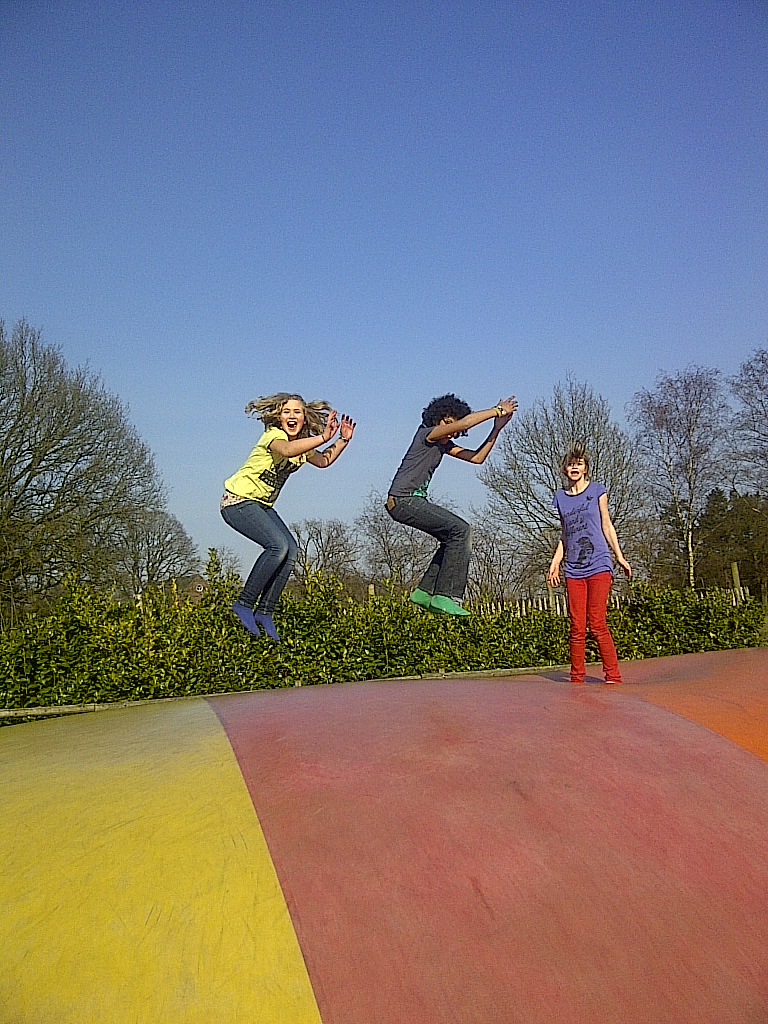
Happiness programs are key for children’s education

Happiness is easy, available everywhere, free of charge and always at hand when needed. Just open up to it by letting go of all inhibitors….
Sustainocratic STIR Academy
The STIR Academy is entirely positioned in the world of Sustainocracy. What does this mean?
1. Invites rather than sells
The academy does not sell teaching programs. It invites people and organizations to take responsibility for sustainable human progress and take the learning from there as an investment into a new reality. This may start with a financial investment just to become aware of what it exactly means but as awareness evolves the investment transforms from financial to commitment in co-creation.
2. Helps develop excellence in change
Our societies are very much concentrated on selling rather than taking human based responsibilities. When we are invited to take responsibility it is always related to a “change for progress” instead of “sales for progress”. The attitude, competences and commitment are totally different from the transaction environment.
3. Helps develop excellence in multidisciplinary co-creation
Various co-creation structures to produce value are appearing in society. From an economic perspective (transaction economy) we see for instance Triple Helix (government, business and education) work together. From a societal human wealth perspective (transformation economy) we see Sustainocracy (government, business. education and civilization). Multidisciplinary co-creation has very specific advantages over mono-disciplinary co-creation ( eg business + business, government + government). In such co-creation process all participants invest in the creation with means. This is not just money but also technology, authority, infrastructures, people, talents, etc. And the groups can invest in knowledge and guidance in the processes of multidisciplinary co-creation. Then they take STIR Academy among the disciplines.
4. Helps deal with the two worlds
In real life we deal with change to be able to grow. Both worlds interact. How to deal with both worlds effectively as a person or institution needs to be acknowledged, addressed, structured and implemented. Change and growth are incompatible together and yet form an unavoidable bondage. Dealing with both together requires entrepreneurship, no matter where it takes place and who deals with it. Any human being deals with this on a daily basis as a person but gets into difficulties when applying it to professional fragmentation and specializations in any sector.
STIR Academy helps with all four issues but does this from “the other side”.
You can see the STIR Academy as a self growing organism connected through sustainable human progress driven purpose (food, health, safety, applied knowledge, self sufficiency) and local Triple Helix and Sustainocratic venture development.

STIR Academy is a self growing structure around multidisciplinary co-creation
Keeping it short when you have a lot to say
Freedom
We are in the “keep it short” kind of world. People have a short span of attention nowadays. If interest is not captured instantly we loose their interest. What if we have the tendency of writing much text to make our point? I do for I have a lot to say. Do people want to listen? Some do, some don’t. Should that worry me when blogging?
Well yes and no. Let’s try to reason through my own inner battle.
Yes, it should worry:
Churchill once wrote to a friend “sorry for writing you a long letter, I had no time to make a short one”.
Churchill is known to have been a person who had many points to make. New issues take time to explain because they are out of the ordinary. Change is never very democratic. Why would you present something out of the common understanding of your public? Because you are convinced that it is important.
In the world of the ordinary we take instant decisions. Our attention is minimized due to habits. Surrounded by impulses that want our instant attention we tend to communicate in bullets if we have something to sell. Those bullets are delivered with fast emotions such as fun, excitement or anxiety.
Our current world is based on transactions and we are the target.
But I have nothing to sell!
I invite people to a specific understanding, a new worldview and social structure that may offer better perspectives and securities than where we come from. I am asking them to join! That takes a bit of explanation. And it requires an audience that is willing to consider change. But how do I get the volatile surroundings to pay attention when it reacts instantly to anything as if it were a sales pitch? Churchill is suggesting that I should take time to describe complex issues in a concise way. He is right.
The general public is not at all interested in what I have to say unless it affects them personally. The whole secret is “the audience”, not me!
I need to attract those people who are open for change. So if I “sell change” the pitch should be short and maybe adventurous. Those who “buy” may just have that little more patience with me to try to understand where I am heading for and what’s in it for them? Then they may even tell others.
E=MC2
Einstein said: “If you can’t explain it in a short way you probably don’t understand yourself.”
Wow, that’s confrontational and a challenge. I often tell people that I write books first to see if I can put my own understanding into words in a structured way. If I can’t how on earth can I explain others? If I can then I have already a book to give away. In a way a blog is that too. A test of my own understanding. The reader is a victim of my own learning process. Can I do this to you? Well, that is up to you to decide. Some may find a morbid kind of pleasure in watching me struggle. Maybe because they recognize their own in me?
But can I shorten it?
Einstein’s E=MC2 is indeed short but do I understand? No, but that’s not the point. Einstein understands. He makes it available to us as a simple to remember formula whether we understand it or not. We only accept that it is important and can subsequently spend the rest of our lives trying to understand the meaning with or without his help.
I made one of my own:

Success is more than just “growth”
Other’s say that a picture says 1000 words, so I also make a picture that says the same as the formula:

Human complexity
Do you understand? Maybe not, maybe yes. You can trust me that I understand as I work with it on a daily basis addressing the key issues of human evolution today, the crises and how it affects business, society, politics etc.
So yes I should worry because it takes this flash second to enter a human being’s perception and remain there for ever, or never get in at all. My biggest worry, if I understand myself (thank you Einstein), should be to take time to be short and show that it is ME that understands while inviting others to figure it out too.
No, it should not worry me
Prof. Jaap Ham (University researcher and department director on “perception”) said to me: “Awareness? Nothing awareness! People do not change behavior through awareness. They massively copy behavior of others”
Who am I writing for? I have nothing to sell. My blogs are to inspire people to the new world of absolute spiritual freedom and take responsibility from there. When I describe the new world to people I just invite them to read my own adventures and experiences.
My texts tend to be long. But Jaap suggested that I have to learn to distinguish long text by considering what I want to do? Do I want people to become aware? Or do I want them to follow me?
Well, I do understand what Jaap is saying but also believe that the ones that we blindly follow do have a sense of direction through awareness. So I need both.
The 10/80/10 rule applies:
10% of the people are always in for change and follow blindly (adventurous)
10% of the people are never in for change and block with arguments and obstacles (conservatives)
80% haven’t a clue and follow the one that convinces most in the “sense of being part of something and not being left behind”.
So for me there is a bit of both, the awareness of the 10% adventurous and curious, and the 80% potential followers who think it’s a good deal. The conservatives we do not pay any attention too no matter how hard they shout. As a “changer” we always have a lot to prove, especially to ourselves. But never to the opposition who always tends to be right basing themselves on wealth from the past.
In this mix of progressive optimism there are some dangers when we apply long texts to explain what we are doing:
Preaching: the danger is that I become a preacher rather than an inspirer. People don’t get aware through preaching. Preaching is another manipulator telling people what to do. Awareness comes when they are inspired to try something out and learn in the process.
Ego: the danger is that I try to convince people that “my way” is better. People don’t follow ego’s, they follow out of self interest.
So when writing long blogs they should tell stories that inspire some to set out and try it their own way and others to follow. It is only “my world” when I am the only resident. It becomes “our world” when the population grows. The stories may have started a long time ago about me but should slowly grow to talk about others and “we”. Interestingly it does in reality. I often take the initiative and after a while others take over who do a better job than I. Then I have nothing to say anymore, just to enjoy. Shorter than my silence is impossible ;-). Just maybe this again:
Freedom for you too!
Last but not least
In “my world” we have accepted the absolute freedom of the human being as a uniquely born living entity of the universe. We surround ourselves with a commitment to life and structure our sustainable progress through a new democratic complexity called Sustainocracy. In my own surroundings I find myself in the lucky circumstances to be able to apply this freedom also to the transformation of society and economy with support of scientific research, governmental organisations and business enterprises joining in as experimenting members and participants. I write about this as a transformation of the past towards the future in which we let go of something dominant to replace it with another dominance. But……
We (I) have to realize however that not everyone in this world can safely free themselves from the reigning old human dogma’s and impositions. Individual freedom is a spiritual breakthrough of the consciousness but the new, purpose driven democracy is a collective evolutionary process that may show important differences around the world, even where the freedom of speech through Internet reaches out without being seconded by the local circumstances. So telling my story may initiate individual processes in places where the surroundings are more hostile than others. That does not mean that the Quantum Leap described in the previous blog does not happen, it just may be a more dangerous and less obvious process.
 Sustainocracy, the new democracy