Home » Posts tagged 'sustainocracy' (Page 18)
Tag Archives: sustainocracy

When I asked the OpenAI platform Chat GPT to explain Sustainocracy to me
This is what I instantly got back. The explanation provided is impressive.
Sustainocracy is a governance model and societal framework that aims to create sustainable and harmonious societies. It was developed by Dutch researcher and entrepreneur Jean-Paul Close and is based on the principles of sustainable development, democracy, and the well-being of all stakeholders.
ChatGPT
The concept of Sustainocracy revolves around the idea that society should be organized in a way that ensures the sustainable development of both the environment and the people. It places a strong emphasis on cooperation and co-creation between various stakeholders, including citizens, businesses, academia, and government institutions.
One of the key features of Sustainocracy is the shift from a traditional political and economic system to a “core values” system. Instead of focusing solely on economic growth and profit, Sustainocracy prioritizes fundamental values such as health, social cohesion, quality of life, and ecological balance. This means that decisions and actions are guided by the pursuit of these core values, rather than short-term economic gains.
Sustainocracy also promotes active citizen participation and engagement in decision-making processes. It encourages citizens to become co-creators of their own sustainable communities by actively participating in projects, initiatives, and discussions related to sustainability and well-being. This participatory approach aims to foster a sense of ownership and responsibility among individuals, leading to more sustainable and resilient communities.
Furthermore, Sustainocracy recognizes the importance of knowledge and innovation in driving sustainable development. It encourages collaboration between different knowledge domains, such as science, technology, and social sciences, to address complex sustainability challenges effectively.
In practical terms, Sustainocracy often involves the creation of local networks, known as “Sustainocratic ventures,” which bring together various stakeholders to work towards common sustainability goals. These ventures act as platforms for dialogue, collaboration, and innovation, enabling the development of sustainable projects and initiatives at the local level.
Overall, Sustainocracy seeks to establish a new societal paradigm where sustainable development, well-being, and collective decision-making are central. It strives to create a balance between the needs of people, the environment, and the economy, ultimately leading to more resilient, equitable, and sustainable societies.

Let music do the talking
Every disturbance in the City of Tomorrow further provokes our creativity and collaboration. We don’t give up because we can’t maintain our comfort zone, we adapt and find a way forward. Thanks to those setbacks along the way, we have been able to find and walk new paths that have only made us richer in contacts, experiences, as well as stronger and more resilient.
Whether it was the credit crisis that opened the doors of the various institutions to look beyond expressing everything in money, or the negativity of Eindhoven that drove us into the arms of the Province of North Brabant and ultimately caused the long-term collaboration with the city of Eindhoven and more municipalities. Or a chance encounter in Belgium that set us on the road with Erasmus+ for European youth work. And Covid, which opened the doors for the international online network approach. A picnic for expats in front of Rararadio ensured that we started working together. And now, the unexpected speech problems of initiator, Jean-Paul Close, who once again challenge us to break new ground.
The man from Raradio on Wednesdays, Koen, who normally provides support in the background, now comes to the fore as a questioner, narrator and speaker. Today we let music do the talking, with Koen explaining the music choices provided by Jean-Paul in this podcast about Sustainocracy and our core values.

How is this possible? Research question…
The “Out of Body Experience“, or OBE, is one of the most mind boggling research questions. Awarded filmmaker Veysi Yildirim starts a crowdfunding action (27.000 euros needed) to make a science and empirically based documentary about this phenomenon.
(Image in blogtitle: www.in5d.com)
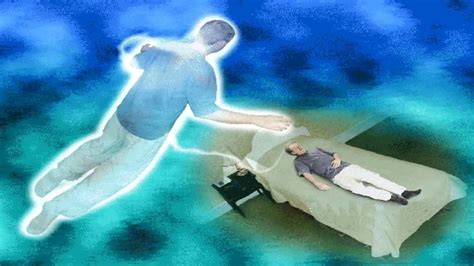
Over 30 stories were collected on video of people that experienced or witnessed such inexplicable events. For science these experiences need to fulfill a series of criteria in order to be understood.
- Verifiable. In case of the experiences lived by people it is of course difficult to verify their stories. They experience a physical death situation for a certain period of time. Often this time is enough to declare them diseased by doctors. To everyone´s surprise the corpse comes back to live without any residues of this death experience. The person tells then a story of leaving the physical body and being able to observe and remember the environment, including the conversations and presence of people, even in adjacent rooms. People can even travel through these walls. Verification comes from the incredible testimonials of people in those stories that have been observed, listened to, smelled, etc. They are often flabbergasted about the testimonial. And these people are often highly educated people such as the medical staff present.
- Scientifically it does not seem possible to observe and memorize events without the presence of a living body that carries the sensoring properties, the neurotransmitters and brains for the interpretation and memorization of that what has been observed. How is this possible without the presence of a body?
- Reproducible. Some people are known to have the ability to do the OBE voluntarily. Other people do it with the help of substances. So to some extend it is reproducible and this is necessary to be able to study the phenomenon and maybe come to an understanding of it.
- Explicable. And here comes the issue. We cannot explain it. There is enough proof about its existence and even part of its working. But we cannot explain it. In our current understanding of our sensory capabilities we need a physical living basis, a body, equipped with the right sensory facilities in order to be able to hear, see, smell, observe consciously, interpret and memorize our observations. The body may be there, but it is at a distance and without the functional signs of being alive. Maybe it is, in a dormant (dream), hallucinatory or unknown state, but this does not explain its capacity to observe at a distance even across rooms.
In addition, people who experience such happening tend to come back to “normal” life with their conscience altered. They look at reality in a different way, with a deeper trust in life, no fear for death, and relieved of their sense of materialism. So, even if we manage to clarify scientifically the mechanics of OBE, this change of awareness and conscience is much more difficult to explain. It seems that we need to accept that there is an energetic life form or experience connected to our physical body, a spirit, that has it own energetic resonance. A resonance that has to do with the way we sense and interpret reality and that this sensing can be altered. Many people experience such sudden altering of their conscience in their lives due to intense experiences but without OBE. But this was never associated to the idea of a spirit as an integrated entity into one’s existence.
So proof and understanding of such spirit has major implications on the way we understand life as whole. It would open up a totally new field of research around the relationship between such spirit and the physical body, the properties of such spirit in time and space, its impact on our behavior, etc.
So far the element of the existence of a spirit has been confined to the world of religious and paranormal beliefs. Bringing it into our scientific reality would have also implications on the way we look at the complexity of life in general and of us as self conscious human beings specifically. Questions arise if such spiritual dimensions are generalized for all living beings, subject to evolution or that it has its own rules? Also interesting is the development of our understanding how this dimension works if it exists without the support of physical bodies. Or does it make use of a broader spectrum of the physical living reality? If so, what would be the relationship, how is it orchestrated as a bigger possible entity to which we are all related?
All this right now is speculation, open questions without concrete answers. The multidimensional options of life have found little scientific support despite some curious riddles that hardly find answers through the physical interpretation of life alone. As STIR (Transformation, Indexation and Research foundation of what the human being really is and how to organize ourselves for our sustainable evolution) this is very relevant and we like to keep an open mind. Especially the change of conscience of people, both within their normal lifetimes through specific (painful) events, through OBE or NDE (Near Death Experience), is relevant for achieving a next phase for humankind in our evolution, away from our (self)destructive presence in our current times.
 Sustainocracy, the new democracy